
Last updated: 3 July 2026
Users must adopt a multi layered defense to avoid crypto scams, particularly after phishing scams caused victims to lose more than $100 million in crypto during the first quarter of 2024. This substantial financial impact signals the persistent danger within the digital asset space. Scam tactics are evolving constantly. Awareness and preventative action are most important.
Key Highlights
- Phishing campaigns alone inflicted losses exceeding $100 million for crypto holders.
- These significant financial damages were recorded across the first three months of 2024.
- Scammers primarily leverage social engineering to trick individuals into compromising their digital assets.
- Many victims unknowingly approve malicious transactions or surrender private keys via deceptive links.
- Continuous education and strong security practices are vital for protecting crypto holdings.
Understanding the Threat space
The digital asset world, while innovative, remains a prime target for malicious actors. Fraudsters constantly refine their methods, making it difficult for even experienced users to differentiate legitimate opportunities from elaborate traps. The sheer scale of losses reported in early 2024 provides a reminder of this enduring challenge.
More than $100 million vanished from user wallets due to phishing scams alone in Q1 2024. This figure represents only a portion of the broader scam market. Many incidents go unreported or remain difficult to track. These attacks frequently involve highly sophisticated deception techniques designed to exploit human trust and urgency.
Beyond phishing, other prevalent schemes include romance scams, where fraudsters build emotional relationships to solicit funds, and investment scams promising impossibly high, guaranteed returns. Fake trading platforms, often mirroring legitimate ones, ensnare unsuspecting investors. They promise quick riches. They deliver only ruin.
Implementing substantial Security Protocols
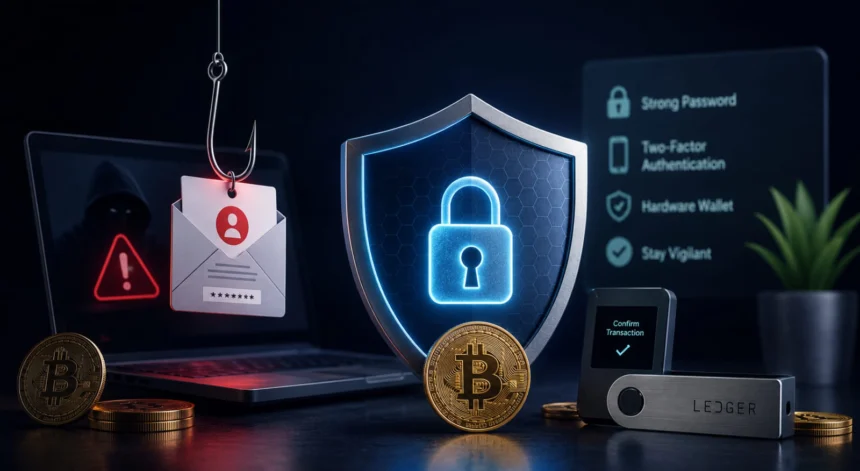
Protecting your crypto assets begins with foundational security practices. The first line of defense is strong, unique passwords for every exchange and wallet service you use. Never reuse passwords. A password manager can help generate and store these complex credentials securely, reducing the risk of unauthorized access.
Activating two factor authentication, or 2FA, is nonnegotiable for every crypto related account. This adds an essential second verification step, often a code from your phone or a hardware token, preventing access even if your password gets compromised. Authentication apps like Authy or Google Authenticator are generally more secure than SMS based 2FA.
Hardware wallets offer the highest level of security for storing significant crypto holdings. These physical devices keep your private keys offline, making them virtually impervious to online hacking attempts. Transactions require physical confirmation on the device itself. Store your seed phrase, the recovery key for your hardware wallet, in a secure, offline location, ideally fireproof and waterproof. Never digitize it. Never share it.
Regularly reviewing your transaction history is another simple yet effective habit. Look for any suspicious or unauthorized activity. Many reputable exchanges and wallets provide alerts for unusual log ins or outgoing transactions. Be aware of these notifications. Investigate anomalies immediately.
How To Avoid Crypto Scams Through Diligent Practices
Avoiding crypto scams demands constant vigilance and a skeptical mindset. Scammers often prey on emotional responses like greed, fear, or urgency. Never rush into any decision involving your digital assets. Take time to research. Verify all information.
Always double check the URL of any website asking for your wallet connection or personal information. Phishing sites often use slightly altered spellings or different domain extensions to mimic legitimate platforms. Bookmark official websites and access them directly, rather than clicking links from emails or social media posts.
Be extremely wary of unsolicited messages. This includes emails, direct messages on social media, or texts. Scammers frequently impersonate support staff, project developers, or even friends. They might claim issues with your account or offer exclusive investment opportunities. Legitimate organizations rarely request private keys or wallet approval via direct messages.
Educate yourself about common scam patterns. Understand how wallet drainers work, where a malicious smart contract asks for approval to spend your tokens, effectively emptying your wallet. Learn to read transaction details carefully before signing. A healthy dose of suspicion protects your funds far better than blind trust.
Navigating Social Engineering and Online Engagement
Social engineering remains a primary tool for scammers. They manipulate individuals into performing actions or divulging confidential information. This can happen on platforms like Telegram, Discord, X formerly Twitter, and even professional networking sites. Be cautious of anyone initiating contact with an offer that seems too good to be true. It invariably is.
Fake customer support scams are rampant. Scammers create fake support accounts on social media or forums, often appearing in replies to legitimate company posts. If you seek support, only use the official channels listed on the outfit’s website. Never provide your seed phrase, private keys, or remote access to your computer to anyone claiming to be support.
Participating in crypto communities is valuable for information sharing, but it also carries risk. Always verify information from multiple reputable sources before acting. Be skeptical of individuals who DM you offering help, particularly if they push you to share your screen or click unusual links. Community administrators often warn against such private approaches.
Before investing in any new project or token, conduct thorough due diligence. Research the team, review their whitepaper, analyze their tokenomics, and scrutinize their code if possible. Check for red flags like anonymous teams, lack of clear use case, or aggressive, hype driven marketing without substance. Legitimate projects welcome scrutiny. Scam projects often vanish quickly.
Frequently Asked Questions (FAQs)
how much crypto was lost to scams in early 2024
Crypto holders lost over $100 million to phishing scams alone in the first three months of 2024. This significant amount highlights the ongoing danger in the digital asset space, and it’s important to remember this figure only represents a portion of the total scam market.
what is a phishing scam in crypto
A phishing scam in crypto involves fraudsters using social engineering to trick people into compromising their digital assets. Victims often unknowingly approve malicious transactions or give away their private keys through deceptive links, leading to substantial financial losses.
how do crypto scammers trick people
Crypto scammers primarily use social engineering tactics to deceive individuals. They create elaborate traps and deceptive links to make victims unknowingly approve malicious transactions or surrender their private keys, making it hard to tell legitimate opportunities from scams.
what is the best way to avoid crypto scams
To avoid crypto scams, users need to adopt a multi layered defense, focusing on continuous education and strong security practices. Staying aware of evolving scam tactics and taking preventative action are vital for protecting your crypto holdings.
The TCB View
Our read: The $100 million lost to phishing in Q1 2024 isn’t just a statistic; it’s a siren call for urgent individual action. This figure represents actual people losing actual savings, often irrevocably. The risk lies in a false sense of security, believing one is immune to scams when the tactics constantly evolve.
An opportunity exists for platforms to implement stronger default security measures and clearer user education campaigns, moving beyond mere disclaimers. The signal to track: the rate of recovery for scammed funds, and whether this nudges lawmakers to act faster on digital asset crime prevention.