
Last updated: 21 July 2026
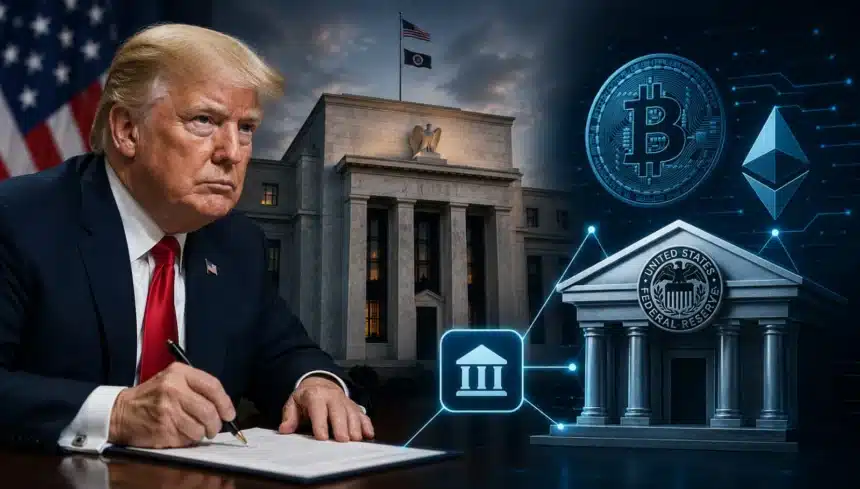
Former President Donald Trump has ordered the Federal Reserve to immediately review its policies regarding master account access for non bank crypto firms, a move reported just minutes ago by The Block.
Key Highlights
- Donald Trump issued a directive to the Federal Reserve Board to reassess master account access for non bank financial institutions, specifically targeting crypto firms.
- The order, reported by The Block, signals a potential shift in federal banking policy towards digital asset companies.
- Master accounts provide direct access to the Federal Reserve’s payment systems, bypassing traditional intermediary banks.
- This directive follows increasing political scrutiny and lobbying efforts by the crypto industry for greater financial integration.
- The timing coincides with Trump’s campaign efforts to appeal to crypto voters ahead of the upcoming US presidential election.
The Trump Directive: Reviewing Access for Crypto Firms
The directive from Donald Trump calls for a swift reevaluation of the Federal Reserve’s approach to granting master accounts. This order specifically mentions non bank crypto firms, signaling a clear intent to open up direct access to the nation’s central banking system for digital asset companies.
Master accounts are crucial for financial institutions as they allow direct settlement of payments, holding balances at the Fed, and participating in the global financial system without relying on commercial banks. For crypto firms, this access could significantly reduce operational costs, enhance stability, and streamline transactions.
The move comes as the crypto industry has aggressively lobbied for clearer regulatory frameworks and greater inclusion within traditional finance. Many crypto companies have long sought direct master account access, arguing it would foster innovation and reduce systemic risk by eliminating dependence on third party banks.
Background on Master Account Access and Crypto Entities
The Federal Reserve has historically maintained a cautious stance on granting master accounts to non bank entities. Its framework, particularly the “SR 23 2” guidance issued in August 2023, established a tiered review process for institutions seeking direct access. This guidance emphasized a thorough assessment of an applicant’s risk profile, often placing crypto related firms in a category requiring extensive scrutiny.
Several crypto focused institutions, such as Custodia Bank and Kraken Financial, have faced significant delays or outright rejections in their bids for master accounts. These entities, despite being state chartered banks, have struggled to gain full access, highlighting the Fed’s reluctance to integrate novel financial players fully into its system without clear regulatory precedents.
The industry has frequently criticized the Fed’s slow pace and perceived opacity in its master account application process. Proponents of crypto integration argue that denying direct access forces digital asset firms to rely on a complex web of commercial banking relationships, which can be unstable and costly, hindering growth and innovation.
Political and Economic Implications of the Trump Orders Fed Review Giving
This directive carries significant political weight, especially given Donald Trump’s recent shift towards a more friendly to crypto stance. His campaign has increasingly embraced digital assets, viewing the crypto community as a key voting bloc. This order could be interpreted as a direct appeal to those voters, demonstrating a tangible commitment to supporting the industry.
Economically, if the Federal Reserve acts on this directive and relaxes its master account policies, the implications for the crypto industry could be transformative. Direct access to the Fed would provide crypto firms with unparalleled financial stability and efficiency. It could also level the playing field between traditional financial institutions and digital asset companies, fostering greater competition.
However, such a policy shift would likely face pushback from traditional banks and some financial stability advocates. Concerns about money laundering, consumer protection, and the potential for new systemic risks within the broader financial system are often raised when discussing increased integration of crypto firms. The Federal Reserve, as an independent body, will need to balance political pressure with its mandate for financial stability.
The TCB View
This directive from Donald Trump represents a potentially seismic shift in the regulatory landscape for crypto firms. TCB views this as a critical moment that could redefine the integration of digital assets into the mainstream financial system, moving beyond mere rhetoric to concrete policy action. The primary risk lies in the Federal Reserve