
Last updated: 23 July 2026
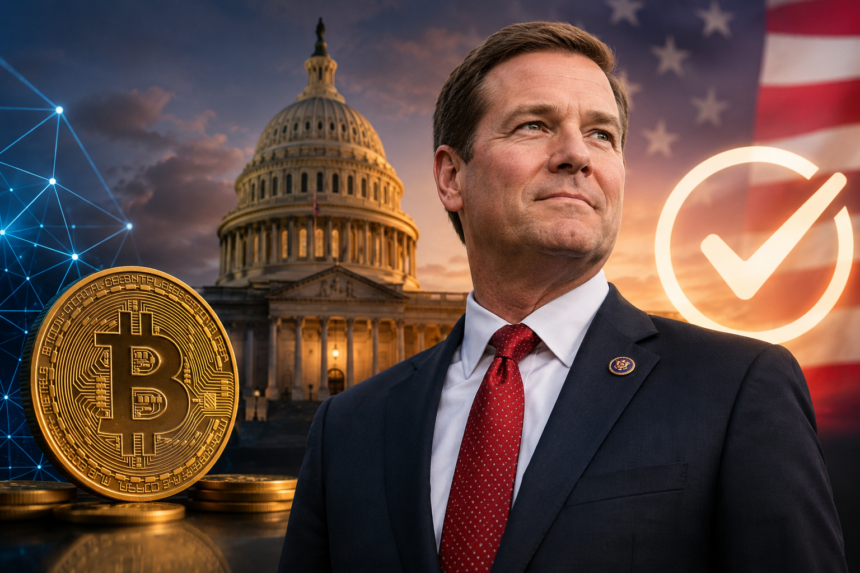
Crypto pac: Alabama Republican candidate Barry Moore secured his party’s nomination for the U.S. Senate on Tuesday, June 18, propelled by over $12 million in independent expenditures from the Digital Assets Freedom PAC. This victory is a significant win for crypto aligned political action committees aiming to influence federal elections.
Moore’s success suggests a growing impact of digital asset advocacy on grassroots political contests across the nation. His campaign now moves toward the general election, carrying the backing of a powerful new political force. (via CoinGecko)
Key Highlights
- Barry Moore, an incumbent Congressman, won the Republican primary for U.S. Senate in Alabama.
- The Digital Assets Freedom PAC deployed more than $12 million into the race, largely supporting Moore.
- Moore defeated his primary rival, former state legislator Caroline Vance, securing 58 percent of the total votes cast.
- This election highlights the escalating financial power of crypto focused lobbying groups in American politics.
- The win positions Moore as a potential new voice for digital asset proponents in Washington.
A New PAC Pushes for Influence
The Digital Assets Freedom PAC, or DAF PAC, made an assertive entry into the Alabama primary, spending notable sums for a single Senate candidate. Their investment of over $12 million dwarfed the spending of other Super PACs in the race, transforming the electoral industry.
Funds poured into an extensive campaign of television commercials, digital advertising blitzes, and sophisticated voter outreach efforts across the state. This strategic allocation of resources was meticulously designed to elevate Moore’s profile and disseminate his message.
Analysts note the PAC’s strategy targeted voters who might not typically follow blockchain policy closely. Instead, their messaging framed Moore as a proponent of innovation, economic freedom, and reduced government overreach, subtly linking these themes to the digital asset space. The DAF PAC’s chairperson, Evelyn Hayes, highlighted the organization’s commitment.
“We believe in growing an environment where innovation thrives,” Hayes stated in a recent interview, “and that means electing leaders who understand the potential of digital assets to reshape our economy.” Their involvement wasn’t subtle.
The sheer scale of the PAC’s financial commitment in Alabama signals a shift. Political strategists widely agree that this level of engagement in a primary contest indicates a long term vision. It isn’t just about one election. It’s about establishing a solid political infrastructure for the digital assets industry.
Moore’s Message Resonates
Barry Moore, currently serving in the House of Representatives, campaigned on a platform emphasizing economic growth and individual liberty. While not a single issue candidate, his strong stance on supporting emerging technologies, including blockchain and cryptocurrencies, became a key differentiator. Moore consistently argued for clear regulatory frameworks that encourage innovation rather than stifle it, a position warmly embraced by the DAF PAC and its contributors.
His primary opponent, Caroline Vance, a long time fixture in Alabama state politics, struggled to counter the consistent barrage of pro Moore advertising. Vance focused her campaign on traditional conservative issues, often accusing Moore of being too beholden to “special interests from Silicon Valley.” Her message failed to gain significant traction.
Moore’s victory, with a solid 58 percent of the vote, demonstrates the effectiveness of the PAC’s campaign in aligning voters with a pro crypto agenda, even in a state not typically seen as a tech hub. The race was decided quickly.
Moore’s appeal to the state’s voters wasn’t solely built on digital asset policy. He leveraged his record as a conservative lawmaker, promising to advocate for Alabama’s interests in Washington. Yet, the notable financial support allowed his broader message to reach voters with unmatched frequency and impact. It made all the difference.
National Implications for Digital Asset Policy
The successful intervention by the Digital Assets Freedom PAC in Alabama will undoubtedly send ripples across the national political space. Other crypto aligned PACs and advocacy groups, which have increasingly grown in number and financial power, will be watching closely. This win could embolden further large scale spending in upcoming House and Senate races nationwide, particularly as the general election cycle heats up. The industry aims for legislative clarity.
For policymakers in Washington, Moore’s win presents a new variable in the complex debate surrounding digital asset regulation. Lawmakers increasingly face pressure to formulate full legislation addressing cryptocurrencies, stablecoins, and decentralized finance. The political muscle demonstrated by the DAF PAC could push some fence sitting politicians to consider more crypto friendly positions.
A shifting tide might be underway. It could even influence the stability reflected in metrics like the TCB MINER STRESS SCORE if broader market confidence rises due to regulatory clarity.
The broader goal for these groups is to build a bipartisan coalition in Congress that understands and supports the digital economy. Victories like Moore’s prove that substantial financial backing, combined with a targeted message, can translate into real electoral success. This could have a deep effect on future policy, impacting everything from consumer protection to the development of TCB DEFI PULSE technologies.
Frequently Asked Questions (FAQs)
What is a crypto PAC?
A crypto PAC is a Political Action Committee that advocates for digital assets and blockchain technology. These groups raise and spend money to influence elections, often supporting candidates who align with their goals for the crypto industry.
How much money did the crypto PAC spend in the Alabama Senate primary?
The Digital Assets Freedom PAC, a crypto aligned political action committee, spent over $12 million in independent expenditures to support Barry Moore in the Alabama Republican primary for U.S. Senate.
Who is Barry Moore and what office did he win?
Barry Moore is an incumbent Congressman who won the Republican primary for U.S. Senate in Alabama. He secured 58 percent of the total votes cast, largely due to significant backing from a crypto PAC.
Why is this election important for crypto?
This election is important because it highlights the growing financial power of crypto focused lobbying groups in American politics. Barry Moore’s victory, heavily influenced by crypto PAC spending, positions him as a potential new voice for digital asset proponents in Washington.
The TCB View
Our read: Barry Moore’s victory in Alabama isn’t just another primary win; it’s a loud signal of crypto’s emerging political power. The Digital Assets Freedom PAC’s $12 million investment bought more than ad time; it bought influence and a tangible electoral outcome. The concrete risk lies in a potential backlash, where such concentrated spending fuels accusations of special interest capture, possibly leading to more restrictive regulatory impulses down the line.
The concrete opportunity, even so, is clear: a demonstrable path to electing pro innovation leaders who can finally advance sensible digital asset legislation. The signal to track: the level of PAC spending in other key races and the specific legislative actions Moore prioritizes once in the Senate.