
Last updated: 27 June 2026
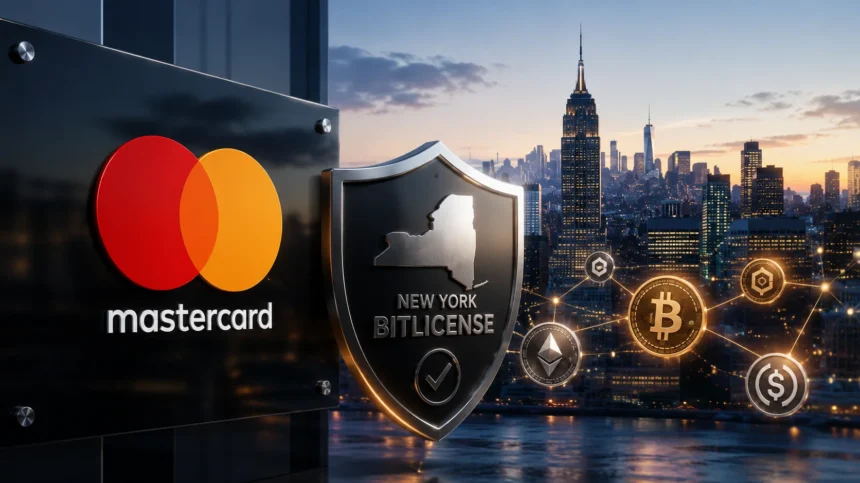
Mastercard has secured a New York BitLicense, a move that transcends mere regulatory compliance and fundamentally reshapes its digital asset strategy, signaling a direct, rather than purely facilitative, engagement with regulated blockchain based payments in a critical global financial hub.
Key Highlights
- The New York Department of Financial Services (NYDFS) granted Mastercard a Virtual Currency License (BitLicense), allowing the payment giant to conduct virtual currency business activities within New York State.
- This approval positions Mastercard to directly support stablecoin and tokenized deposit infrastructure, moving beyond its previous role as an enabler for crypto card programs.
- The NYDFS is recognized for its stringent regulatory framework, making this license a significant validation of Mastercard’s operational and compliance capabilities in the digital asset space.
- Mastercard previously expanded its crypto efforts through partnerships with entities like Binance and Coinbase, and by exploring central bank digital currencies (CBDCs) through various pilot programs.
Mastercard’s Strategic Pivot: From Enabler to Direct Participant
Mastercard’s acquisition of a New York BitLicense represents a profound strategic shift from its historical engagement with digital assets. For years, the payments giant primarily acted as an infrastructure provider, enabling traditional financial institutions and fintechs to offer crypto linked payment cards. These partnerships, while significant, kept Mastercard at arm’s length from direct virtual currency operations.
The BitLicense, known for its rigorous compliance requirements, now positions Mastercard as a direct participant in the regulated digital asset economy. This is not merely about processing crypto transactions; it signals an intent to build and operate core infrastructure for stablecoins and tokenized deposits. This move allows Mastercard greater control over its digital asset offerings and opens new revenue streams beyond transaction fees from card programs.
This direct involvement in regulated digital assets is a clear response to the evolving landscape of global finance. As institutional interest in blockchain based payments grows, major players like Mastercard cannot afford to remain solely on the periphery. Securing the BitLicense is a proactive step to capture a larger share of the emerging digital economy.
New York’s Regulatory Rigor: A Gateway for Institutional Digital Assets
The New York BitLicense is not an easy permit to obtain. The NYDFS maintains one of the most comprehensive and demanding regulatory frameworks for virtual currency businesses globally. This includes strict requirements for cybersecurity, anti money laundering (AML), consumer protection, and capital reserves. The approval itself lends significant credibility to Mastercard’s operational integrity in the digital asset sector.
For the broader market, Mastercard securing this license under New York’s rigorous oversight acts as a powerful signal. It validates the potential of stablecoins and tokenized deposits as legitimate, regulated financial instruments. This regulatory clarity is crucial for accelerating institutional adoption, as large enterprises and financial institutions prioritize compliance and stability above all else.
The NYDFS approval effectively creates a regulatory blueprint that other jurisdictions might emulate. It demonstrates that a global payment network can integrate digital assets within a highly regulated environment, potentially encouraging other major players to pursue similar licenses. This fosters a more mature and trusted environment for digital asset innovation.
The Shifting Sands: Who Benefits, Who Faces New Challenges
This development creates distinct winners and introduces new challenges for various market participants. Mastercard itself is a clear winner, gaining a competitive edge by directly accessing the regulated digital asset market in New York. This allows for direct innovation in stablecoin settlement and tokenized asset services, potentially bypassing traditional banking rails for certain transactions.
Regulated stablecoin issuers, particularly those focused on institutional use cases, also stand to benefit significantly. Mastercard’s direct involvement can provide a robust, compliant channel for their products, enhancing liquidity and adoption. Financial institutions exploring tokenized real world assets (RWAs) will find a powerful ally in Mastercard, whose network and regulatory approval can accelerate their initiatives. The NYDFS further solidifies its position as a leading, forward looking financial regulator.
Conversely, traditional payment networks that have been slower to embrace direct digital asset operations may find themselves playing catch up. Unregulated crypto entities will face increased pressure, as the institutional market gravitates towards compliant, established players. Smaller fintechs without the resources to navigate complex licensing processes could also be at a disadvantage, unless they can forge strategic partnerships with licensed entities. This move reinforces the bifurcation of the digital asset market into regulated and unregulated segments.
What to Watch Next: The Race for Enterprise Digital Payments
The immediate aftermath of Mastercard’s BitLicense approval will focus on its practical implementation. Watch for announcements regarding specific stablecoin integration partnerships or pilot programs for tokenized deposits. The key will be how quickly Mastercard can translate this regulatory clearance into tangible, revenue generating services for enterprise clients.
We anticipate other major payment networks will accelerate their own licensing efforts, particularly in key jurisdictions like New York. The competitive landscape for institutional digital payments is heating up, and regulatory compliance is now a non negotiable entry barrier. Look for increased lobbying and engagement with regulators from Visa, American Express, and others.
beyond that, monitor the types of assets Mastercard chooses to support. While stablecoins are an obvious starting point, their long term strategy will likely extend to other tokenized financial instruments and real world assets. The success of these initial offerings will dictate the pace of broader adoption for enterprise blockchain solutions.
The TCB View
Mastercard securing a New York BitLicense is not merely a procedural step; it is a definitive declaration that regulated digital assets, particularly stablecoins and tokenized deposits, are integral to the future of global payments. This move validates the institutional trajectory of blockchain technology and sets a new standard for mainstream financial giants engaging with virtual currencies. We predict an accelerated push by Mastercard into enterprise grade digital asset services, leveraging this license to onboard large financial institutions and corporations seeking compliant, efficient blockchain based payment solutions. The critical metric to watch will be the quarterly transaction volume growth of Mastercard’s direct digital asset services, specifically tracking Q3 2024 figures for any new product launches or major client announcements.