
Last updated: 27 June 2026
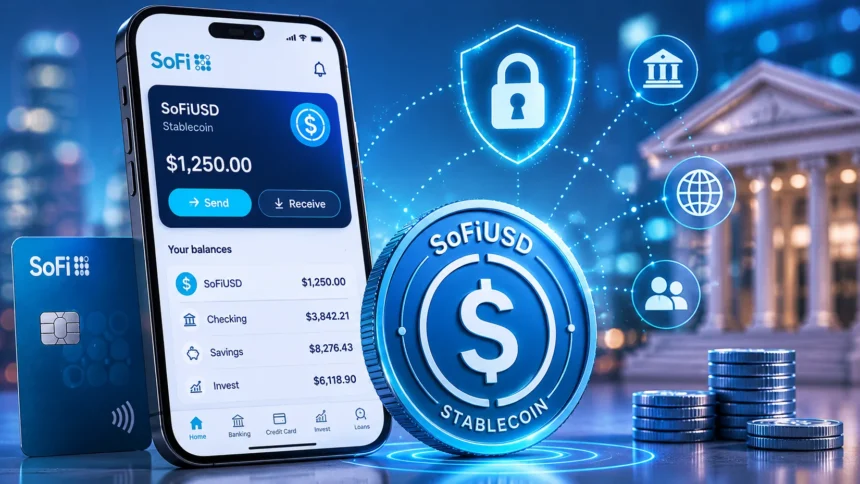
SoFi’s recent announcement that it will sofi rolls out sofiusd stablecoin to banking app users marks a significant escalation in the battle for mainstream digital asset adoption, directly challenging traditional finance and established crypto players alike by embedding a dollar pegged token within a familiar banking interface.
Key Highlights
- SoFiUSD, a new stablecoin pegged 1:1 to the US dollar, began a phased rollout to select SoFi Bank customers on May 15, 2024, enabling direct purchase and redemption within the SoFi banking application.
- The stablecoin is initially available on the Ethereum blockchain as an ERC20 token, with SoFi stating plans for multi chain expansion later this year, according to a company blog post.
- Reserves for SoFiUSD are held in segregated accounts at regulated US financial institutions, consisting solely of US dollars and short term US Treasury bills, as detailed in an independent attestation report published May 14.
- This launch positions SoFi as one of the first nationally chartered banks to offer a proprietary stablecoin directly to its retail banking clientele, bypassing traditional crypto exchanges.
SoFi’s Strategic Move: Why a Stablecoin Now?
SoFi’s entry into the stablecoin arena is a calculated maneuver, not a spontaneous one. The financial technology company, which holds a national bank charter, has been steadily expanding its offerings beyond lending and investment into a full service financial platform. Introducing SoFiUSD is a logical next step in monetizing its vast user base and capturing a share of the rapidly growing digital asset market.
The timing is crucial. Regulatory clarity, while still evolving, has improved, particularly around stablecoin issuers and reserve requirements. SoFi’s decision to back SoFiUSD with 1:1 US dollars and short term US Treasury bills in segregated accounts at regulated institutions directly addresses concerns that plagued earlier stablecoin iterations. This conservative approach aims to instill confidence among its user base, many of whom may be new to crypto.
beyond that, competition among fintechs is fierce. Companies like PayPal have already introduced their own stablecoins, PYUSD, signaling a clear trend. By offering SoFiUSD, SoFi aims to retain users who might otherwise migrate to platforms offering similar digital asset functionalities. It also creates a new revenue stream through potential transaction fees, interest on reserves, or enhanced user engagement with its broader financial products.
The Competitive Landscape: Fintech vs. Crypto Natives
The sofi rolls out sofiusd stablecoin move intensifies the competition on multiple fronts. For traditional crypto native stablecoins like Tether (USDT) and USD Coin (USDC), SoFiUSD represents a new challenger backed by a regulated financial institution with a direct line to millions of retail banking customers. While USDT and USDC dominate in terms of market capitalization and liquidity within the broader crypto market, SoFiUSD targets a different segment: the mainstream user seeking simplicity and familiarity.
SoFi’s integrated approach allows users to manage their stablecoin holdings alongside their checking accounts, investment portfolios, and loan products. This seamless experience contrasts sharply with the often complex onboarding processes of dedicated crypto exchanges. For many consumers, the ability to convert fiat to SoFiUSD and back without leaving their primary banking app removes a significant barrier to entry for digital asset participation.
However, SoFiUSD faces an uphill battle in achieving widespread adoption outside its own platform. Its utility will initially be confined to SoFi’s ecosystem. Crypto natives may find its centralized nature and limited initial blockchain support less appealing than established alternatives. The real test will be whether SoFi can expand SoFiUSD’s utility beyond its own walls, perhaps through partnerships or broader blockchain integrations, to compete effectively in the wider digital economy.
Regulatory Scrutiny and User Adoption Challenges
The launch of SoFiUSD will undoubtedly attract significant regulatory attention. While SoFi’s national bank charter provides a degree of regulatory oversight, the specific framework for bank issued stablecoins is still developing. Regulators will closely monitor SoFi’s reserve management, anti money laundering (AML) compliance, and consumer protection measures. Any misstep could invite swift enforcement action and set precedents for other financial institutions contemplating similar moves.
User adoption presents another critical challenge. Despite the convenience, many SoFi users may not immediately grasp the benefits of a stablecoin over traditional fiat. Education will be key. SoFi must clearly articulate the advantages, such as faster payments, lower transaction costs for certain use cases, or seamless integration with Web3 applications, without overwhelming its less tech savvy customers. The success of SoFiUSD hinges on whether it can move beyond being a niche offering for crypto enthusiasts within SoFi’s user base and become a widely used payment and transfer mechanism for the average consumer. Its initial rollout to a limited user group suggests a cautious approach, allowing SoFi to gather data and refine its strategy.
The TCB View
SoFi’s stablecoin launch is a clear signal that regulated financial institutions are no longer just observing the digital asset space; they are actively building within it. This move validates the long term potential of stablecoins for mainstream finance, shifting the narrative from speculative asset to practical utility. We predict that other chartered banks and large fintechs will accelerate their own stablecoin initiatives, creating a crowded market for dollar pegged tokens. The critical metric to watch will be SoFiUSD’s transaction volume outside of internal transfers within the next 12 months; sustained growth here, rather than just user acquisition, will indicate true product market fit and broader acceptance.