
Last updated: 27 June 2026
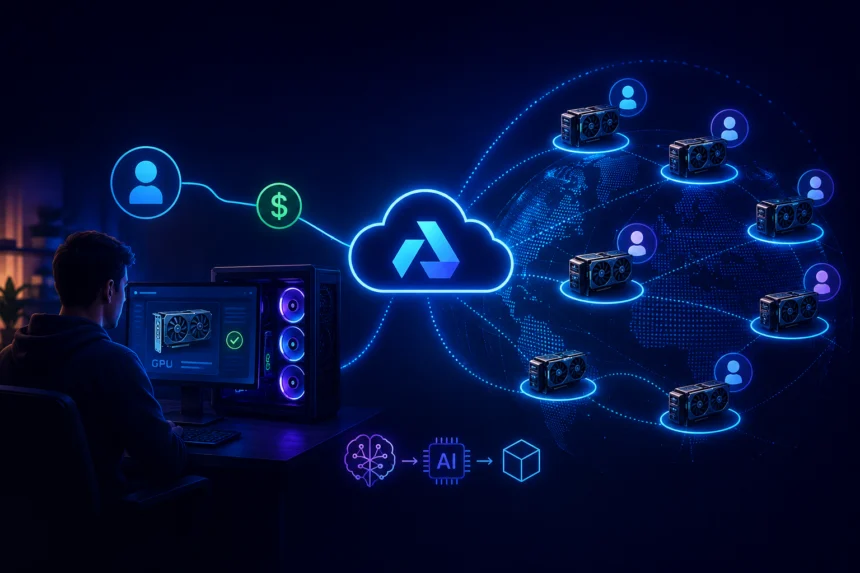
Akash Network, a prominent decentralized cloud provider, recently detailed how private citizens can generate passive income by renting out their underused Graphics Processing Units (GPUs) to AI developers, a model poised to significantly expand distributed computing resources and redefine computing infrastructure. This initiative, highlighted in a recent CoinDesk report, outlines concrete steps for individuals to participate in the burgeoning AI economy, demonstrating heres how one decentralized cloud platform empowers a new class of digital entrepreneurs.
Key Highlights
- Akash Network enables individuals to rent out idle GPUs, offering up to 80% cost savings compared to traditional cloud providers.
- The platform currently boasts over 3,000 active GPUs available, with supply growing rapidly as more individuals join.
- Participants can earn passive income, with potential monthly earnings varying based on GPU specifications and demand.
- The initiative supports a wide range of AI workloads, from model training to inference, attracting diverse developer needs.
- Akash Network launched this comprehensive monetization guide in Q2 2024, aiming to onboard thousands of new providers.
Monetizing Idle GPU Power: Heres How One Decentralized Cloud Enables It
Akash Network, built on the Cosmos SDK, operates as a peer to peer marketplace for cloud compute. It connects individuals and small businesses with spare GPU capacity to those requiring compute power for AI, machine learning, and other intensive tasks. This direct connection bypasses centralized intermediaries, fostering a more efficient and cost effective environment.
For private citizens, the process involves installing specific software on their computers to make their GPUs available on the Akash marketplace. Providers set their own pricing, allowing for competitive bids and flexible terms. The platform handles the matchmaking, payment processing, and resource allocation, simplifying participation for non technical users.
The demand for GPUs has surged with the rapid advancements in artificial intelligence. Traditional cloud providers often face supply constraints and high prices. Akash Network presents an alternative by tapping into a vast, distributed pool of privately owned hardware. This approach democratizes access to high performance computing, previously dominated by large corporations.
Driving Down AI Compute Costs and Expanding Access
AI startups and researchers frequently struggle with the prohibitive costs of GPU compute. Centralized cloud services like AWS, Google Cloud, and Azure can be expensive, particularly for sustained or large scale projects. Akash Network’s decentralized model offers a compelling solution, providing compute resources at a fraction of the cost.
By leveraging a global network of individual providers, Akash can offer GPU instances at significantly lower rates. This cost efficiency allows smaller teams and independent developers to innovate without breaking their budgets. The competitive bidding system on Akash ensures that prices remain attractive for consumers while still providing fair compensation to providers.
This model also enhances resilience and censorship resistance. A decentralized network of GPU providers is less susceptible to single points of failure or arbitrary service interruptions. This distributed architecture is crucial for fostering an open and robust AI development landscape, aligning with core Web3 principles.
Implications for Web3 and the Future of AI
The ability for private citizens to monetize their hardware assets represents a significant step towards a more equitable digital economy. It shifts power from centralized entities to individuals, empowering them to become active participants in value creation. This aligns perfectly with the ethos of Web3, which champions decentralization, ownership, and user empowerment.
This development could accelerate the adoption of decentralized physical infrastructure networks (DePINs). As more individuals realize the tangible benefits of contributing their resources, the growth of such networks will likely intensify. This creates a virtuous cycle where increased supply drives down costs, attracting more demand, and further decentralizing critical infrastructure.
The long term impact extends beyond just compute. It sets a precedent for how other underused assets could be pooled and monetized within decentralized frameworks. From storage to bandwidth, the model pioneered by platforms like Akash Network could reshape how digital resources are supplied and consumed globally. Further details on decentralized infrastructure can be found in recent industry reports.
The TCB View
Akash Network’s initiative to empower private citizens in monetizing their GPUs for AI is a pivotal moment for both Web3 and AI infrastructure. It concretely demonstrates how decentralized networks can unlock dormant economic value and provide a vital alternative to centralized compute monopolies. However, participants must be aware of potential risks, including fluctuating demand for specific GPU types, the need for consistent uptime and maintenance, and the nascent regulatory landscape surrounding digital asset earnings. TCB believes this model will drive down AI development costs significantly, fostering innovation, but the sustainability of provider earnings and the network’s ability to scale securely will be crucial metrics to watch in the coming quarters.