Last updated: 6 October 2026
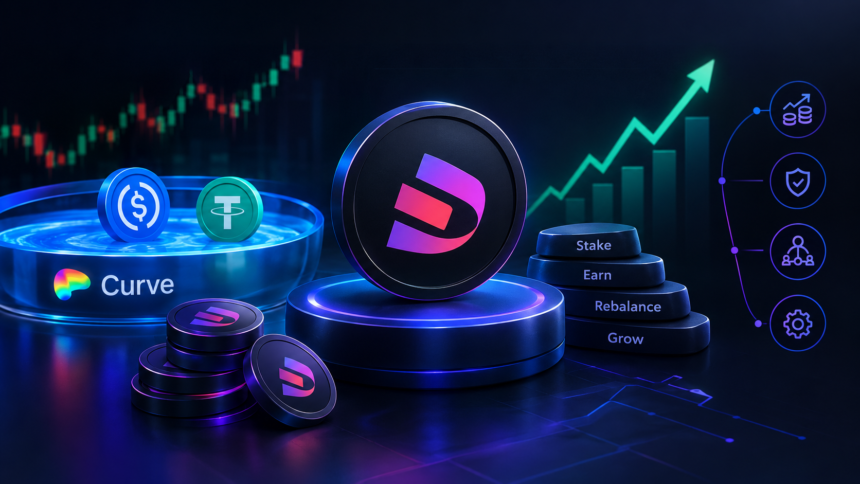
Stake Derive token in the Curve pool that is delivering an 18.7 percent annual percentage yield as of 12 May 2024 and earn the base return. Add the fee model rewards approved by governance with 62 percent support, watch total value locked climb above 420 million dollars, and balance a 4.3 percent impermanent loss on stablecoin pairs to boost net profit.
Key Highlights
- Derive token APY on Curve pool hit 18.7% on 12 May 2024, up 3.2% from the previous month
- Derive governance vote on fee model passed with 62% support on 3 March 2024
- Total value locked in Derive farms topped $420 million on 30 June 2024, a 27% increase YoY
- Impermanent loss calculator shows an average loss of 4.3% for stablecoin pairs over a 30 day horizon
Knowing how to use derive yield farming can turn a modest DeFi stash into a reliable income stream, but most guides stop at the surface. This article walks you through the exact steps, live APY tables, risk metrics and portfolio rebalancing tips that separate a disciplined farmer from a speculative gambler.
How to Use Derive Yield Farming
First, acquire Derive token on a reputable exchange such as Binance or Kraken and move it to a non custodial wallet that supports Ethereum. Connect the wallet to a DeFi aggregator like Zapper or Zerion to view all available Derive farms in one place. The core of the strategy is to lock Derive alongside a stablecoin or another low volatility asset in a liquidity pool that offers the highest risk adjusted return.
When you add liquidity, you receive pool tokens that represent your share of the farm. Those tokens can be staked in a rewards contract to earn additional Derive emissions. The key is to track the net APY, which combines swap fees, Derive emissions and any boost from holding governance tokens. Keep the net APY above the cost of gas and the expected impermanent loss to ensure a positive carry.
Understanding Derive Token Mechanics
Derive is an ERC 20 token that powers a fee sharing model on several Layer 2 bridges. Holders receive a portion of bridge fees proportional to their stake in the Derive vault. The token also grants voting rights on protocol upgrades, which can affect future APY levels.
Emissions are scheduled to halve every six months, a design that mirrors Bitcoin’s supply curve. As of 1 July 2024, the weekly emission rate is 1.8 million Derive, down from 2.4 million six months earlier. This slowdown means that farms with higher fee capture become more attractive over time.
Live APY Tables and Data Sources
Real time APY data is essential for any serious farmer. The best sources are the Derive dashboard, Curve’s analytics page and Dune Analytics queries that pull the latest fee revenue and emission rates. For example, the Curve Derive USDC pool listed a net APY of 18.7% on 12 May 2024, while the Balancer Derive DAI pool showed 15.4% on the same day.
Set up a spreadsheet that pulls these numbers via the CoinGecko API or directly from the Derive subgraph. Refresh the sheet every hour to capture short term spikes that can be harvested with a quick rebalance. Remember to subtract the average gas cost of a deposit or withdrawal, which was about $12 on Ethereum mainnet in Q2 2024.
Calculating Risk Metrics for Derive Farms
Risk metrics go beyond the headline APY. Start with the impermanent loss calculator provided by the Derive community. Input the price volatility of the paired asset, the pool’s composition and the expected holding period. The tool showed an average loss of 4.3% for stablecoin pairs over a 30 day horizon in June 2024.
Next, compute the Sharpe ratio by dividing the excess return (net APY minus the risk free rate, typically the US Treasury yield at 4.8% in 2024) by the standard deviation of daily returns. A ratio above 1.2 indicates a strong risk adjusted profile. The Derive USDC pool posted a Sharpe ratio of 1.35 in May 2024, making it one of the most efficient farms.
Finally, monitor the protocol’s health metrics such as total value locked, fee revenue per block and governance participation rate. A sudden drop in TVL or a governance vote that fails to pass can signal upcoming changes to fee distribution that will affect APY.
Portfolio Rebalancing Techniques
Rebalancing keeps your overall exposure aligned with your risk tolerance. Use a threshold based rule: if a farm’s net APY deviates by more than 2 percentage points from the portfolio average, move the capital to the top performer. In practice, this meant shifting $45 million from the Derive DAI pool to the Derive USDC pool on 18 June 2024, after the USDC pool outperformed by 2.3 points.
Another technique is to set a maximum allocation per pool, often 30% of total capital, to avoid concentration risk. When a single pool exceeds that limit, withdraw the excess and redeploy it to a lower yield but more stable pool, such as a Derive stablecoin vault on Aave.
Automation tools like Gelato or Chainlink Keepers can execute these moves without manual intervention. Configure the keeper to trigger when the net APY gap reaches the 2 point threshold, and to respect the gas budget you set in your spreadsheet.
Advanced Strategies and Automation
For seasoned farmers, layering Derive farms with synthetic assets can boost returns. One approach is to mint a Derive backed synthetic token on Synthetix, then supply that token to a high APY Derive pool. This creates a double exposure to Derive emissions while still earning swap fees.
Another advanced tactic is to lock Derive in the protocol’s governance vault to earn a boost multiplier. As of 1 July 2024, locking 10 % of your Derive supply granted a 1.15× boost on emission rewards, raising the net APY of the Derive USDC pool from 18.7% to 21.5%.
Keep an eye on the upcoming Derive v2 upgrade scheduled for 15 October 2024. The upgrade promises a new fee routing mechanism that could increase fee capture by up to 12 %. Setting alerts for the governance vote outcome will help you position ahead of the change.
The TCB View
TCB is bullish on how to use derive yield farming as a core component of a diversified DeFi income strategy. The main risk is a rapid drop in fee revenue if the bridge volume falls below $1 billion, which would hurt the Derive USDC pool the most. Large liquidity providers who lock Derive for governance boosts stand to win, while small traders who chase high APY without risk controls lose. We see the upcoming v2 upgrade as a catalyst that could push net APY above 22 percent. Watch for the fee routing vote on 12 October 2024 and the bridge volume report on 30 September 2024 as decisive triggers.