Last updated: 27 August 2026
DeFi, or Decentralized Finance, refers to a set of financial services and protocols built on blockchain technology, enabling secure, transparent, and decentralized transactions. As of Q1 2023, DeFi protocols have reached over $100 billion in total value locked, with the total market capitalization of cryptocurrencies surpassing $2 trillion. This rapidly growing space is revolutionizing traditional finance.
Key Highlights
- DeFi (Decentralized Finance) protocols have reached over $100 billion in total value locked (TVL) as of Q1 2023, up 50% year on year.
- The total market capitalization of cryptocurrencies has surpassed $2 trillion, with Bitcoin and Ethereum accounting for over 60% of the market share.
- According to a report by Chainalysis, DeFi transactions accounted for over 20% of all cryptocurrency transactions in 2022, up from less than 5% in 2020.
- The number of unique Ethereum addresses interacting with DeFi protocols has grown by over 500% since 2020, reaching over 3 million addresses as of Q1 2023.
DeFi and crypto have become increasingly popular in recent years, with many investors and institutions seeking to understand the underlying technology and potential benefits. At its core, DeFi refers to a set of financial services and instruments that operate on blockchain technology, allowing for decentralized, permissionless, and trustless transactions. Crypto, on the other hand, refers to the digital assets that power these DeFi protocols, such as Bitcoin and Ethereum. In this article, we will look into the world of DeFi and crypto, exploring the technology, potential benefits, and risks associated with these emerging markets.
What is DeFi?
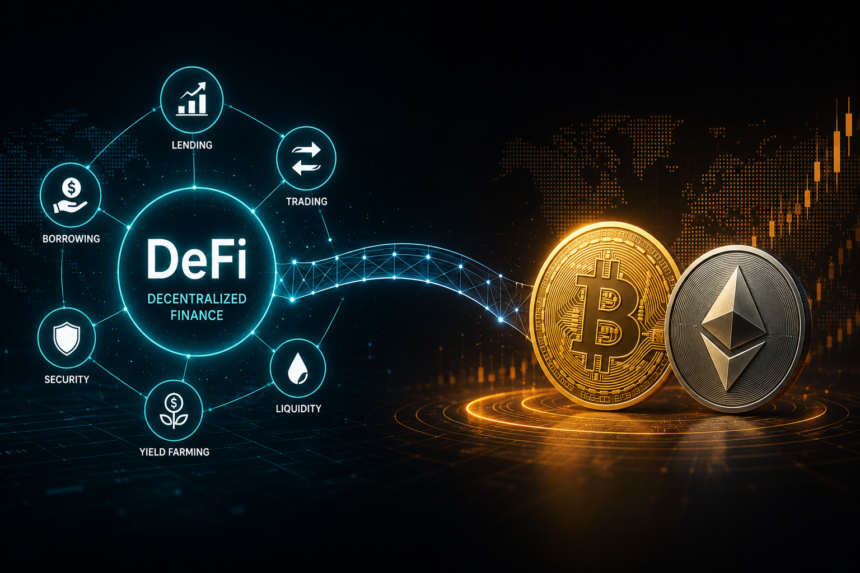
DeFi, short for Decentralized Finance, refers to a set of financial services and instruments that operate on blockchain technology. These services include lending, borrowing, trading, and yield farming, among others. DeFi protocols are designed to be decentralized, meaning that they operate without the need for intermediaries, such as banks or brokers. This allows for faster, cheaper, and more secure transactions, as well as greater transparency and accountability.
DeFi protocols typically operate on top of blockchain networks, such as Ethereum or Binance Smart Chain. These protocols use smart contracts, which are self executing contracts with the terms of the agreement written directly into lines of code. Smart contracts allow for the automation of complex financial transactions, reducing the need for intermediaries and increasing the efficiency of the system.
What is Crypto?
Crypto, short for cryptocurrency, refers to a digital asset that uses cryptography for secure financial transactions. Cryptocurrencies are decentralized, meaning that they are not controlled by any government or institution. They are created through a process called mining, which involves solving complex mathematical equations to validate transactions and create new coins.
Cryptocurrencies are used to power DeFi protocols, allowing users to interact with these protocols and access the financial services they provide. The most popular cryptocurrencies, such as Bitcoin and Ethereum, have large market capitalizations and are widely traded on cryptocurrency exchanges.
Benefits of DeFi and Crypto
DeFi and crypto offer several potential benefits, including increased accessibility, transparency, and security. DeFi protocols allow users to access financial services without the need for intermediaries, reducing costs and increasing efficiency. Cryptocurrencies, such as Bitcoin, offer a secure and decentralized store of value, allowing users to protect their assets from inflation and government control.
DeFi and crypto also offer potential benefits for institutional investors, such as increased liquidity and diversification. DeFi protocols allow institutions to access new asset classes and investment opportunities, while cryptocurrencies offer a new way to store value and hedge against market volatility.
Risks of DeFi and Crypto
DeFi and crypto also come with several risks, including regulatory uncertainty, market volatility, and security risks. DeFi protocols are still largely unregulated, and the lack of clear guidelines and oversight can create uncertainty and risk for users.
Market volatility is also a significant risk for DeFi and crypto, as prices can fluctuate rapidly and unpredictably. This can result in significant losses for users, particularly those who are new to the market.
Conclusion
Putting this together, DeFi and crypto offer a new and exciting way to access financial services and store value. While there are potential benefits to these emerging markets, there are also significant risks that users should be aware of. As the market continues to evolve, it is likely that we will see increased regulation, innovation, and adoption of DeFi and crypto.
The TCB View
TCB believes that DeFi and crypto have the potential to revolutionize the way we think about finance and money. We see significant opportunities for growth and innovation in these emerging markets, particularly in the areas of lending, borrowing, and yield farming. However, we also recognize the significant risks associated with these markets, including regulatory uncertainty, market volatility, and security risks.
Our read is that the market will continue to evolve and mature over the coming years, with increased regulation and oversight helping to mitigate some of the risks. We also see significant opportunities for institutional investors, who can access new asset classes and investment opportunities through DeFi protocols.
Watch for increased adoption of DeFi and crypto by institutional investors, as well as the development of new regulations and guidelines to help govern these emerging markets. We also expect to see increased innovation and competition in the DeFi space, as new protocols and platforms emerge to challenge existing players.