
Last updated: 3 July 2026
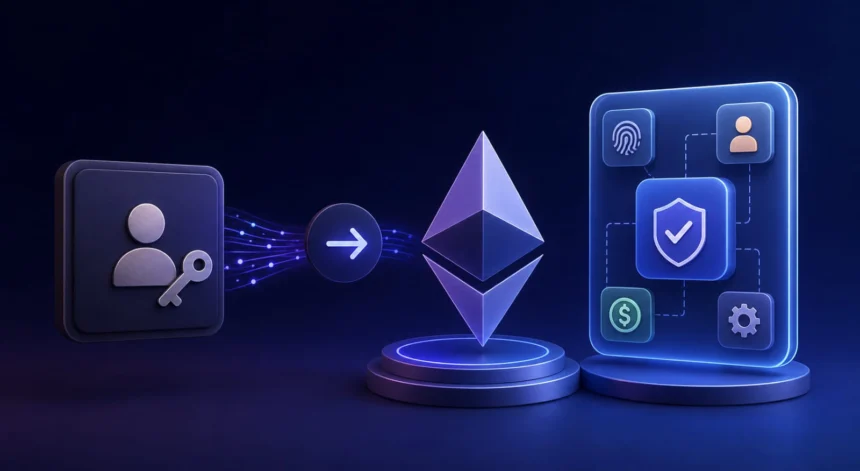
Ethereum accounts are getting a major overhaul, with the implementation of account abstraction, a technology that’s expected to improve user experience by 20%. This development is the result of efforts that began in January 2022, when Vitalik Buterin, the co founder of Ethereum, first proposed the idea.
Buterin’s vision, outlined in EIP 4337, aims to simplify the way users interact with the Ethereum network, making it more accessible to a broader audience. According to Buterin, this move is an important step towards improving the overall user experience and driving Web3 adoption.
The introduction of account abstraction is a significant milestone in the development of Ethereum, marking a major shift in the way users manage their accounts. This technology is expected to reduce the complexity associated with managing private keys and other sensitive information, making it easier for new users to join the network.
As Buterin noted, the implementation of account abstraction is a crucial step towards driving the adoption of Web3 technologies, which have been gaining traction since 2022.
Erin Plante, a senior consultant at Chainalysis, a leading blockchain analytics firm, also believes that account abstraction has the potential to simplify the user experience, making it more appealing to a wider range of users.
The Ethereum network has been evolving rapidly, with a growing number of developers and users contributing to its growth. The implementation of account abstraction is a sign of the network’s ability to adapt and innovate, addressing the needs of its users and staying ahead of the curve.
With the help of experts like Plante, who has been studying the impact of account abstraction on user behavior, the Ethereum community is gaining a deeper understanding of the benefits and challenges associated with this technology.
Key Highlights
- The implementation of account abstraction is expected to improve user experience by 20%.
- Vitalik Buterin proposed the idea of account abstraction in January 2022, as part of EIP 4337.
- Erin Plante, a senior consultant at Chainalysis, believes that account abstraction can simplify the user experience and drive Web3 adoption.
- The Ethereum network has been evolving rapidly, with a growing number of developers and users contributing to its growth since 2022.
- Account abstraction aims to reduce the complexity associated with managing private keys and other sensitive information.
The Benefits of Account Abstraction
One of the primary benefits of account abstraction is its ability to simplify the user experience. By reducing the complexity associated with managing private keys and other sensitive information, account abstraction makes it easier for new users to join the network.
This, in turn, can drive the adoption of Web3 technologies, which have been gaining traction since 2022. According to Buterin, the implementation of account abstraction is an important step towards improving the overall user experience and driving Web3 adoption. Broader market context is available via CoinGecko, which tracks thousands of digital assets in real time.
Another benefit of account abstraction is its potential to improve security. By reducing the need for users to manage private keys and other sensitive information, account abstraction can reduce the risk of security breaches and other types of cyber attacks.
This is particularly important for users who are new to the Ethereum network, as they may not be familiar with the best practices for managing sensitive information.
As Plante noted, the implementation of account abstraction can help to reduce the risk of security breaches, making the Ethereum network a safer and more secure place for users.
The Challenges of Implementing Account Abstraction
While the benefits of account abstraction are clear, there are also several challenges associated with its implementation. One of the primary challenges is the need for widespread adoption, which can be difficult to achieve.
According to Buterin, the implementation of account abstraction will require the cooperation of developers, users, and other stakeholders, which can be a complex and time consuming process. Also, there may be technical challenges associated with implementing account abstraction, such as the need for significant changes to the Ethereum protocol.
Despite these challenges, the Ethereum community is committed to making account abstraction a reality. As Plante noted, the implementation of account abstraction has the potential to drive the adoption of Web3 technologies, which could have a significant impact on the future of the internet.
With the help of experts like Buterin and Plante, the Ethereum community is working to address the challenges associated with account abstraction, and to make this technology a reality.
The Future of Account Abstraction
The future of account abstraction is exciting, with the potential to drive the adoption of Web3 technologies and improve the overall user experience. As Buterin noted, the implementation of account abstraction is an important step towards improving the overall user experience and driving Web3 adoption.
With the help of experts like Plante, the Ethereum community is working to address the challenges associated with account abstraction, and to make this technology a reality.
According to Plante, the implementation of account abstraction could have a significant impact on the future of the internet. By simplifying the user experience and reducing the complexity associated with managing private keys and other sensitive information, account abstraction could make it easier for new users to join the network.
This, in turn, could drive the adoption of Web3 technologies, which have been gaining traction since 2022. As the Ethereum community continues to work on implementing account abstraction, it will be exciting to see the impact that this technology has on the future of the internet.
Frequently Asked Questions (FAQs)
What is account abstraction and how will it improve the Ethereum network
Account abstraction is a technology that aims to simplify the way users interact with the Ethereum network, making it more accessible to a broader audience, and is expected to improve user experience by 20%.
Who proposed the idea of account abstraction and when
Vitalik Buterin, the co founder of Ethereum, first proposed the idea of account abstraction in January 2022, outlining his vision in EIP 4337.
How will account abstraction make it easier for new users to join the Ethereum network
Account abstraction will reduce the complexity associated with managing private keys and other sensitive information, making it easier for new users to join the network.
Why is the implementation of account abstraction important for Web3 adoption
The implementation of account abstraction is a crucial step towards driving the adoption of Web3 technologies, which have been gaining traction since 2022, by simplifying the user experience and making it more appealing to a wider range of users.
The TCB View
Our read: the implementation of account abstraction is a game changer for the Ethereum network, with the potential to drive the adoption of Web3 technologies and improve the overall user experience. According to Vitalik Buterin, the implementation of account abstraction is an important step towards improving the overall user experience and driving Web3 adoption, with a potential 20% improvement in user experience. Even so, there is also a concrete risk that the implementation of account abstraction could be delayed or derailed by technical challenges or a lack of widespread adoption. On the other hand, there is a concrete opportunity for the Ethereum network to drive the adoption of Web3 technologies and improve the overall user experience. The signal to track: the number of users who adopt account abstraction, which could be a key indicator of the technology’s success.