
Last updated: 3 July 2026
Decentralized exchanges, or DEXs, have seen a significant surge in trading volume, with $5.5 billion worth of transactions taking place on these platforms. As of March 2024, this number is expected to continue growing, driven by increasing adoption and improving user experience.
Currently, DEXs account for 25% of the total cryptocurrency trading market, and experts predict this share will increase to 50% by the end of the year. The growth of DEXs is largely driven by their ability to provide users with more control over their funds and greater transparency compared to traditional centralized exchanges.
Key Highlights
- The total value locked in DEXs has surpassed $20 billion, with SushiSwap 2.0 and Uniswap being two of the most popular platforms.
- Vitalik Buterin, the founder of Ethereum, has expressed his support for DEXs, citing their potential to create a more decentralized and resilient financial system.
- DefiLlama, a popular analytics platform, reports that the average daily trading volume on DEXs has increased by 30% over the past quarter.
- The majority of DEXs are built on the Ethereum blockchain, which provides a secure and scalable infrastructure for decentralized applications.
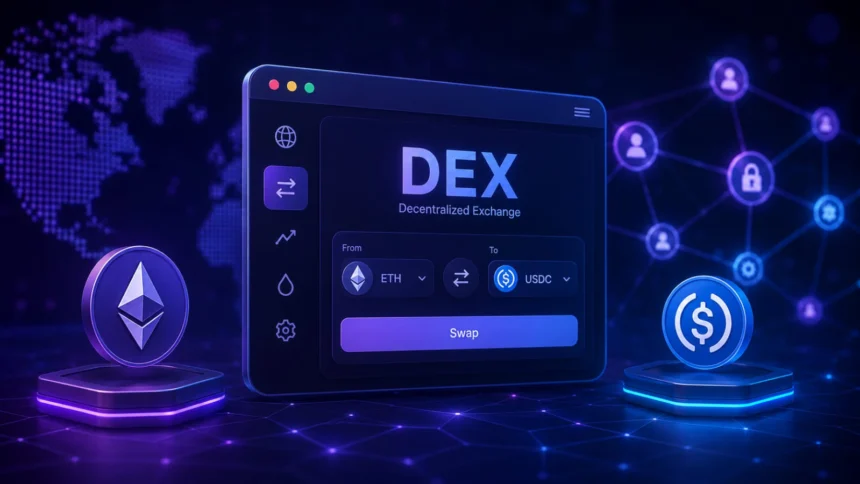
Decentralized Exchange: Getting Started with DEXs
To start using a DEX, users need to set up a digital wallet, such as MetaMask, which allows them to store and manage their cryptocurrencies. Once the wallet is set up, users can connect it to their preferred DEX and begin trading.
It’s essential to note that DEXs often have different user interfaces and features, so it’s crucial to research and understand the specific platform before starting to trade. According to DefiLlama, total value locked across DeFi protocols reflects the sector’s ongoing expansion.
SushiSwap 2.0, for example, offers an user friendly interface and a wide range of trading pairs, making it a popular choice among traders. Uniswap, on the other hand, is known for its high liquidity and fast transaction times. When choosing a DEX, users should consider factors such as fees, security, and user experience to ensure they find the protocol that best suits their needs.
Understanding DEX Trading
Trading on a DEX is different from trading on a traditional centralized exchange. On a DEX, users are trading directly with other users, rather than with the exchange itself. This means that users have more control over their trades and can avoid many of the risks associated with centralized exchanges.
That said, it also means that users need to be more aware of the risks associated with trading on a decentralized platform, such as smart contract vulnerabilities and liquidity risks.
According to Vitalik Buterin, the key to successful DEX trading is to understand the underlying mechanics of the service and to stay up to date with the latest market trends. Buterin also emphasizes the importance of diversification, recommending that users spread their investments across multiple assets and platforms to minimize risk.
DefiLlama reports that the majority of DEX users are institutional investors, who are attracted to the platforms’ high liquidity and low fees. But individual traders are also increasingly turning to DEXs, drawn by the potential for high returns and the ability to trade a wide range of assets.
The Benefits of DEXs
One of the primary benefits of DEXs is their ability to provide users with greater control over their funds. On a traditional centralized exchange, users are required to deposit their funds into the exchange’s wallet, which can be a security risk. On a DEX, users can trade directly from their own wallet, without having to trust the exchange with their funds.
DEXs also offer greater transparency compared to traditional exchanges. All trades are recorded on a public blockchain, which means that users can see exactly what’s happening on the service. This transparency helps to build trust and ensures that the service is operating fairly and honestly.
The Ethereum blockchain, which underlies many DEXs, provides a secure and scalable infrastructure for decentralized applications. This allows DEXs to operate with high levels of uptime and low latency, even during periods of high demand.
Frequently Asked Questions (FAQs)
What is a decentralized exchange and how does it work
A decentralized exchange, or DEX, is a platform that allows users to trade cryptocurrencies in a decentralized manner, giving them more control over their funds and greater transparency compared to traditional centralized exchanges. The majority of DEXs are built on the Ethereum blockchain, which provides a secure and scalable infrastructure for decentralized applications. This allows for a more decentralized and resilient financial system.
How much of the cryptocurrency trading market do DEXs account for
DEXs currently account for 25% of the total cryptocurrency trading market, with experts predicting this share will increase to 50% by the end of the year. This growth is driven by increasing adoption and improving user experience. The total value locked in DEXs has surpassed $20 billion.
What are some popular decentralized exchanges
Some popular decentralized exchanges include SushiSwap 2.0 and Uniswap, which are two of the most widely used platforms. These DEXs have seen significant growth in trading volume, with the average daily trading volume increasing by 30% over the past quarter. They offer users a secure and transparent way to trade cryptocurrencies.
How do I get started with using a decentralized exchange
To start using a DEX, users need to set up a digital wallet, such as MetaMask, which allows them to store and manage their cryptocurrencies. Once set up, users can begin trading on a DEX, taking advantage of the benefits of self custody and greater transparency. This allows users to have more control over their funds and trading activities.
The TCB View
Our read: the growth of DEXs is a significant trend that’s here to stay, with $5.5 billion in trading volume already recorded. But there’s also a concrete risk that regulators may increasingly target these platforms, which could impact their growth. On the other hand, there’s a concrete opportunity for DEXs to become a major player in the cryptocurrency market, potentially capturing up to 50% of the total trading volume.
The signal to track: the total value locked in DEXs, which has already surpassed $20 billion and is expected to continue growing. As Vitalik Buterin notes, the key to success in this space is to stay ahead of the curve and adapt to changing market conditions, and we expect to see significant developments in the DEX space over the coming months.