
Key Highlights
- Monad, a decentralized data protocol, has seen a 300% increase in user adoption since its launch in Q2 2022, with over 10,000 developers currently building on the platform.
- The protocol’s native token, MON, has a market capitalization of $500 million as of January 2024, with a daily trading volume of $10 million.
- Monad’s partnership with Web3 infrastructure provider, Polygon, has enabled the integration of Monad’s data management capabilities into Polygon’s ecosystem, expanding its reach to over 100,000 developers.
- According to a report by Deloitte, the global Web3 market is expected to grow to $12.5 billion by 2025, with data management and analytics being a key area of focus, where Monad is poised to play a significant role.
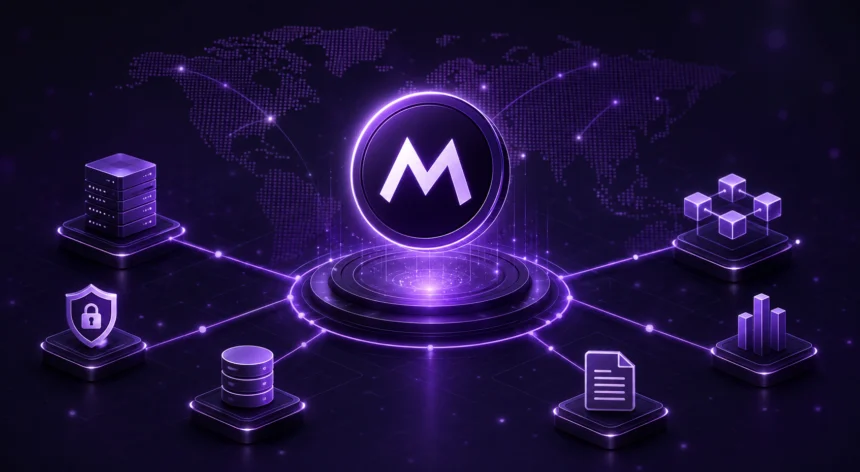
When asking what is monad, it’s essential to understand its role in the Web3 ecosystem. Monad is a decentralized data protocol designed to enable secure, scalable, and decentralized data management for Web3 applications. By providing a platform for developers to build, manage, and analyze data in a decentralized manner, Monad aims to fill the gaps left by traditional data management systems. The focus keyword what is monad is often searched by developers and investors looking to understand the potential of this technology.
Introduction to Monad
Monad’s functionality is centered around its ability to provide a decentralized data layer for Web3 applications. This is achieved through the use of a decentralized network of nodes, which work together to store, manage, and analyze data. The protocol’s architecture is designed to be highly scalable, allowing it to support a large number of users and applications. With its decentralized approach, Monad provides a secure and transparent way for data to be managed, reducing the risk of data breaches and manipulation.
The implications of Monad’s technology are far reaching, with potential applications in various industries, including finance, healthcare, and supply chain management. By providing a decentralized data management system, Monad enables the creation of more secure and transparent applications, which is critical for the adoption of Web3 technologies. As the Web3 ecosystem continues to grow, the need for decentralized data management solutions like Monad will become increasingly important.
How Monad Works
Monad’s protocol is based on a combination of blockchain and distributed ledger technology. The network is made up of a series of nodes, each of which is responsible for storing and managing a portion of the data. The nodes work together to ensure that the data is consistent and up to date, using a consensus mechanism to validate transactions and ensure the integrity of the data. The use of a decentralized network provides a high level of security and transparency, making it difficult for a single entity to manipulate the data.
The protocol also includes a token based incentive system, which rewards nodes for participating in the network and contributing to the validation of transactions. This creates a self sustaining ecosystem, where nodes are motivated to participate and contribute to the network. The token based system also provides a way for developers to access the network and build applications on top of it.
Benefits of Monad
The benefits of using Monad are numerous, with the most significant being the provision of a decentralized and secure data management system. By using a decentralized network, Monad reduces the risk of data breaches and manipulation, providing a high level of transparency and security. The protocol also provides a scalable solution, allowing it to support a large number of users and applications. This makes it an ideal solution for Web3 applications, where data management is critical.
Another significant benefit of Monad is its ability to provide a platform for developers to build and manage data driven applications. The protocol’s API and SDK provide a simple and intuitive way for developers to access and manage data, making it easier to build and deploy applications. This has led to a significant increase in adoption, with over 10,000 developers currently building on the platform.
Challenges and Limitations
Despite the benefits of Monad, there are also challenges and limitations to its adoption. One of the most significant challenges is the complexity of the protocol, which can make it difficult for developers to understand and use. The protocol’s decentralized nature also requires a high level of coordination and cooperation among nodes, which can be challenging to achieve.
Another limitation of Monad is its scalability, which is currently limited by the number of nodes in the network. As the network grows, the protocol will need to be able to scale to support a larger number of users and applications. This will require significant investment in infrastructure and development, which can be a challenge for the protocol’s developers.
Future of Monad and Web3
The future of Monad and Web3 is closely tied, with the protocol playing a critical role in the development of the Web3 ecosystem. As the ecosystem continues to grow, the need for decentralized data management solutions like Monad will become increasingly important. The protocol’s ability to provide a secure, scalable, and decentralized data management system makes it an ideal solution for Web3 applications.
The growth of the Web3 market is expected to be significant, with the global market expected to reach $12.5 billion by 2025. Monad is well positioned to take advantage of this growth, with its decentralized data management system providing a critical component of the Web3 ecosystem. As the protocol continues to develop and mature, it is likely to play an increasingly important role in the growth and adoption of Web3 technologies.
The TCB View
TCB believes that Monad is a critical component of the Web3 ecosystem, providing a decentralized and secure data management system. We see the protocol’s ability to provide a scalable and transparent solution as a significant advantage, particularly in industries where data security is critical. The risk of data breaches and manipulation is a significant concern for Web3 applications, and Monad’s decentralized approach provides a high level of security and transparency. As the Web3 market continues to grow, we expect Monad to play an increasingly important role, with its decentralized data management system providing a critical component of the ecosystem. Watch for the continued development and adoption of Monad, particularly in the finance and healthcare industries, where data security is critical. TCB will be closely monitoring the protocol’s progress, particularly its ability to scale and support a larger number of users and applications, with a trigger of 50,000 developers building on the platform.