Last updated: 9 June 2026
Key Highlights
- Over 2,000 DAOs currently exist, collectively managing digital assets valued at over $10 billion as of Q1 2024.
- Popular governance platforms like Snapshot facilitated more than 100,000 off chain votes in 2023, offering gas free participation.
- Major protocols such as Uniswap and Arbitrum require active community participation for critical treasury management and protocol upgrades.
- Delegation allows smaller token holders to contribute to governance by assigning their voting power to a trusted representative, a feature on platforms like Tally.
- Successful DAO proposals often achieve quorum thresholds ranging from 1% to 10% of total circulating governance tokens.
Participating in DAO governance moves beyond simply holding tokens; it is about actively shaping the future of decentralized protocols and treasuries. For those asking how to participate in DAO governance, the process involves identifying active communities, understanding their unique voting mechanisms, and critically analyzing proposals to cast an informed vote. This guide will walk you through the essential steps to become an engaged and effective DAO member.
Finding Your DAO: Where Community Meets Capital
The first step in effective DAO participation is identifying the right community. With over 2,000 DAOs active across various sectors like DeFi, NFTs, and infrastructure, choosing a DAO aligned with your interests and expertise is crucial. Websites like DeepDAO and Tally provide comprehensive directories, allowing you to filter DAOs by total value locked (TVL), number of proposals, and community size.
Look for DAOs with a clear mission, an active community forum, and a track record of successful proposals. For instance, a DeFi enthusiast might consider DAOs like Aave or Compound, which manage significant lending protocols. An NFT collector might gravitate towards communities like Nouns DAO, focused on digital art and brand building. A healthy DAO typically has lively discussions on platforms like Discord or Commonwealth, signaling genuine community engagement beyond just token prices.
Grasping Governance Models and Mechanisms
Each DAO operates under its own unique set of governance rules, though common patterns exist. The most prevalent model is token weighted voting, where a larger token holding translates to more voting power. However, many DAOs implement additional safeguards to prevent whale dominance.
Key mechanisms to understand include quorum requirements, which specify the minimum percentage of total voting power needed for a proposal to pass, often ranging from 1% to 10%. Voting periods typically last between 3 to 7 days. Platforms like Snapshot enable off chain, gas free voting, while others require on chain transactions, incurring network fees. Familiarity with these specifics is vital before you cast your first vote.
Acquiring Governance Tokens and the Power of Delegation
To participate in a DAO’s governance, you need to own its native governance tokens. These can be acquired on decentralized exchanges (DEXs) like Uniswap or centralized exchanges (CEXs) like Coinbase, depending on the token’s liquidity and availability. Always research the token’s contract address carefully to avoid scams.
For smaller token holders, delegation is a powerful tool. Many DAOs allow you to delegate your voting power to a trusted community member or thought leader without transferring ownership of your tokens. This enables you to contribute to governance through a proxy, ensuring your tokens still have an impact even if you lack the time or expertise for detailed proposal analysis. Platforms like Tally facilitate easy delegation, showcasing delegates’ past voting records and contributions.
Dissecting Proposals: Beyond the Headline
Effective participation demands more than a cursory glance at a proposal title. Each proposal usually includes a detailed explanation of its intent, technical specifications, and potential impact. Begin by reading the full proposal text, often found on the DAO’s forum or governance portal.
Pay attention to the problem the proposal aims to solve, the proposed solution, and the resources required, including any treasury allocations. For example, a Uniswap governance proposal might suggest adjusting fee parameters or deploying to a new blockchain. Critically evaluate the financial implications, the technical feasibility, and the potential risks involved. Does the proposal align with the DAO’s long term vision? Are there any hidden costs or unintended consequences?
Engaging with the Community and Asking Smart Questions
Before voting, engage with the DAO’s community. Most DAOs maintain active forums, Discord servers, or Telegram groups where proposals are debated. These discussions often reveal nuances, counterarguments, or potential flaws not immediately apparent in the initial proposal text.
Do not hesitate to ask clarifying questions. Is the budget realistic? What are the alternative solutions? Has a similar proposal failed or succeeded in the past? Active questioning not only helps you make an informed decision but also contributes to a more robust and transparent governance process for everyone involved. Communities like Arbitrum’s Commonwealth forum are excellent places for this dialogue.
Casting Your Vote: A Secure and Informed Decision
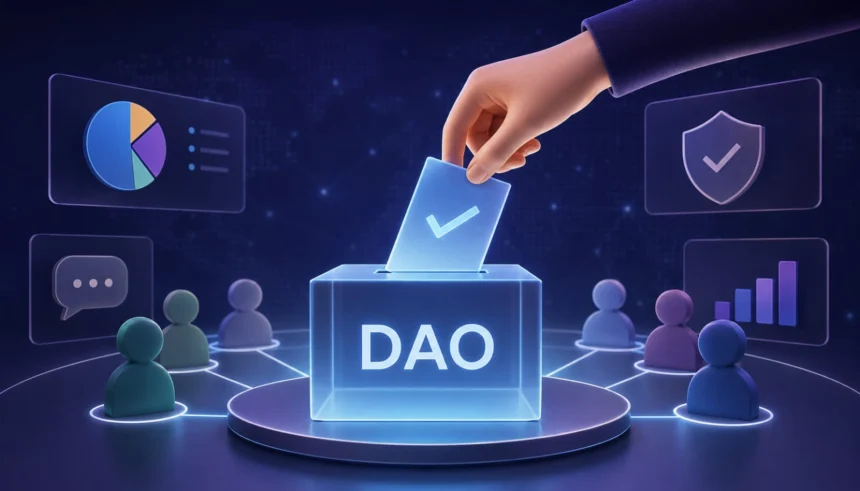
Once you have thoroughly analyzed a proposal and engaged with the community, it is time to cast your vote. The process varies depending on whether the DAO uses an off chain platform like Snapshot or requires an on chain transaction.
For Snapshot votes, simply connect your wallet to the platform and select your preferred option. These votes are gas free as they do not directly interact with the blockchain. For on chain votes, you will need to approve a transaction from your wallet, which will incur a gas fee. Always double check the proposal details and the voting options before confirming your transaction. Ensure your wallet is secure and confirm your vote has been registered on the respective governance portal.
Beyond Voting: Sustained Engagement Builds Influence
Participation in DAO governance is not a one time event; it is an ongoing commitment. To truly influence a DAO’s direction, consider consistent engagement beyond just voting. This includes contributing to discussions, proposing new ideas, and even drafting your own proposals.
Building a reputation as a thoughtful and active community member can lead to opportunities for leadership, such as becoming a delegate or joining a working group. The more you contribute, the more your voice will be heard, transforming you from a passive token holder into a true stakeholder in the decentralized future. For instance, early and consistent contributors to MakerDAO have often ascended to key roles within the ecosystem.
The TCB View
TCB believes that active participation in DAO governance is increasingly crucial for the healthy evolution of the Web3 ecosystem. We see a significant opportunity for individuals to shape the future of digital economies, moving beyond passive investment into true ownership and stewardship. The risk lies in the current low voter turnout, with many proposals struggling to meet quorum requirements of even 1% of total tokens, allowing concentrated power to wield disproportionate influence.
Well informed, engaged participants who dedicate time to proposal analysis and community discussion ultimately win, driving innovation and accountability. Conversely, passive token holders risk seeing their assets managed by a small, potentially self interested, minority. Watch for the emergence of more intuitive governance tooling and educational resources that lower the barrier to entry, aiming for a 50% increase in unique voter participation across major DAOs by the end of 2025.