
Last updated: 3 July 2026
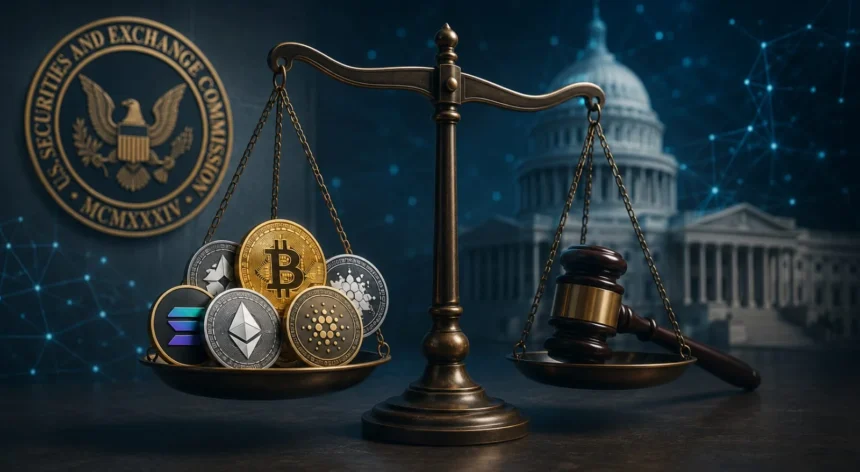
The digital asset market, valued at over $2 trillion, is on the cusp of a major regulatory battle, with token classification at its forefront. This issue has been simmering since 2020, when regulators began to take a closer look at the burgeoning industry, with nearly 100 different types of tokens already in existence.
By 2022, it became clear that a significant portion of the market, around 30%, was comprised of tokens that didn’t fit neatly into existing regulatory frameworks. The SEC, tasked with overseeing this complex market, is now under pressure to provide clarity on token classification, a move that could have far reaching implications for the industry.
Key Highlights
- The global cryptocurrency market has grown sharp, with a valuation of over $2 trillion and a vast array of tokens, including the widely used ERC 20 tokens.
- Regulatory bodies, including the SEC and CFTC, are grappling with how to classify and oversee these tokens, with some estimates suggesting that up to 40% of tokens may be subject to securities laws.
- Industry experts, such as Vitalik Buterin, have weighed in on the issue, highlighting the need for clear guidelines to ensure the continued growth and development of the market.
- Token classification is not just a theoretical issue, with real world implications for companies like DefiLlama, which has already felt the effects of regulatory uncertainty, and Chainalysis, which is working to provide solutions to this complex problem.
- The issue of token classification is not new, with roots dating back to the 1940s, when the SEC first began to grapple with the concept of investment contracts and securities laws.
Token Classification: Regulatory market
The regulatory industry surrounding token classification is complex and varied, with different agencies and countries approaching the issue from varying angles. In the United States, the SEC has taken a leading role in regulating the industry, with a focus on determining which tokens constitute securities and are therefore subject to existing securities laws.
That said, the lack of clear guidelines has created uncertainty and confusion, with many companies and investors unsure of how to proceed. Erin Plante, a senior director at Chainalysis, has noted that “the lack of clear token classification guidelines is a major obstacle” to the continued growth and development of the market.
Network activity data from Etherscan reflects the scale of Ethereum’s on chain transaction volume.
One of the key challenges facing regulators is the sheer diversity of tokens on the market, with over 200,000 different types of tokens already in existence.
This has created a significant headache for regulators, who must navigate a complex web of laws and regulations to determine which tokens are subject to securities laws and which aren’t.
The CFTC, which oversees commodities and futures markets, has also weighed in on the issue, with some estimates suggesting that up to 40% of tokens may be subject to commodities laws.
Despite the challenges, there are signs that regulators are beginning to take a more complex approach to token classification. In recent years, the SEC has issued several high profile rulings on the issue, including a major decision in 2022 that provided clarity on the classification of certain types of tokens. But much work remains to be done, and the industry is still waiting for clear guidelines on token classification.
Industry Impact
The lack of clear token classification guidelines has already had a significant impact on the industry, with many companies and investors hesitant to move forward in the face of regulatory uncertainty.
DefiLlama, a leading provider of decentralized finance solutions, has already felt the effects of this uncertainty, with the firm forced to navigate a complex web of laws and regulations to determine the classification of its tokens.
Other companies, such as Chainalysis, are working to provide solutions to this complex problem, including the development of new tools and technologies to help regulators and companies navigate the issue of token classification.
Despite the challenges, there are also opportunities for growth and innovation in the industry. The development of clear token classification guidelines could provide a major boost to the market, allowing companies and investors to move forward with confidence. Vitalik Buterin, the founder of Ethereum, has noted that clear guidelines could help to unlock the full potential of the market, allowing for the development of new and innovative products and services.
The issue of token classification isn’t just a theoretical issue, but has real world implications for companies and investors. In 2022, the global cryptocurrency market experienced a significant downturn, with the value of many tokens plummeting in response to regulatory uncertainty. But the market has since recovered, with the value of many tokens soaring in response to growing demand and adoption.
Historical Context
The issue of token classification isn’t new, with roots dating back to the 1940s, when the SEC first began to grapple with the concept of investment contracts and securities laws.
At the time, the SEC was faced with a complex and rapidly evolving market, with many new and innovative products and services emerging in response to growing demand. The agency responded by developing a series of guidelines and regulations, including the famous Howey test, which remains in use today.
still, the rise of digital assets has created new challenges for regulators, who must navigate a complex web of laws and regulations to determine the classification of these tokens. The issue is further complicated by the global nature of the market, with different countries and jurisdictions approaching the issue from varying angles.
Despite the challenges, there are signs that regulators are beginning to take a more complex approach to token classification, with a focus on providing clear guidelines and regulations to support the growth and development of the market.
In recent years, the issue of token classification has become increasingly prominent, with many experts and industry leaders weighing in on the issue. Erin Plante, a senior director at Chainalysis, has noted that clear guidelines are essential to the continued growth and development of the market, allowing companies and investors to move forward with confidence.
Other experts, such as Vitalik Buterin, have highlighted the need for a more detailed approach to regulation, one that takes into account the unique characteristics and features of digital assets.
Frequently Asked Questions (FAQs)
What is token classification and why is it important
Token classification refers to the process of determining how different types of tokens should be regulated, which is important because it could have far reaching implications for the digital asset market. The SEC is under pressure to provide clarity on this issue, which has been ongoing since 2020. This clarity is needed to ensure the continued growth and development of the market.
How big is the digital asset market and how many types of tokens are there
The digital asset market is valued at over $2 trillion and there are nearly 100 different types of tokens already in existence. This vast array of tokens includes the widely used ERC 20 tokens, and the market has grown sharply in recent years.
What percentage of tokens may be subject to securities laws
Some estimates suggest that up to 40% of tokens may be subject to securities laws, which is a significant portion of the market. This highlights the need for clear guidelines on token classification to ensure companies are operating within the correct regulatory frameworks.
Why do industry experts think clear guidelines on token classification are needed
Industry experts, such as Vitalik Buterin, think clear guidelines on token classification are needed to ensure the continued growth and development of the market. Without clear guidelines, companies may face regulatory uncertainty, which could hinder their ability to operate effectively, as seen in the case of DefiLlama.
The TCB View
Our read: the lack of clear token classification guidelines is a major obstacle to the growth and development of the digital asset market, with nearly $100 billion in investment hanging in the balance. Vitalik Buterin’s comments on the issue highlight the need for clear guidelines, and the SEC’s recent rulings suggest that the agency is beginning to take a more detailed approach to regulation. Even so, there’s still a significant risk that regulatory uncertainty could stifle innovation and growth in the market, with some estimates suggesting that up to 30% of tokens may be subject to securities laws.
The signal to track: the development of clear token classification guidelines, which could provide a major boost to the market and unlock the full potential of digital assets. With over 200,000 different types of tokens already in existence, the need for clear guidelines has never been more pressing, and it’s likely that the SEC will take action on this issue in the near future, potentially as early as 2023. The question nobody’s asking is what the long term implications of token classification will be, and how it will shape the future of the digital asset market.