
Last updated: 3 July 2026
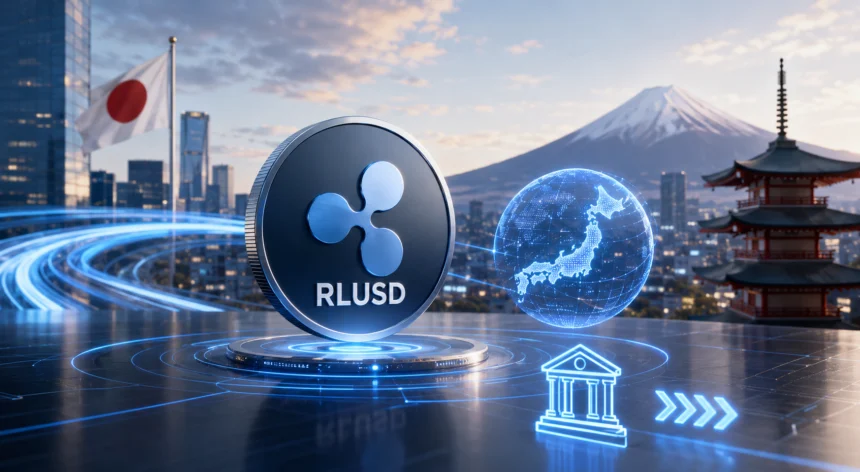
Ripple has launched its stablecoin Ripple USD, known as RLUSD, in Japan together with SBI Group, after approval from the country’s Financial Services Agency. Customers can now access the token through SBI VC Trade’s VCTRADE platform, opening the regulated, dollar referenced asset to both institutional and retail users. It is the clearest sign yet that Japan’s new rules are pulling foreign stablecoins into the regulated mainstream.
This is a News report. The launch matters because Japan reshaped its stablecoin framework this month, and RLUSD is one of the first foreign issued tokens to enter under it. For context on the local push, see our coverage of SBI’s trust bank backed stablecoin JPYSC and how Japan’s largest banks plan a joint stablecoin.
Key Highlights
- Ripple launched RLUSD in Japan with SBI Group after approval from the Japan Financial Services Agency.
- The token is available through SBI VC Trade’s VCTRADE platform for both institutional and retail users.
- Japan’s framework, effective June 1, 2026, lets qualifying foreign stablecoins operate as regulated electronic payment instruments.
- RLUSD’s market capitalization sits near $1.59 billion, down from an early June peak of $1.8 billion but up roughly 271% over the past year.
- The launch fulfills a memorandum of understanding signed in August 2025 and builds on a Ripple and SBI partnership dating to 2016.
Japan Opens the Door to Foreign Stablecoins
Japan reshaped its stablecoin rules this month. A new framework took effect on June 1, letting qualifying foreign stablecoins operate as regulated payment tools. Under the rules, foreign issued stablecoins are classified as electronic payment instruments under the Payment Services Act, and RLUSD is categorized as a new type of instrument within that structure.
That regulatory clarity is the real story. It places RLUSD inside the same supervised perimeter as domestic offerings, rather than leaving it in a gray zone. The shift fits the broader trend we track as stablecoin regulation tightens worldwide and as institutions weigh how reserve management reshapes the stablecoin market.
What Ripple Said
Ripple’s Senior Vice President of Stablecoins, Jack McDonald, framed RLUSD as a bridge for payments, tokenization, and collateral management, linking Japanese businesses to global liquidity.
“Japan has long been a leader in digital asset adoption, underpinned by both regulatory clarity and financial innovation. This launch marks an important step in expanding access to transparent, regulated USD backed stablecoins like RLUSD for financial institutions, consumers, and businesses in Japan,” McDonald said in the company’s announcement.
The launch fulfills a memorandum of understanding signed in August 2025 and builds on a Ripple and SBI partnership that dates back to 2016. It also reflects SBI’s broader XRP strategy, which expanded this year as XRP gained a spot listing on Rakuten Wallet. The move slots into the wider institutional embrace of on chain settlement we have followed in tokenization forecasts from Standard Chartered.
What It Means for the Market
RLUSD has cooled since its early June peak. Its market capitalization hit a record of $1.8 billion then and has since slipped to about $1.59 billion, according to DeFiLlama data. Even with that pullback, the market cap remains up roughly 271% over the past year, a sign of how quickly the token has scaled from a standing start.
The open question is whether RLUSD can challenge incumbents in Japan’s regulated market, where it will compete for attention against bank led projects and dollar tokens already in circulation. The Japan entry follows RLUSD’s expansion into other regulated markets, and it lands as banking rails move past a single stablecoin winner. Demand will also depend on whether Japanese institutions treat it as settlement infrastructure rather than a trading chip, a distinction that has shaped XRP’s own market behavior this year, and one that echoes the race to build settlement across borders.
Frequently Asked Questions (FAQs)
What did Ripple launch in Japan
How is RLUSD regulated in Japan
What is RLUSD’s market capitalization
How long have Ripple and SBI worked together
The TCB View
Our read: the headline is a product launch, but the substance is regulatory access. By entering under Japan’s new framework rather than around it, RLUSD gains something money cannot buy quickly, which is supervised legitimacy in one of the world’s most demanding markets. That is a more durable advantage than a temporary lead in market cap.
The signal to track is adoption by Japanese financial institutions, not the token’s price. RLUSD has already slipped from $1.8 billion to $1.59 billion since early June, so spot demand is volatile. The real test is whether SBI’s distribution turns RLUSD into working settlement rails for payments and tokenization. If it does, the 271% yearly growth will look like a beginning rather than a peak. The question nobody is asking is what happens to domestic yen stablecoins once a regulated dollar option is sitting on the same platform.