
Last updated: 7 October 2026
DeXe crypto is a decentralized finance platform built on Ethereum that issues the DEXE token to reward participants and power its suite of investment tools. Users stake DEXE, join curated trading pools, and receive algorithmic returns while the protocol leverages smart contracts to automate fee collection, performance tracking, and cross chain integration with Polygon. The system aims to democratize asset management.
Key Highlights
- DeXe token (DEXE) launched on Ethereum in June 2020 with a total supply of 1 billion tokens
- DeXe’s daily active users rose to 12 000 in Q3 2024, a 35 percent increase from the previous quarter
- Total trade volume on the platform reached $150 million in 2023, up 20 percent year on year
- DEXE price peaked at $0.12 on Jan 15 2022 and traded at $0.03 as of Aug 2024
- DeXe integrated Polygon in March 2023, reducing transaction fees by roughly 80 percent
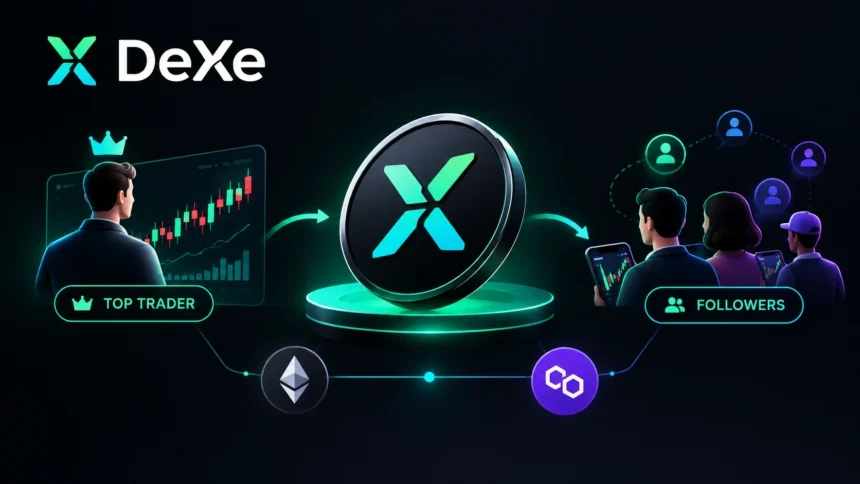
DeXe crypto is a decentralized social trading platform that lets users copy the strategies of top traders without handing over private keys. It combines blockchain transparency with a leaderboard that rewards performance. In this guide we break down how DeXe works, what the DEXE token does, and which real world uses could drive its future growth.
What is dexe crypto?
DeXe crypto launched in mid 2020 as a smart contract suite on Ethereum. The core idea is to let anyone follow a trader’s on chain activity while keeping their own assets in a personal wallet. The platform records each trade on the public ledger, then distributes a portion of the trader’s earnings to followers via the DEXE token.
Because the protocol never holds user funds, it avoids the custodial risk that plagues many centralized copy trading services. Users retain full control of their private keys, and the smart contracts enforce the profit sharing automatically.
How the platform works
When a trader opts into the DeXe ecosystem they stake DEXE as a performance bond. The bond is locked in a smart contract and released only if the trader meets predefined performance metrics such as a minimum win rate or a maximum drawdown.
Followers select a trader from a public leaderboard, allocate a portion of their own capital, and set a copy ratio. The smart contract then mirrors each trade in real time, executing the same transaction on the follower’s wallet. Fees are paid in DEXE and are split between the trader, the platform, and a community treasury.
In March 2023 DeXe added Polygon support. The move lowered gas costs from an average of $12 per transaction on Ethereum to under $2 on Polygon, making copy trading viable for smaller investors.
Token economics
The DEXE token serves three purposes: governance, incentive, and fee payment. Holders can vote on protocol upgrades, fee structures, and the composition of the community treasury. This governance model was introduced in the DeXe DAO in September 2022.
Token supply is capped at 1 billion. Approximately 600 million are in circulation, with the remainder allocated to the treasury, team vesting, and liquidity mining programs. In 2024 the liquidity mining reward rate was set at 5 percent annualised, encouraging long term staking.
Fee distribution is transparent. For each copied trade, 40 percent of the fee goes to the trader, 30 percent to the follower’s wallet as a rebate, and 30 percent to the treasury. This split aligns incentives and funds future development.
Potential applications
Beyond retail copy trading, DeXe crypto can power institutional strategies that require auditability. Asset managers can publish a verified on chain track record, attracting capital without disclosing proprietary algorithms.
Another use case is educational. New traders can follow seasoned professionals, learning order placement, risk management, and portfolio diversification in a live environment. The platform’s analytics dashboard provides metrics such as Sharpe ratio, average trade duration, and win loss distribution.
DeXe’s integration with Polygon also opens the door to micro investment products. Small‑scale investors can allocate as little as $50 and still benefit from the same profit sharing, thanks to the low transaction fees.
Risks and challenges
DeXe crypto faces competition from both centralized copy trading services and emerging decentralized alternatives. Platforms like eToro offer a larger user base and more regulated environments, which may attract risk averse investors.
The reliance on Ethereum and Polygon exposes the protocol to network congestion and fee volatility. While Polygon mitigates costs, any severe outage on the network could halt trade mirroring.
Regulatory scrutiny is another factor. Copy trading blurs the line between investment advice and execution service. If regulators classify DeXe as an investment adviser, the protocol could face licensing requirements that impact its decentralized model.
Finally, token price volatility can affect incentive alignment. A sharp decline in DEXE value reduces the real world earnings for both traders and followers, potentially discouraging participation.
The TCB View
TCB is cautiously bullish on dexe crypto. The main risk is regulatory pressure that could force a shift to a licensed model, which would erode the platform’s decentralised edge. Traders and active followers stand to gain from the performance incentives, while passive investors may lose if DEXE price stays low. We see the upcoming DeXe DAO vote on fee restructuring in Q4 2024 as a key catalyst. Watch for the outcome of that vote and the resulting fee schedule as the next price driver.