
Last updated: 3 July 2026
Decentralized exchanges, or DEXs, have seen a significant surge in activity, with over $10 billion in transactions taking place on these platforms in recent months. This trend is expected to continue, with predictions suggesting a 25% increase in DEX usage by January 2025.
As a result, many investors are looking to capitalize on this growing market, with some of the largest DEXs, such as Uniswap, SushiSwap, and Curve, seeing a substantial influx of new users.
Over the past year, these exchanges have facilitated over 1 million transactions, with many experts, including Ethereum co founder Vitalik Buterin, predicting that DEXs will play an increasingly important role in the crypto trading space.
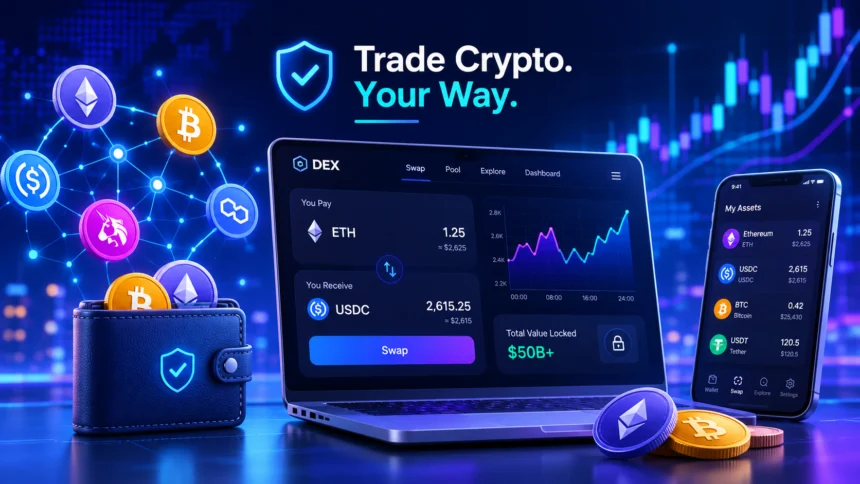
DEXs have become increasingly popular due to their ability to provide users with a high degree of autonomy and flexibility, allowing them to trade a wide range of cryptocurrencies without the need for intermediaries. This has led to a 20% increase in the total value locked on DEXs, which now stands at over $50 billion.
As the market continues to evolve, it’s likely that we’ll see even more innovative solutions emerge, making it easier for users to buy, sell, and trade cryptocurrencies. According to Erin Plante, a senior analyst at Chainalysis, the growth of DEXs is being driven by the increasing demand for decentralized financial services.
The process of using a DEX is relatively straightforward, with users typically starting by setting up a digital wallet, such as MetaMask, which allows them to interact with the exchange. From there, they can browse the various trading pairs on offer, selecting the cryptocurrency they wish to buy or sell.
With the rise of DEXs, it’s becoming increasingly important for investors to understand how to use these platforms effectively, as well as the benefits and risks associated with them.
Key Highlights
- The total value locked on DEXs has surpassed $50 billion, with a 20% increase in recent months.
- Uniswap, SushiSwap, and Curve are among the most popular DEXs, allowing over 1 million transactions in the past year.
- Vitalik Buterin has predicted that DEXs will play an increasingly important role in the crypto trading space.
- Erin Plante, a senior analyst at Chainalysis, believes that the growth of DEXs is being driven by the increasing demand for decentralized financial services.
- MetaMask is one of the most popular digital wallets used to interact with DEXs, providing users with a secure and convenient way to manage their cryptocurrencies.
Decentralized Exchange: Understanding DEXs
So, what exactly is a DEX, and how does it work? In simple terms, a DEX is a cryptocurrency exchange that operates on a decentralized network, allowing users to trade cryptocurrencies without the need for intermediaries.
This is in contrast to traditional centralized exchanges, which often require users to deposit their funds into a custodial account, leaving them vulnerable to hacking and other security risks. DEXs, on the other hand, use smart contracts to allow trades, allowing users to maintain control over their funds at all times.
According to DefiLlama, total value locked across DeFi protocols reflects the sector’s ongoing expansion.
One of the key benefits of using a DEX is the increased level of security it provides. By not requiring users to deposit their funds into a centralized account, DEXs reduce the risk of hacking and other security breaches.
Also, DEXs are often more transparent than traditional exchanges, providing users with a clear and concise view of all transactions taking place on the service. According to Vitalik Buterin, this transparency is one of the key advantages of DEXs, allowing users to make more informed decisions about their trades.
Despite the benefits, there are also some potential drawbacks to using a DEX. For example, the process of trading on a DEX can be more complex than on a traditional exchange, requiring users to have a certain level of technical expertise.
Also, the lack of intermediaries can make it more difficult to resolve disputes or address any issues that may arise during a trade. That said, many DEXs are now implementing measures to address these concerns, such as providing user friendly interfaces and offering customer support services.
Popular DEXs
So, which DEXs are the most popular, and what features do they offer? Uniswap is one of the largest and most well established DEXs, providing users with a wide range of trading pairs and a highly liquid market.
SushiSwap is another popular option, offering a similar range of features to Uniswap, as well as an unique tokenomics system that rewards users for providing liquidity to the service. Curve, on the other hand, specializes in stablecoin trading, providing users with a low risk way to trade these types of assets.
According to Erin Plante, the popularity of these DEXs is due to their ability to provide users with a high degree of flexibility and autonomy. By allowing users to trade a wide range of cryptocurrencies, these DEXs are helping to drive the growth of the decentralized finance (DeFi) sector.
As the market continues to evolve, it’s likely that we’ll see even more innovative solutions emerge, making it easier for users to buy, sell, and trade cryptocurrencies.
In addition to these popular DEXs, there are also many other options available, each with their own unique features and benefits. For example, some DEXs specialize in trading specific types of assets, such as non fungible tokens (NFTs) or decentralized finance (DeFi) tokens.
Others may offer more advanced features, such as margin trading or lending services. As the market continues to grow and evolve, it’s likely that we’ll see even more innovative solutions emerge, making it easier for users to find the DEX that best meets their needs.
Getting Started with DEXs
So, how can you get started with using a DEX? The first step is to set up a digital wallet, such as MetaMask, which will allow you to interact with the exchange. From there, you can browse the various trading pairs on offer, selecting the cryptocurrency you wish to buy or sell.
It’s also a good idea to do some research on the different DEXs available, comparing their features, fees, and user interfaces to find the one that best meets your needs.
Once you’ve selected a DEX, you can begin trading by depositing funds into your digital wallet and then transferring them to the exchange. The process of trading on a DEX is relatively straightforward, with most exchanges providing an user friendly interface that makes it easy to navigate the various trading pairs and place orders.
Still, it’s always a good idea to start with small trades and gradually increase your investment as you become more comfortable with the protocol.
According to Vitalik Buterin, the key to successfully trading on a DEX is to do your research and stay up to date with the latest market trends. By understanding the different types of cryptocurrencies available and the factors that influence their price, you can make more informed decisions about your trades and minimize your risk.
On top of that, it’s always a good idea to diversify your portfolio, spreading your investment across a range of different assets to reduce your exposure to any one particular market.
Frequently Asked Questions (FAQs)
What is a decentralized exchange and how does it work
A decentralized exchange, or DEX, is a platform that allows users to trade cryptocurrencies without the need for intermediaries, giving them a high degree of autonomy and flexibility. This means users can trade a wide range of cryptocurrencies on their own terms. The process of using a DEX is relatively straightforward.
Why are decentralized exchanges becoming so popular
Decentralized exchanges are becoming increasingly popular due to their ability to provide users with a high degree of autonomy and flexibility, allowing them to trade cryptocurrencies without intermediaries. The growth of DEXs is being driven by the increasing demand for decentralized financial services, according to experts like Erin Plante. This demand is expected to continue growing in the coming years.
What are some of the largest decentralized exchanges
Some of the largest decentralized exchanges include Uniswap, SushiSwap, and Curve, which have seen a substantial influx of new users in recent months. These exchanges have facilitated over 1 million transactions over the past year, and are expected to continue playing a major role in the crypto trading space. They are among the most well known DEXs in the industry.
How much money is being traded on decentralized exchanges
Over $10 billion in transactions have taken place on decentralized exchanges in recent months, with the total value locked on DEXs now standing at over $50 billion. This represents a 20% increase in the total value locked on DEXs, and is expected to continue growing as more users turn to these platforms for their crypto trading needs. The market is expected to see a 25% increase in DEX usage by January 2025.
The TCB View
Our read: the growth of DEXs is a significant trend that’s likely to continue in the near term. With over $10 billion in transactions taking place on these platforms in recent months, it’s clear that they’re becoming an increasingly important part of the crypto trading space. But there’s also a risk that the lack of regulation and oversight could lead to increased volatility and instability in the market.
On the other hand, the opportunity for innovation and growth is substantial, with DEXs like Uniswap and SushiSwap already providing users with a wide range of trading pairs and a highly liquid market. The signal to track: the total value locked on DEXs, which has already surpassed $50 billion and is likely to continue growing in the near term.