
Last updated: 21 July 2026
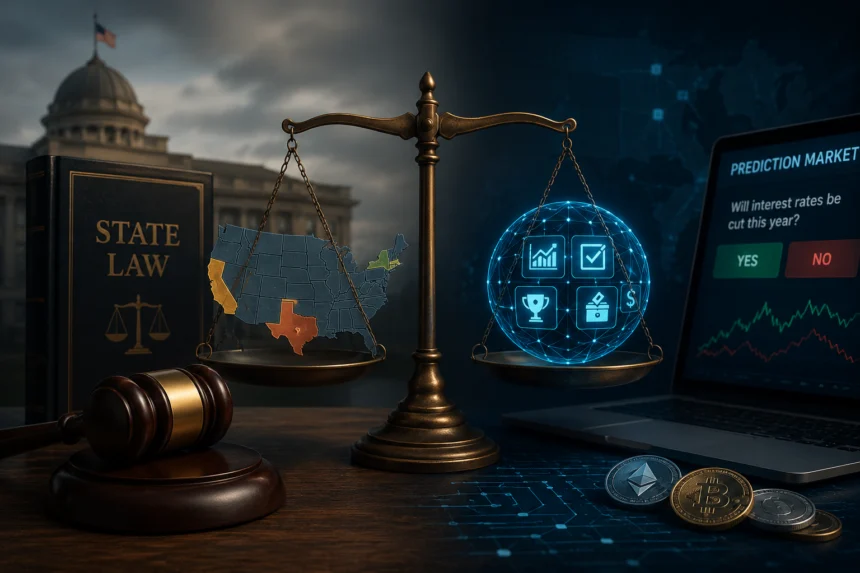
Former SEC, CFTC Chair Gary Gensler argues that prediction markets don’t overrule state regulationsFormer sec: The total crypto market added about $7.10 billion in 24 hours (+0.3%), computed from CoinGecko global data on 2026-06-12. Gary Gensler, who once chaired both the Securities and Exchange Commission and the Commodity Futures Trading Commission, recently asserted that prediction markets don’t supersede state level regulations.
This clarification establishes a critical boundary for the burgeoning Web3 sector. His remarks, delivered during a keynote address at the Digital Assets Policy Forum last Tuesday, emphasize the enduring authority of established legal frameworks. It’s a direct challenge to the notion of unfettered decentralization. (via SEC)
Key Highlights
- Gary Gensler previously served as the top regulator for both the SEC and the CFTC.
- He recently addressed the issue of prediction markets and their interaction with state laws.
- Gensler firmly stated that these emerging markets do not hold power over existing state regulations.
- His comments signal ongoing federal vigilance toward decentralized finance innovation.
The Regulator’s Standpoint
Few individuals possess Gary Gensler’s unique breadth of experience across major financial regulatory bodies. Having led both the SEC and the CFTC, he brings an unparalleled perspective to the evolving digital asset space. His insights into market structure and compliance carry significant weight.
Gensler’s address made it clear. The assumption that decentralized technologies can operate outside traditional legal boundaries is a fundamental misinterpretation. He underscored the enduring power of state laws, a concept sometimes overlooked by those focused solely on federal oversight or global crypto networks. This perspective is a direct challenge to a common narrative within the Web3 community.
His remarks suggest a future where digital asset platforms, including prediction markets, must navigate a complex web of both federal and state regulations. It’s a reminder that innovation doesn’t grant immunity. Compliance remains most important.
Prediction Markets Under Scrutiny
Prediction markets, platforms where users bet on future events ranging from political outcomes to commodity prices, have seen substantial growth. Platforms like Polymarket and Kalshi have attracted hundreds of millions of dollars in activity. These decentralized systems often aim to provide real time insights into collective human foresight. They offer an unique way to aggregate information.
but their legal classification remains deeply ambiguous. Regulators grapple with whether these markets constitute illegal gambling, unregistered securities, or unregulated derivatives. Many states maintain strict laws regarding wagering and financial instruments. This presents a formidable challenge for market operators.
Gensler’s point is simple: a prediction market created on a blockchain doesn‘t magically escape these long standing state level definitions. A transaction is still a transaction. The technology itself offers no shield against regulatory purview. This clarifies a point many project founders prefer to ignore.
Navigating the Patchwork of State Laws
The United States operates under a dual system of regulation, covering both federal and state jurisdictions. This creates a hard environment for any industry, but especially for early stage technologies like decentralized finance. Dozens of states have their own specific laws governing gambling, financial services, and consumer protection. These laws differ widely across the nation.
A prediction market operating nationally might find itself compliant in one state but in direct violation in an adjacent one. This patchwork approach makes broad based compliance extremely difficult. Developers face a choice. Either restrict access based on geographic location or risk running afoul of multiple state attorneys general. There’s no easy answer.
Gensler’s comments suggest that federal authorities are unlikely to preempt state efforts to regulate these markets. Instead, he signaled a concurrent enforcement approach. Project teams should prepare for scrutiny from both Washington DC and state capitals simultaneously. It’s a warning against simplifying the regulatory industry.
Implications for Web3 Development
For Web3 developers and entrepreneurs, Gensler’s pronouncement carries significant implications. The dream of building truly permissionless, global applications often clashes with jurisdictional realities. Ignoring state specific rules can lead to substantial fines, legal challenges, and reputational damage. This is a costly lesson many have learned.
Companies building prediction market protocols must now prioritize legal analysis on a state by state basis. This adds considerable overhead to product development. It could slow down innovation. Legal teams must become integral to product design from day one. This changes the entire development paradigm.
And Gensler’s stance reinforces the idea that regulators will look past the technological veneer. They will instead focus on the underlying economic function. If a prediction market functions like a gambling operation or an unregistered exchange, it will be treated as such, regardless of its blockchain backend. This is a sobering truth for many in the space. It’s a pragmatic approach to regulation.
Frequently Asked Questions (FAQs)
What did Gary Gensler say about prediction markets?
Gary Gensler, who used to lead both the SEC and CFTC, recently stated that prediction markets do not override state level regulations. This means that even with new Web3 technologies, existing laws still apply.
Who is Gary Gensler?
Gary Gensler is a highly experienced financial regulator who has chaired both the Securities and Exchange Commission (SEC) and the Commodity Futures Trading Commission (CFTC). His background gives him a unique perspective on digital assets and their regulation.
Do prediction markets have to follow state laws?
Yes, according to Gary Gensler, prediction markets must still adhere to state level regulations. He emphasized that these emerging markets do not supersede established legal frameworks.
What does this mean for Web3 and decentralization?
Gensler’s comments are a direct challenge to the idea of completely unfettered decentralization in the Web3 sector. They signal that federal regulators will continue to monitor decentralized finance innovations and ensure compliance with existing laws.
The TCB View
Our read: Gensler’s comments aren’t merely an observation; they’re a stark warning shot across the bow of the prediction market sector. The assumption that decentralized protocols operate beyond traditional law is a fundamental misunderstanding, especially concerning state authority, which is formidable and diverse. The risk is real: innovation could stall under the weight of fragmented, complex regulations, potentially forcing many projects to restrict United States users.
The opportunity lies with developers who proactively engage with state level legal frameworks, building compliance into their core architecture to demonstrate legitimate innovation. The signal to track: how specific states like New York or California initiate enforcement actions against existing prediction market platforms.