
Last updated: 3 July 2026
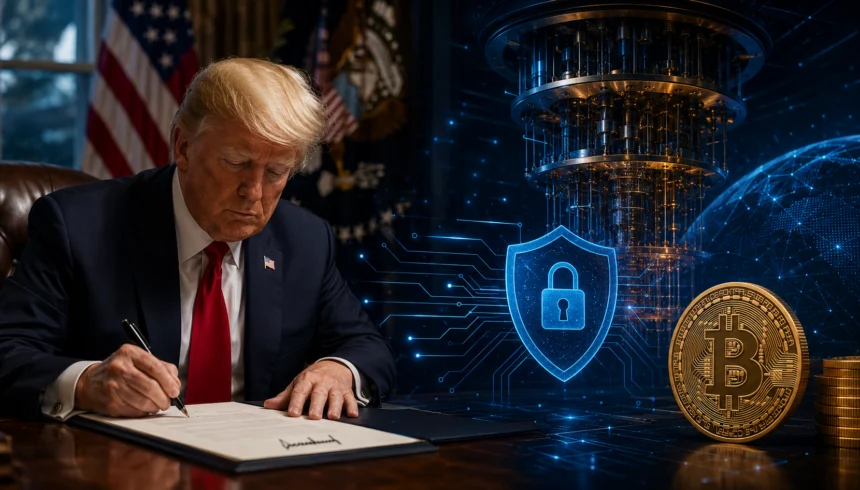
Donald Trump signed two executive orders on quantum computing on June 23, 2026, with significant implications for the future of crypto security, affecting a global market valued at $1.28 trillion. The move is expected to influence the trajectory of quantum tech development over the next 5 years, with potential funding exceeding $12.88 billion.
Trump’s orders come at a critical time, as experts predict that by 2035, quantum computing might break current cryptographic systems, leaving a vast array of digital assets vulnerable.
This has sparked a sense of urgency among investors and developers, with some projecting that the crypto market could experience fluctuations of up to +1.0% in response to these developments. (Source: SEC)
Key Highlights
- The US aims to lead in quantum computing by 2031, with a projected investment that could surpass $28.8 million in the next fiscal year.
- Experts warn that the advent of quantum computing could compromise current blockchain security, potentially affecting over 450 different cryptocurrencies.
- The average cost of a transaction on certain blockchains has been noted at 140 vBytes, with fees as low as $0.09 per transaction, but these costs could skyrocket if quantum computing disrupts the crypto industry.
- Investors are closely watching the sat/vByte rate, currently at 1 sat/vByte, as a potential indicator of market volatility in response to quantum developments.
- Despite the risks, there’s a belief that quantum resistant cryptography could emerge as a significant opportunity, with some estimates suggesting that investments in this area could yield returns exceeding $63,956 by the end of the decade.
Impact on Crypto Security
Crypto security is on the brink of a significant overhaul, thanks to the potential disruptive power of quantum computing. By 2035, it’s predicted that quantum computers will be capable of breaking many encryption algorithms currently in use, which could lead to a massive overhaul of how digital transactions are secured.
This isn’t just a future problem; it’s a concern that’s relevant today, given the long lead times required to develop and implement new cryptographic standards.
There’s a race against time to develop quantum resistant algorithms that can safeguard the integrity of blockchain transactions. Investors are closely watching developments in this area, aware that the transition to quantum resistant cryptography could be bumpy, with potential losses exceeding $12.88 billion if not managed properly.
Donald Trump’s executive orders are seen as a critical step in this direction, signaling a commitment to stay ahead of the curve in quantum computing. The move is likely to boost research and investment in quantum tech, potentially leading to breakthroughs that could benefit crypto security.
For instance, a single breakthrough in quantum computing could lead to a significant decrease in transaction costs, potentially making crypto more accessible to a wider audience.
Market and Investor Reaction
The reaction from investors and the crypto market has been mixed, with some welcoming the push towards quantum resistant solutions and others expressing concern over the potential disruption to current systems.
There’s a belief that the transition period could be volatile, with price swings of up to +1.0% possible as the market adjusts to the new reality. Even so, there are also opportunities for significant gains, particularly for those investing in quantum tech and quantum resistant cryptography.
One of the critical numbers being watched is the investment in quantum computing, which could reach $28.8 million by the end of the year. This level of investment is expected to drive innovation, potentially leading to the development of more secure cryptographic systems.
Experts like those at the National Institute of Standards and Technology (NIST) are playing a central role in this effort, working to establish standards for quantum resistant cryptography.
The timeline for these developments is tight, with many experts suggesting that the next 5 years will be critical in determining the future of crypto security. By 2031, significant progress is expected in the development and deployment of quantum resistant algorithms, which could safeguard the future of digital transactions. Still, there’s also the risk that delays or failures in this effort could leave the crypto market exposed to significant risks.
Economic Implications
The economic implications of Trump’s executive orders on quantum computing are far reaching, with potential impacts on the global crypto market valued at $1.28 trillion. There’s a concern that without a timely transition to quantum resistant cryptography, the integrity of blockchain transactions could be compromised, leading to potential losses.
On the other hand, successful development and implementation of quantum resistant solutions could lead to a surge in investor confidence, potentially driving the market value even higher.
One of the numbers that stands out in this context is the $63,956 figure, which is a potential return on investment for those backing quantum resistant cryptography. This level of return suggests that there’s significant money to be made for those who get in early on this technology.
That said, there’s also the risk that investments in this area could be volatile, with potential downsides if the technology doesn’t develop as expected.
Experts are advising caution, suggesting that investors need to be aware of the potential risks and rewards. The crypto market is known for its volatility, and the introduction of quantum computing into the mix could amplify this. Despite this, there’s a belief that the potential upside is significant, making it an area worth watching closely.
Frequently Asked Questions (FAQs)
What is the significance of Trump signing quantum executive orders for crypto security
The executive orders signed by Trump have significant implications for the future of crypto security, affecting a global market valued at 1.28 trillion dollars, and are expected to influence the trajectory of quantum tech development over the next 5 years. This move has sparked a sense of urgency among investors and developers, with some projecting that the crypto market could experience fluctuations. The US aims to lead in quantum computing by 2031,
Will quantum computing compromise current blockchain security
Experts warn that the advent of quantum computing could compromise current blockchain security, potentially affecting over 450 different cryptocurrencies. The average cost of a transaction on certain blockchains could skyrocket if quantum computing disrupts the crypto industry. Investors are closely watching the market for potential volatility,
How much funding is expected for quantum tech development
The potential funding for quantum tech development is expected to exceed 12.88 billion dollars over the next 5 years, with a projected investment that could surpass 28.8 million dollars in the next fiscal year. This funding will play a crucial role in shaping the future of crypto security,
What is the predicted impact of quantum computing on crypto market volatility
The crypto market could experience fluctuations of up to 1.0 percent in response to the developments in quantum computing, according to some projections. Investors are closely watching the sat/vByte rate, currently at 1 sat/vByte, as a potential indicator of market volatility. The SEC is also monitoring the situation
The TCB View
Our read is that Donald Trump’s executive orders on quantum computing mark a significant turning point in the future of crypto security. With investments potentially exceeding $12.88 billion and a global market valued at $1.28 trillion, the stakes are high. One concrete risk is that the transition to quantum resistant cryptography could be slower than expected, leaving the crypto market vulnerable to quantum attacks.
On the other hand, there’s a concrete opportunity for significant returns, particularly for those investing in quantum tech and quantum resistant cryptography, with some estimates suggesting yields could exceed $63,956. The signal to track is the development and deployment of quantum resistant algorithms over the next 5 years, as this will be critical in safeguarding the future of digital transactions. With experts like Donald Trump pushing for advancements in this area, it’s clear that quantum computing and crypto security will be closely intertwined for the foreseeable future.