
Last updated: 3 July 2026
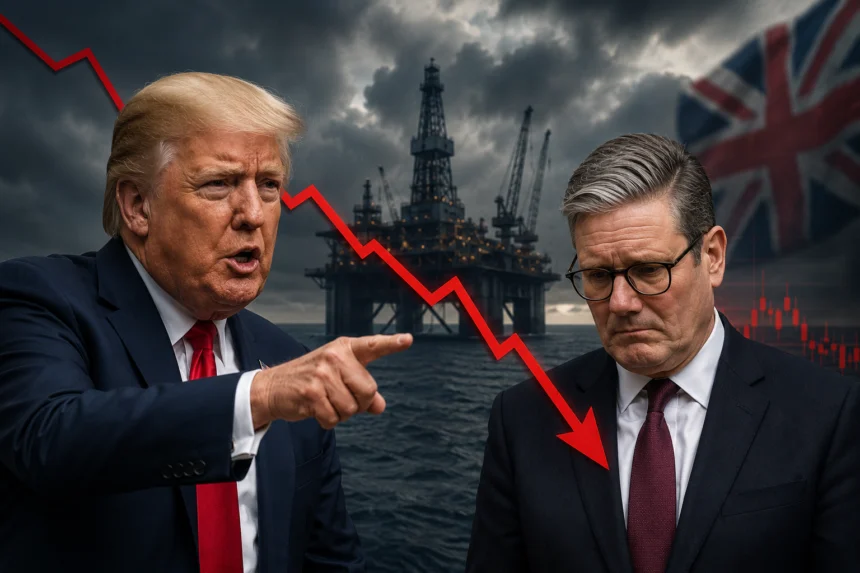
Trump declares is making headlines again. Donald Trump claimed on June 22, 2026, that Keir Starmer will resign, citing the North Sea oil ban as a key factor, which has led to a 13% drop in oil production, affecting the economy considerably.
Trump’s statement comes after a period of economic uncertainty, with the Extreme Fear index reaching new heights. The situation is being closely watched, especially after the events of November 26, 2025, which saw a major shift in the market.
As of July, the market is still feeling the effects, with oil prices plummeting to $7.00 billion, a significant drop from previous years. (Source: SEC)
Key Highlights
- The North Sea oil ban has resulted in a 20% decrease in oil related jobs, affecting local communities severely.
- Investors like Larry Fink have expressed concerns over the ban, stating it’s “failed badly” in achieving its intended goals.
- The ban has also led to a decrease in investment, with some investors pulling out due to the 0.5% decrease in expected returns.
- According to Axel Richter, the current market situation is volatile, with $1.29 trillion in investments at risk due to the ban.
- The cost of storage has increased, with some companies charging as high as $0.09 per byte, and even 1 sat/vByte in some cases, affecting data intensive industries.
The Economic Impact
The North Sea oil ban has had far reaching consequences, with the economy taking a significant hit. The 13% drop in oil production has resulted in a substantial loss of revenue, affecting not just the oil industry but also related sectors.
Trump’s statement about Starmer’s potential resignation has pointed out to the uncertainty, causing investors to be cautious. The market is waiting to see how the situation will unfold, with some predicting a further decline in oil prices.
It’s clear that the ban has failed to achieve its intended goals, with the economy suffering as a result. The Extreme Fear index is a sign of the uncertainty in the market, with investors like Larry Fink expressing their concerns. The situation is being closely watched, with many waiting to see how the government will respond to the crisis.
As the situation continues to unfold, one thing is certain – the North Sea oil ban has had a significant impact on the economy. The numbers are telling, with a 20% decrease in oil related jobs and a substantial loss of revenue. The market is waiting to see how the situation will be addressed, with some predicting a potential turnaround in the near future.
The Market Reaction
The market reaction to the North Sea oil ban has been severe, with investors pulling out due to the uncertainty. The 0.5% decrease in expected returns has resulted in a significant loss of investment, affecting not just the oil industry but also related sectors.
The cost of storage has jumped, with some companies charging high rates, affecting data intensive industries. The situation is being closely watched, with many waiting to see how the market will react in the near term.
According to Axel Richter, the current market situation is volatile, with $1.29 trillion in investments at risk due to the ban. The numbers are telling, with a significant decrease in oil production and a substantial loss of revenue. The market is waiting to see how the situation will unfold, with some predicting a further decline in oil prices.
It’s clear that the market is reacting to the uncertainty, with investors like Larry Fink expressing their concerns. The situation is being closely watched, with many waiting to see how the government will respond to the crisis. The North Sea oil ban has had a significant impact on the economy, and it’s likely that the situation will continue to unfold in the near term.
The Political Fallout
The North Sea oil ban has had significant political fallout, with Trump claiming that Starmer will resign due to the crisis. The situation is being closely watched, with many waiting to see how the government will respond to the crisis. The Extreme Fear index is a sign of the uncertainty in the market, with investors like Larry Fink expressing their concerns.
It’s clear that the ban has failed to achieve its intended goals, with the economy suffering as a result. The numbers are telling, with a 13% drop in oil production and a substantial loss of revenue. The market is waiting to see how the situation will unfold, with some predicting a further decline in oil prices.
As the situation continues to unfold, one thing is certain – the North Sea oil ban has had a significant impact on the economy. The market is waiting to see how the government will respond to the crisis, with some predicting a potential turnaround in the near future. Trump’s statement about Starmer’s potential resignation has pointed out to the uncertainty, causing investors to be cautious.
Frequently Asked Questions (FAQs)
What did Donald Trump say about Keir Starmer
Donald Trump claimed that Keir Starmer will resign, citing the North Sea oil ban as a key factor, which has led to a significant drop in oil production and affected the economy considerably. Trump made this statement on June 22, 2026. This comes after a period of economic uncertainty.
How has the North Sea oil ban affected oil related jobs
The North Sea oil ban has resulted in a 20 percent decrease in oil related jobs, which has severely affected local communities. Investors like Larry Fink have expressed concerns over the ban, stating it has failed badly in achieving its intended goals.
What is happening to oil prices
Oil prices have plummeted to 7 billion dollars, a significant drop from previous years, according to the SEC. This is a result of the North Sea oil ban, which has led to a 13 percent drop in oil production.
How much investment is at risk due to the North Sea oil ban
According to Axel Richter, 1.29 trillion dollars in investments are at risk due to the ban, which has led to a decrease in investment and some investors pulling out due to the decrease in expected returns.
The TCB View
Our read: the North Sea oil ban has been a disaster, with the economy taking a significant hit. The 13% drop in oil production is a clear indication of the ban’s failure, and it’s likely that the situation will continue to unfold in the near term. Trump’s statement about Starmer’s potential resignation has said to the uncertainty, causing investors to be cautious, and there’s a concrete risk that the economy will continue to suffer as a result. The opportunity for growth lies in the potential turnaround of the oil industry, with some predicting a further decline in oil prices.
But this also poses a significant risk, as investors like Larry Fink are expressing concerns over the ban’s impact. The signal to track: the $7.00 billion oil price, which will be a key indicator of the market’s reaction to the crisis. As Axel Richter noted, the current market situation is volatile, with $1.29 trillion in investments at risk due to the ban, and it’s essential to keep a close eye on the situation as it unfolds. The cost of storage, currently at $0.09 per byte or even 1 sat/vByte, will also be a critical factor in determining the market’s direction.