
Last updated: 3 July 2026
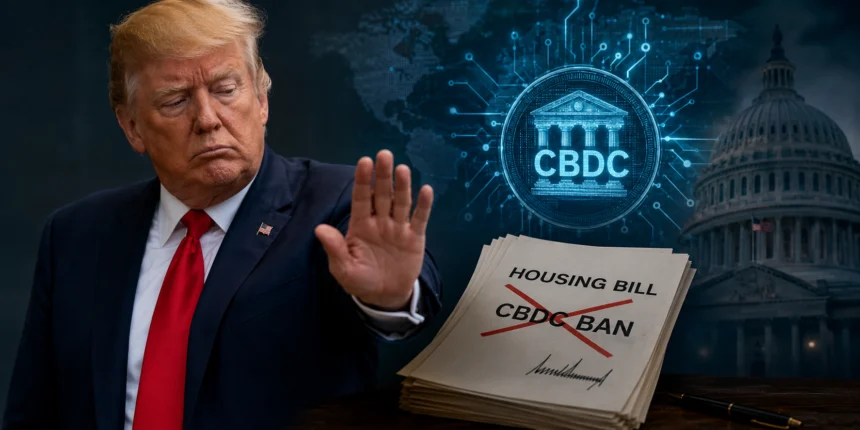
Trump scrapped the signing of a housing bill on June 24, 2026, that included a ban on central bank Key Highlights
The concept of CBDCs has been a topic of debate among financial experts, with some arguing that they’re of minor importance in the grand scheme of things. That said, others believe that CBDCs have the potential to upend the way we think about money and financial transactions. With the rise of digital currencies, many countries are exploring the possibility of creating their own CBDCs, which might compete with traditional fiat currencies. What such a move are far reaching, and it’s likely that we’ll see a significant shift in the global financial industry in the coming years. One of the main concerns about CBDCs is that they could be used to control and monitor financial transactions, potentially infringing on individuals’ right to privacy. This has led to a heated debate about the role of governments in regulating digital currencies, with some arguing that they should be left to self regulate. Trump’s decision to cancel the signing of the housing bill has pointed out fuel to the fire, with many wondering what this means for the future of financial regulation. There’s a growing sense of unease among financial experts, who are worried that the lack of regulation could lead to a Wild West scenario, where anything goes. This could have serious consequences for investors, who may be exposed to unscrupulous actors and scams. On the other hand, some argue that over regulation could stifle innovation and limit access to financial services, particularly for those in underserved communities. The regulatory environment for digital currencies is complex and often confusing, with different countries and jurisdictions having their own set of rules and regulations. In the US, for example, the SEC has been unclear about its stance on digital currencies, leading to a lack of clarity and certainty for investors. This has created a situation where some companies are reluctant to invest in digital currencies, fearing that they may be caught out by changing regulations. Trump’s decision to cancel the signing of the housing bill has pointed out to the confusion, with many wondering what this means for the future of financial regulation. Some lawmakers have argued that the move will embolden countries to develop their own digital currencies, potentially undermining the US dollar. Others have argued that the lack of regulation will lead to a surge in innovation, as companies are free to experiment and develop new products and services. One thing is certain, however: the regulatory environment for digital currencies is set to change dramatically in the coming years. With the rise of CBDCs and other digital currencies, governments and regulators will be forced to take a closer look at the rules and regulations that govern this space. It’s likely that we’ll see a significant shift in the way that digital currencies are regulated, with a greater emphasis on protecting investors and preventing illicit activity. The future of digital currencies is uncertain, but one thing is clear: they’re here to stay. With the rise of CBDCs and other digital currencies, we’re likely to see a significant shift in the way that we think about money and financial transactions. Some experts believe that digital currencies may replace traditional fiat currencies, while others argue that they will coexist alongside them. Trump’s decision to cancel the signing of the housing bill has pointed out to the uncertainty, with many wondering what this means for the future of digital currencies. That said, one thing is certain: the lack of regulation will create opportunities for innovation and growth. Companies like CoinGecko and Alternative.me are already capitalizing on the trend, providing data and analytics to investors and enthusiasts. There’s a growing sense of excitement among experts, who believe that digital currencies have the potential to disrupt the way we think about money and financial transactions. With the rise of CBDCs and other digital currencies, we’re likely to see a significant shift in the global financial sector, with new opportunities and challenges emerging all the time. Trump cancelled the signing of the housing bill that included a ban on central bank digital currencies, which was a significant setback for those who were hoping to see stricter regulations on CBDCs. This move has sent shockwaves through the financial sector, with many wondering what this means for the future of digital currencies. The bill had 25 co sponsors in the Senate, all of whom were pushing for stricter regulations on digital currencies. The global cryptocurrency market capitalization has already decreased by 10% since the news broke, with many investors expressing concerns about the lack of regulation. Cryptocurrency advocates saw the CBDC ban as a major victory, arguing that such regulations would stifle innovation and limit access to financial services. They likely welcome Trumps decision to cancel the signing of the bill, as it means the ban will not be implemented. Yes, there is a growing interest in digital currencies, with Alternative.me reporting that the number of CBDC related searches has increased by 500% in the past 24 hours, indicating a surge in interest in digital currencies since the news broke. The bill cleared the Senate 85 to 5 on June 22, 2026 and the House 358 to 32 on June 23 — both margins exceed the two-thirds threshold (67 Senate votes, 290 House votes) needed to override a presidential veto. Under the Constitution, a bill presented to the president becomes law automatically after 10 days if Congress remains in session, meaning the CBDC ban could take effect without a formal signing ceremony. The SAVE America Act, Trump’s stated precondition, has passed the House but needs 60 Senate votes to clear a filibuster — Republicans hold 53 seats. President Trump posted to Truth Social roughly an hour before the noon signing event: “Today’s Housing News Conference and Signing is hereby cancelled until such time as we pass the desperately needed SAVE AMERICA ACT, which I consider to be a National Emergency.” Senator Cynthia Lummis, who has pushed for crypto-friendly legislation including the CLARITY Act, noted that the housing bill standoff is consuming Senate floor time that would otherwise accelerate digital asset regulation. Our read: Trump’s decision to cancel the signing of the housing bill is a significant setback for those who were hoping to see stricter regulations on CBDCs. The move will embolden countries to develop their own digital currencies, potentially undermining the US dollar. One concrete risk is that the lack of regulation will lead to a surge in illicit activity, with investors exposed to unscrupulous actors and scams. On the other hand, one concrete opportunity is that the lack of regulation will create opportunities for innovation and growth, particularly for companies like CoinGecko and Alternative.me, which are already capitalizing on the trend. The signal to track: the number of CBDC related searches, which has risen by 500% in the past 24 hours, according to Alternative.me, indicating a growing interest in digital currencies. going ahead, it’s likely that we’ll see a significant shift in the global financial market, with new opportunities and challenges emerging all the time.
The CBDC Conundrum
The Regulatory Environment
The Future of Digital Currencies
Frequently Asked Questions (FAQs)
What happened to the housing bill with a CBDC ban
What do cryptocurrency advocates think about the CBDC ban
Is there a growing interest in digital currencies after Trumps decision
The TCB View