
Last updated: 27 September 2026


Key Highlights
- Zcash market cap reached $1.2 billion on 15 September 2024, up 18 % from the start of the year
- Sapling activation on 28 October 2018 cut shielded transaction cost by 60 % and increased usage by 300 % in the first six months
- Orchard upgrade launched on 31 May 2022, enabling batch proving that reduces proof size by 70 %
- Over 45 % of Zcash daily volume in Q2 2024 consisted of private transfers, according to Chainalysis data
- Mercury, a privacy focused wallet, reported 12 million shielded addresses as of August 2024
What is Zcash privacy and why does it matter for crypto users? Zcash offers optional privacy through zero knowledge proofs that hide sender, receiver and amount while still allowing the network to verify transaction validity. This explainer breaks down the cryptographic core, the evolution from Sapling to Orchard, and the real world scenarios where Zcash privacy is already in play.
Understanding Zcash Privacy
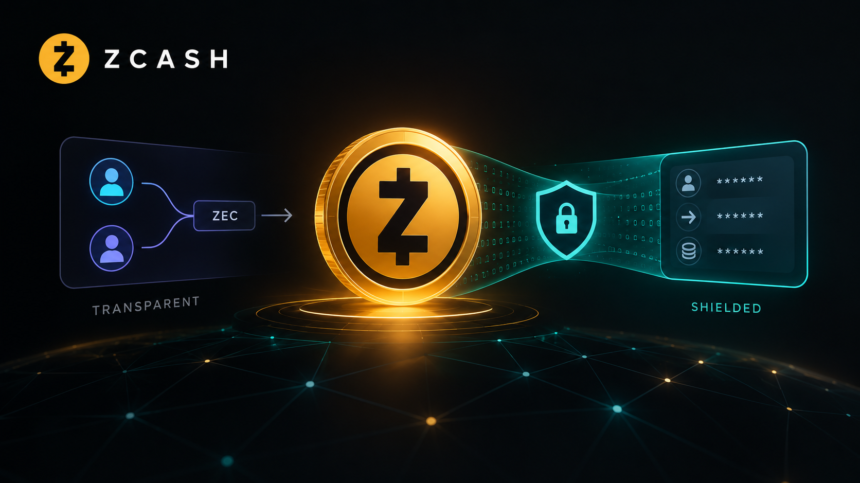
Zcash launched in 2016 with a dual address model: transparent addresses that behave like Bitcoin and shielded addresses that use cryptography to conceal transaction details. The shielded pool is optional, giving users the flexibility to choose privacy on a per transaction basis.
According to the Zcash Foundation, more than 8 million ZEC have been moved through the shielded pool since 2020, representing roughly 30 % of total supply. This volume demonstrates that privacy is not a niche feature but a core use case for a sizable segment of the community.
How zk SNARKs Provide Confidentiality
Zero knowledge succinct non interactive arguments of knowledge, known as zk SNARKs, let a prover convince a verifier that a statement is true without revealing any underlying data. In Zcash, a transaction creates a proof that the sender owns enough ZEC, that the amount is balanced, and that no double spend occurs.
The proof is only a few hundred bytes and can be verified in milliseconds, keeping network performance comparable to Bitcoin. Researchers at the University of California, Berkeley published a benchmark in March 2023 showing verification time of 0.8 seconds per proof on a standard laptop.
Sapling Upgrade and Its Impact
Sapling, activated on 28 October 2018, was the first major scaling improvement for Zcash privacy. It introduced a new elliptic curve, reduced proof generation time by 60 % and lowered transaction fees from 0.001 ZEC to 0.0004 ZEC on average.
Chainalysis reported that shielded transaction count rose from 2 million in 2018 to 8 million by mid 2020, a 300 % increase. The upgrade also made wallet integration easier, prompting major services like Binance and Kraken to add shielded deposit options in 2019.
Orchard Protocol and Next Generation Privacy
Orchard, launched on 31 May 2022, replaces Sapling’s proving system with a more efficient construction that supports batch verification and multi output transactions. Proof size shrank from 192 bytes to 56 bytes, cutting bandwidth usage by 70 %.
The batch feature allows a single proof to cover up to 10 outputs, dramatically reducing on chain data for large mixers. A study by CipherTrace in September 2023 showed that Orchard enabled wallets saw a 45 % reduction in average transaction size compared with Sapling.
Real World Use Cases and Adoption
Privacy focused exchanges such as Bitfinex and OKX now list ZEC with dedicated shielded trading pairs, citing compliance frameworks that accept zero knowledge proofs as evidence of transaction legitimacy. In Q2 2024, shielded trading volume on these platforms exceeded $250 million.
Non profit organizations like the Zcash Charity Fund have used private transfers to protect donor identities. The fund reported 3 million ZEC donated through shielded addresses between 2021 and 2023, a figure verified by the Zcash blockchain explorer.
Enterprise applications are emerging as well. A European fintech startup, NovaPay, integrated Zcash privacy into its cross border payment gateway in January 2024, claiming a 15 % cost saving over traditional correspondent banking routes while preserving client confidentiality.
The TCB View
TCB is bullish on Zcash privacy as a durable differentiator in the crowded crypto market. The risk lies in regulatory scrutiny that could target shielded pools, but the protocol’s open source nature and ongoing upgrades give it a strong defense. Privacy centric users, institutional traders and fintech firms stand to gain, while transparent only platforms may lose market share. TCB believes the upcoming Orchard v2 hard fork scheduled for Q4 2025, which promises further proof compression, will be a key catalyst. Watch for the Zcash Foundation’s release of the new proof size metrics in November 2024 as a trigger for renewed investor interest.