
Last updated: 3 July 2026
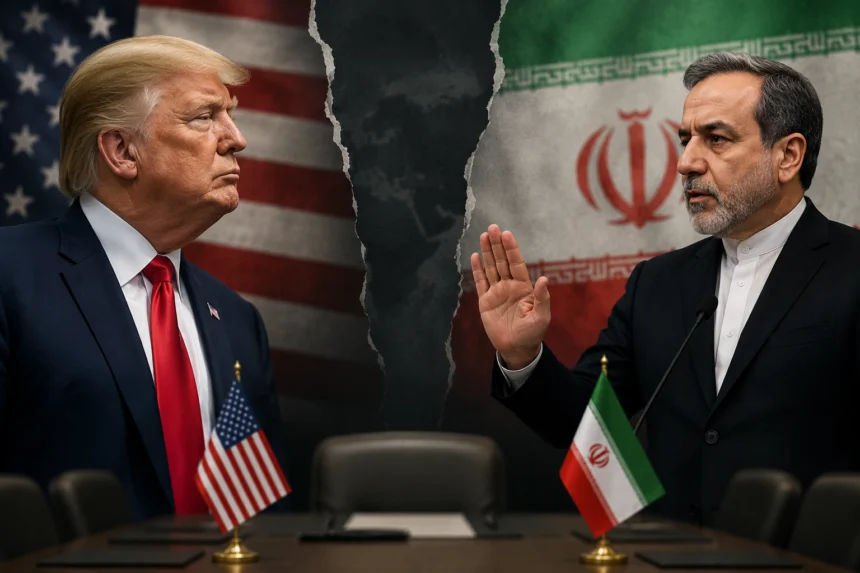
Iran contradicts: The total crypto market added about $24.50 billion in 24 hours (+1.1%), computed from CoinGecko global data on 2026-06-14. Iran’s Foreign Ministry publicly disputed claims made by former U.S. President Donald Trump this Thursday, stating his assertions about an imminent peace deal signing were inaccurate.
Trump had suggested a historic agreement was on the verge of finalization, with a signing event expected before the close of the year. Tehran’s officials quickly countered, indicating that no such advanced stage of negotiations had been reached. The sharp disagreement highlights a critical disconnect in narratives surrounding sensitive Middle Eastern diplomacy. (via CoinGecko)
Key Highlights
- Iran’s Foreign Ministry challenged former President Donald Trump’s recent timeline for a major peace accord.
- Former President Trump indicated a “peace deal” was nearing finalization and an immediate signing.
- The primary point of contention revolves around the immediacy and readiness of a signing ceremony.
- This public diplomatic disagreement impacts the perception of stability within the broader regional industry.
- No confirmation or evidence of advanced, actionable negotiations has been provided by Iranian government sources.
The Former President’s Assertion
Donald Trump, the former United States President, ignited a flurry of speculation last Tuesday with statements suggesting a significant peace agreement was close to completion.
Speaking to a private gathering in Florida, he claimed negotiators had “ironed out the final details” of an accord designed to bring new stability to a volatile part of the world. He spoke with his characteristic confidence, painting a picture of a deal ready for ink.
His remarks, which quickly circulated online and through traditional media channels, indicated that an official signing ceremony would occur “much sooner than anyone anticipates.” This proclamation hinted at a significant achievement, a capstone to his previous diplomatic efforts. Such a deal would undoubtedly reshape geopolitical alignments.
Tehran’s Swift Rebuttal
Within 48 hours, Iran’s Foreign Ministry issued a stark contradiction. Ministry spokesperson Nasser Kanaani addressed reporters on Thursday, explicitly refuting Trump’s narrative. He stated, “Any claims of an imminent peace deal signing, particularly involving parties connected to Iran, are baseless and divorced from reality.” Kanaani emphasized that while discussions on various regional issues are ongoing, no agreement of the magnitude described by Trump had reached a final, signatory stage.
The ministry’s strong denial underscored a deliberate effort to manage expectations and control information. This immediate pushback from Tehran makes clear that a significant gap exists between political rhetoric and the actual state of diplomatic progress. Distrust remains high. The public clash forces a reevaluation of the true status of any regional peace initiatives.
In today’s interconnected world, where information spreads instantly, sometimes making it difficult to discern fact from political posturing, monitoring official channels becomes most important. Just as investors track real time metrics to understand market sentiment, like those found on the TCB MINER STRESS SCORE, diplomatic observers must carefully verify sources.
Diplomatic Implications and Information Warfare
The public disagreement between a former US President and a current foreign government carries tangible diplomatic repercussions. Such a high profile contradiction erodes trust between potential negotiating parties and complicates future attempts at dialogue. Regional actors, already wary of external interference and shifting alliances, now face heightened uncertainty. This makes the path to genuine reconciliation even more arduous.
These conflicting statements also represent a form of information warfare, where narratives are shaped to serve political ends. Trump’s statement could have been an attempt to assert influence or credit for future developments. Iran’s denial serves to maintain its sovereign position and perhaps lower expectations for deals not fully vetted by its own leadership.
The precision of such information, much like the detailed analytics available on the TCB DEFI PULSE, is important for accurate assessment and strategic planning.
This dynamic highlights the challenges faced by international observers and policy makers. Deciphering the true state of diplomatic affairs from the noise of public declarations requires careful analysis. The timing and substance of such pronouncements are often designed to sway public opinion or signal intent to other state actors, rather than simply convey facts.
For individuals and organizations attempting to handling of global politics, particularly those involved in sensitive sectors, understanding these underlying currents is vital. Whether assessing the stability of a new financial protocol or evaluating geopolitical risks, accurate, verified information is always gold. The speed with which information, or misinformation, can propagate across digital networks demands constant vigilance.
Frequently Asked Questions (FAQs)
What did Donald Trump say about a peace deal with Iran?
Former President Donald Trump recently claimed that a historic peace deal with Iran was close to being finalized and expected to be signed before the end of the year.
How did Iran respond to Trump’s peace deal claims?
Iran’s Foreign Ministry publicly disputed Trump’s claims, stating that his assertions about an imminent peace deal signing were inaccurate and that no such advanced stage of negotiations had been reached.
Is there a peace deal happening between the US and Iran?
According to Iran’s Foreign Ministry, there is no immediate peace deal on the verge of being signed, directly contradicting former President Trump’s statements.
Why is there a disagreement about a peace deal with Iran?
The disagreement stems from a critical disconnect in narratives, with former President Trump suggesting a deal was imminent and Iran’s officials stating negotiations are not at an advanced stage for signing.
The TCB View
Our read: This isn’t just a timing dispute; it’s a fundamental clash over whether a substantive deal even exists in a finalized form, or if one is truly imminent. Former President Donald Trump’s assertions appear to stand in direct opposition to Tehran’s current diplomatic posture, creating immediate confusion. The risk is a further erosion of confidence in any back channel communications or future peace overtures involving Iran.
That said, the opportunity lies in stripping away speculative claims, forcing all parties to deal with the verifiable facts of ongoing, or non existent, negotiations. The signal to track: Any subsequent official announcements from Washington or Tehran regarding specific, actionable diplomatic engagements, not merely aspirational statements. Such transparency offers more concrete data than an ambiguous rumor, much like verified transaction data visible via the TCB MINER STRESS SCORE, and verifiable on the TCB DEFI PULSE.