

Last updated: 27 June 2026
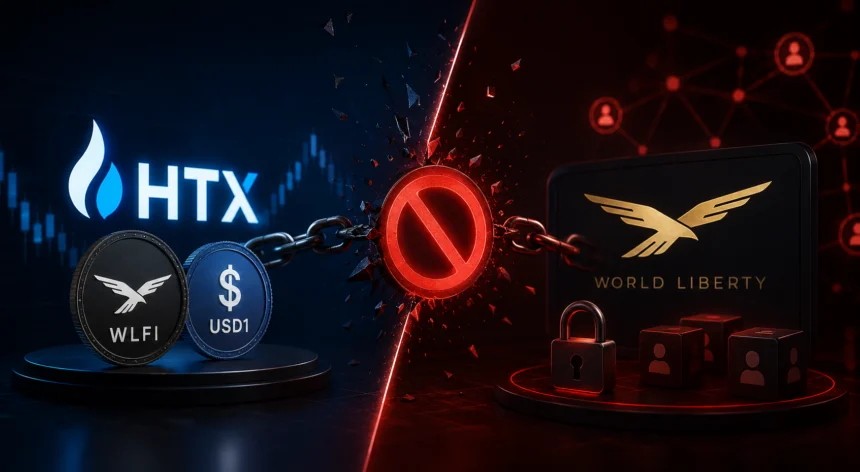
HTX, a prominent cryptocurrency exchange, recently halted all trading activity for World Liberty Financial (WLFI) tokens and its associated USD1 stablecoin. This decisive move came after World Liberty Financial unilaterally froze certain user digital assets directly on its platform. The exchange’s action effectively cut off crucial liquidity for affected holders, signaling a significant escalation in the ongoing dispute.
Key Highlights
- HTX unilaterally suspended all trading pairs involving the WLFI token.
- The global exchange also ceased support for all activities tied to the USD1 stablecoin.
- World Liberty Financial initiated the freeze of specific user owned tokens without providing immediate public explanation.
- The HTX decision directly impacts all users holding WLFI and USD1 on its platform, rendering them illiquid.
The Precipitating Freeze
World Liberty Financial, a blockchain project focused on delivering various financial solutions, recently took a historic step by freezing user held crypto assets. This unilateral action caught many in its community and the wider market by surprise. Details regarding the exact reasons behind the freeze remain notably sparse, fueling speculation and concern among investors. Such a move on a platform, whether decentralized or semi decentralized, raises immediate and serious questions about the true extent of asset control for individual users. Affected individuals suddenly found themselves unable to access their own digital wealth.
This action by World Liberty Financial stirred considerable alarm across the broader Web3 market. The ability for any single entity, even a project development team, to unilaterally lock user funds runs contrary to the core tenets of decentralized finance and digital asset ownership. It undeniably reveals a persistent tension within the space: the promise of absolute user sovereignty against the practical realities of project level control mechanisms and emergency protocols. Many within the crypto community quickly voiced their real concerns regarding this centralized intervention.
HTX’s Swift Countermove
In direct and forceful response to World Liberty Financial’s controversial decision, HTX moved swiftly to implement protective measures for its own substantial user base. The global exchange announced a complete and immediate suspension of all trading activities for WLFI tokens. This meant an immediate halt to all buy and sell orders, effectively stopping market price discovery on its platform. It’s a powerful statement from a major centralized entity, prioritizing user protection over continuous trading.
HTX extended its suspension to include USD1. This particular stablecoin is intrinsically linked to World Liberty Financial’s operations and space. By concurrently delisting both assets, HTX effectively isolated the problematic project from its vast trading liquidity network. The exchange acted decisively to mitigate potential further financial risks for its own users and maintain market integrity on its platform. This makes clear HTX’s clear stance: it won’t stand by idly if user assets are put at direct risk by project level actions.
Custody, Control, and Centralized Power
The entire incident starkly highlights the ongoing philosophical debate between the foundational ideals of decentralized finance and the practical necessities of centralized exchanges. World Liberty Financial’s demonstrated ability to unilaterally freeze user tokens inherently indicates a significant level of centralized control within its project structure, a characteristic often met with criticism by Web3 purists. This type of power directly contradicts the trustless and permissionless nature that many proponents associate with true blockchain technology. Users believed they possessed full, unencumbered control over their assets.
When a project undertakes such a severe action, a centralized exchange like HTX often finds itself in an incredibly difficult and complex position. Should it allow trading to continue unabated, potentially exposing more of its users to an increasingly problematic asset and volatile situation? Or should it decisively intervene, thereby effectively becoming a powerful gatekeeper for access to the broader cryptocurrency market? HTX unequivocally chose the latter. This decision, while commendably protecting its user base, also unmistakably demonstrates the immense power and influence centralized exchanges still wield within the expansive crypto market. Their operational decisions can undeniably make or break a token’s market accessibility and overall viability.
What This Means for Users and the Market
For individual investors and traders holding WLFI or USD1 tokens specifically on the HTX platform, the immediate impact is both direct and seriously significant. Their digital assets are now effectively illiquid on one of the world’s largest and most active exchanges. This unfortunate situation traps capital for potentially thousands of market players. It forces them to either seek alternative, often less liquid, avenues for transaction or simply await an uncertain further resolution from World Liberty Financial or HTX. The market value of such delisted tokens often experiences sharp and dramatic plunges following a major exchange’s suspension or delisting.
The broader market implications stemming from this specific dispute are equally crucial for the entire Web3 space. This incident is a stark and timely reminder of the natural risks embedded within certain blockchain projects, especially those exhibiting significant centralized control points or opaque operational processes. It fundamentally reinforces the critical importance of rigorous due diligence for all investors before committing capital. Exchanges like HTX, in taking such strong and definitive stances, signal their unwavering commitment to protecting the integrity of their own platforms and the security of their user funds. Also, this action might influence how other prominent exchanges choose to respond to similar project level incidents in the future. The episode undeniably sets a powerful new precedent within the industry.
The TCB View
Our read: HTX just drew a clear line in the sand, demonstrating that centralized exchanges will robustly assert their considerable power when project teams threaten the sanctity of user assets. World Liberty Financial’s unilateral token freeze likely triggered an automatic, protective response from the exchange, which saw no viable alternative to safeguarding its platform and users. The immediate, concrete risk is real illiquidity for potentially thousands of users currently holding WLFI or USD1. A specific opportunity arises for exchanges to strongly differentiate themselves as proactive protectors of investor funds, potentially increasing long term trust among their global user base. The signal to track: how World Liberty Financial publicly addresses and potentially attempts to reverse the effective isolation of its core tokens.