
Last updated: 9 June 2026
Key Highlights
- In 2022, the total value of tokenized real world assets (RWAs) reached $2.5 billion, up 25% from 2021, according to a report by Chainlink.
- The global RWA market is expected to grow to $5.5 trillion by 2027, driven by increasing adoption in DeFi and traditional finance, forecasts a study by Grand View Research.
- As of January 2023, the top three RWA categories by market capitalization are real estate ($1.2 billion), commodities ($750 million), and loans ($500 million), data from CoinMarketCap shows.
- Major players like Goldman Sachs, JPMorgan, and Visa have already begun exploring RWA tokenization, with partnerships and investments in companies like Paxos and Circle.
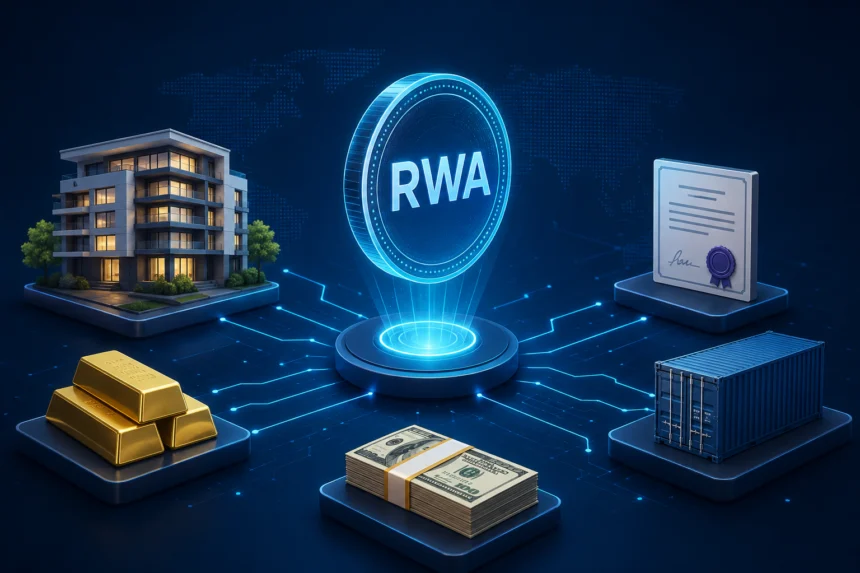
When asking what are real world assets crypto, it’s essential to understand that real world assets (RWAs) in the context of cryptocurrency refer to physical or financial assets that have inherent value outside of the digital realm, such as real estate, commodities, or loans, which are then tokenized and represented on a blockchain. This process allows for the creation of digital tokens that are backed by the value of these real world assets, enabling their use in decentralized finance (DeFi) applications and providing a bridge between traditional finance and the digital asset ecosystem.
Introduction to Real World Assets
RWAs can encompass a wide range of assets, from tangible items like art and collectibles to intangible assets such as copyrights and patents. The tokenization of these assets involves dividing them into digital tokens, which can then be traded, stored, or used as collateral in various financial transactions.
The benefits of tokenizing RWAs include increased liquidity, reduced transaction costs, and improved accessibility for a broader range of investors. For instance, tokenizing a piece of real estate allows for the creation of multiple digital tokens, each representing a fraction of ownership, thereby making it possible for more people to invest in property.
Types of Real World Assets
There are several categories of RWAs, each with its unique characteristics and potential for tokenization. Real estate, for example, is one of the most popular types of RWAs, with companies like RealT and Fundraise allowing investors to purchase tokens representing ownership in properties. Commodities, such as gold, oil, and agricultural products, are another significant category, with platforms like Digix and Tiberius offering tokenized versions of these assets.
Loans and other debt instruments are also being tokenized, enabling lenders to originate, trade, and manage loans more efficiently. This is particularly beneficial for small and medium sized enterprises (SMEs) and individuals in underserved markets, who may struggle to access traditional credit channels.
Tokenization Process
The process of tokenizing RWAs involves several steps, including the creation of a digital token, the establishment of a legal framework to govern the relationship between the token and the underlying asset, and the development of a platform for buying, selling, and trading the tokens. This process requires collaboration between various stakeholders, including asset owners, financial institutions, and technology providers.
One of the critical aspects of tokenization is ensuring compliance with relevant laws and regulations, such as securities laws, anti money laundering (AML) rules, and know your customer (KYC) requirements. Companies like Securitize and Harbor have developed platforms that facilitate the tokenization of RWAs while adhering to these regulatory requirements.
Legal and Regulatory Frameworks
The legal and regulatory frameworks surrounding RWAs are complex and evolving. In the United States, for example, the Securities and Exchange Commission (SEC) has issued guidance on the tokenization of securities, while the Commodity Futures Trading Commission (CFTC) has jurisdiction over the trading of commodity based tokens. Similarly, the European Union has implemented the Markets in Financial Instruments Directive (MiFID) and the Capital Requirements Directive (CRD), which apply to the tokenization of financial instruments.
Understanding these frameworks is crucial for companies involved in the tokenization of RWAs, as non compliance can result in significant penalties and reputational damage. As the RWA market continues to grow, there will be an increasing need for clear and consistent regulations to ensure the integrity and stability of the ecosystem.
Implications for Traditional Finance and DeFi
The integration of RWAs into the crypto ecosystem has significant implications for both traditional finance and DeFi. For traditional finance, the tokenization of RWAs can increase efficiency, reduce costs, and improve accessibility, making it possible for a broader range of investors to participate in various asset classes. In DeFi, the introduction of RWAs can provide a more stable and reliable source of value, reducing the volatility associated with purely digital assets and enabling the creation of more complex financial instruments and applications.
As the RWA market expands, we can expect to see the development of new business models, products, and services that combine the benefits of traditional finance with the innovation and efficiency of DeFi. This convergence will likely lead to increased collaboration between traditional financial institutions, technology companies, and DeFi platforms, driving growth and innovation in the financial sector as a whole.
The TCB View
TCB believes that the growth of the RWA market will be a bullish factor for the crypto ecosystem, as it provides a more stable source of value and increases the potential for mainstream adoption. We see significant opportunities for companies that can navigate the complex legal and regulatory frameworks surrounding RWAs, such as Securitize and Harbor, which have already established themselves as leaders in the tokenization of securities.
However, we also recognize that there are risks associated with the integration of RWAs, particularly in terms of ensuring compliance with relevant laws and regulations, and the potential for market volatility. Watch for the development of clearer regulatory frameworks and the emergence of new business models that combine traditional finance with DeFi, with a key trigger being the growth of the RWA market to $5.5 trillion by 2027, as forecasted by Grand View Research.