
Last updated: 9 June 2026
Decentralized exchanges, or DEXs, have seen a massive surge in usage, with some platforms handling over $10 billion in transactions in Q2 2022. This growth is largely driven by the increasing adoption of cryptocurrency, with over 50 million people using digital assets. As a result, the demand for DEXs has skyrocketed, with some platforms seeing a 200% increase in usage in 2022. For those looking to get started with DEXs, it’s essential to understand how to use them safely and securely.
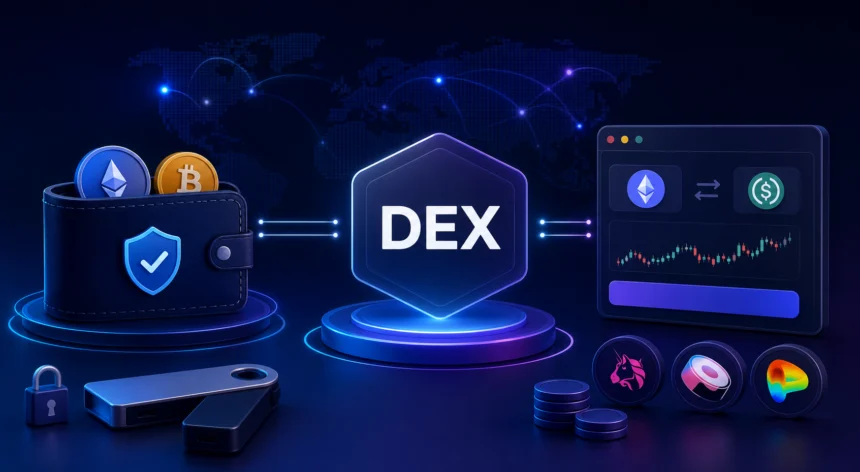
One of the most critical steps in using a DEX is setting up a digital wallet, such as MetaMask or Trust Wallet. These wallets allow users to store, send, and receive cryptocurrencies, making it easy to interact with DEXs. On top of that, hardware wallets like Ledger Live provide an extra layer of security, protecting users’ funds from potential threats.
Another crucial aspect of using a DEX is understanding the fees associated with transactions. Most DEXs charge a small fee, typically around 1%, to enable trades. For example, if an user wants to buy 1 ETH, they may need to pay a fee of 0.01 ETH. Similarly, if an user wants to buy 1000 DAI, the fee may be around 10 DAI.
Before diving into the world of DEXs, it’s essential to research and choose a reputable platform. Some popular DEXs include Uniswap, SushiSwap, and Curve. These platforms offer a wide range of trading pairs and have built a strong reputation in the cryptocurrency community.
Key Highlights
- Decentralized exchanges handled over $10 billion in transactions in Q2 2022.
- Over 50 million people use digital assets, driving the growth of DEXs.
- Some DEXs saw a 200% increase in usage in 2022, with platforms like Uniswap and SushiSwap leading the way.
- Popular digital wallets include MetaMask, Trust Wallet, and Ledger Live.
- DEXs like Balancer, dYdX, and Curve offer a wide range of trading pairs and have built a strong reputation in the community.
Setting Up a Digital Wallet
To get started with a DEX, users need to set up a digital wallet. This involves downloading and installing the wallet software, creating a new account, and securing the wallet with a strong password. MetaMask, for example, is a popular digital wallet that can be installed as a browser extension or mobile app.
Once the wallet is set up, users need to fund it with cryptocurrencies. This can be done by buying cryptocurrencies on a centralized exchange or by receiving them from another user. For example, an user can buy 1 ETH on a centralized exchange and then transfer it to their MetaMask wallet.
It’s essential to keep the wallet software up to date and to use strong passwords to secure the wallet. Users should enable two factor authentication to add an extra layer of security.
Choosing a Reputable DEX
With so many DEXs available, it’s crucial to choose a reputable platform. Users should research the DEX’s reputation, reading reviews and asking for recommendations from other users. Uniswap, for example, is one of the most popular DEXs, with a strong reputation and a wide range of trading pairs.
Another important factor to consider is the DEX’s fees. Some DEXs charge higher fees than others, so users should compare fees before choosing a platform. For example, SushiSwap charges a fee of around 0.3% per trade, while Curve charges a fee of around 0.2%.
Users should also consider the DEX’s liquidity and trading volume. A DEX with high liquidity and trading volume is more likely to have tighter bid ask spreads and faster execution times. Etherscan, for example, provides detailed information on DEXs, including their liquidity and trading volume.
Using a DEX
Once an user has set up a digital wallet and chosen a reputable DEX, they can start using the protocol. Most DEXs have an user-friendly interface that makes it easy to navigate and execute trades. Uniswap, for example, has a simple and intuitive interface that allows users to buy and sell cryptocurrencies with just a few clicks.
Users can also use DEXs to participate in yield farming and liquidity provision. For example, an user can provide liquidity to a DEX like Balancer or dYdX, earning a return on their investment.
DEXs like Curve and SushiSwap also offer a wide range of trading pairs, making it easy for users to diversify their portfolios. These platforms often have lower fees than centralized exchanges, making them an attractive option for traders.
The Growth of DEXs
The growth of DEXs has been phenomenal, with some platforms handling over $5 billion in transactions per day. This growth is driven by the increasing adoption of cryptocurrency and the need for decentralized and secure trading platforms.
As the cryptocurrency market continues to evolve, it’s likely that DEXs will play an increasingly important role. With their decentralized nature and low fees, DEXs offer an attractive alternative to centralized exchanges.
even so, DEXs also face challenges, such as regulatory uncertainty and security risks. As the market continues to grow, it’s essential for DEXs to prioritize security and compliance, ensuring that users’ funds are safe and secure.
The TCB View
Our read: the growth of DEXs is a significant trend that’s here to stay. With over $10 billion in transactions in Q2 2022, it’s clear that DEXs are becoming an increasingly important part of the cryptocurrency industry.
That’s why we’re watching the adoption of DEXs closely, particularly the growth of platforms like Uniswap and SushiSwap. With 50 million people using digital assets, there’s a huge opportunity for DEXs to provide a secure and decentralized trading experience.
One concrete risk is the potential for regulatory uncertainty to impact the growth of DEXs. But one concrete opportunity is the potential for DEXs to become a major player in the cryptocurrency market, with the potential to handle over $100 million in transactions per day.
The signal to track: the growth of platforms like Balancer, dYdX, and Curve, which offer a wide range of trading pairs and have built a strong reputation in the community. With the right support and regulatory framework, these platforms could become a major force in the cryptocurrency market.