Last updated: 21 July 2026
To successfully participate in airdrops, prospective recipients must engage proactively with emerging crypto projects, often before official announcements surface. This strategy unlocks access to a substantial pool of digital assets; since 2017, the crypto community has seen over $12 billion distributed through these free token giveaways.
Preparing the right digital infrastructure and consistently monitoring new protocols are key initial steps. Airdrops represent an unique mechanism for new projects to decentralize their token supply and reward early adopters.
Key Highlights
- More than $12 billion in crypto assets have reached users through airdrop events.
- The practice of distributing free tokens to a wide audience started taking hold as early as 2017.
- Airdrops serve as a powerful marketing tool, drawing attention and building community engagement for new protocols.
- Many airdrops reward early interaction with decentralized applications, ranging from testnet usage to mainnet transactions.
- Effective participation requires substantial security practices and careful validation of official project communications.
Understanding Airdrops and Their Value
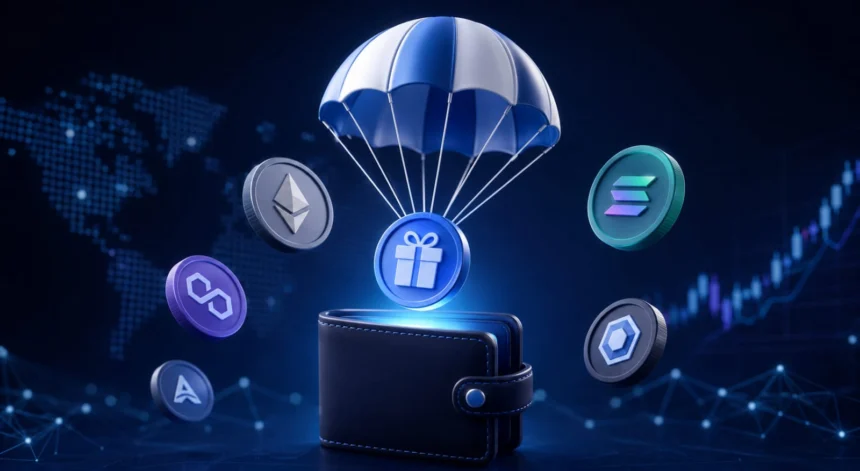
Airdrops fundamentally involve crypto projects distributing free tokens to wallet addresses. This distribution isn’t random; it’s often a strategic move to build community, reward early adopters, and decentralize token ownership. The process effectively places a project’s new currency directly into the hands of potential users and evangelists, bypassing traditional fundraising rounds in some aspects.
This approach serves multiple purposes for a developing blockchain project. It acts as a viral marketing campaign, generating buzz and attracting attention in a crowded market. By distributing tokens widely, projects can achieve greater decentralization from inception, preventing concentrated ownership. The financial impact is significant for recipients; over $12 billion in value has been transferred since 2017, proving that these aren’t just minor handouts.
Historically, airdrops gained prominence around 2017, coinciding with a boom in initial coin offerings and the proliferation of new blockchain networks. Early examples often involved simply holding a specific token, like Bitcoin, to receive a new asset on a different chain. Today, the criteria have evolved sharply, demanding more active engagement from participants to qualify for rewards.
Different types of airdrops exist, each with distinct participation requirements. Standard airdrops might only require signing up with a wallet address. Bounty airdrops task users with completing specific social media promotions or content creation. Holder airdrops credit wallets based on their balance of an existing token.
Retroactive airdrops, perhaps the most coveted, reward past engagement with a protocol, often for actions taken months or even years prior to the token launch.
How to Successfully Participate in Airdrops
Successfully participating in airdrops requires methodical preparation and consistent engagement within the web3 market. It isn’t just about being lucky; it’s about being prepared and strategic. The journey often begins long before a token’s official launch, demanding foresight and active interaction with promising decentralized applications.
First, establish a secure crypto wallet. MetaMask is a popular choice for Ethereum and EVM compatible networks, while Phantom serves Solana users well. Hardware wallets like Ledger or Trezor provide superior security for long term holdings, though direct transaction signing might be smoother with hot wallets for active participation. Understand wallet recovery phrases and store them offline. Your wallet is your identity.
Next, identify potential airdrop candidates. This involves diligent research. Follow reputable crypto news publications like The Central Bulletin, engage with communities on platforms like X (formerly Twitter) and Discord, and track airdrop aggregator websites. Pay close attention to projects backed by major venture capital firms or those building novel infrastructure. High quality projects often attract high quality participants.
Engagement is central. Most lucrative airdrops reward users who actively interact with a protocol during its early phases. This could mean testing beta versions on testnets, performing transactions on the mainnet, providing liquidity to decentralized exchanges, or staking tokens. Participating in governance votes on platforms like Snapshot can also be a strong indicator of community involvement. Maintain a consistent transaction history.
Diversify your engagement across various blockchains and applications. Don’t put all your eggs in one basket. Explore different ecosystems like Ethereum, Solana, Arbitrum, Optimism, zkSync, and LayerZero. Each offers distinct opportunities. Small, regular interactions can often be more beneficial than large, one time transactions, as projects frequently look for genuine and sustained usage.
Always prioritize security. The allure of free tokens makes airdrops a prime target for scammers. Never connect your wallet to suspicious websites. Verify all links through official project channels before interacting. Be wary of unsolicited messages promising airdrops, especially those requiring you to send funds first or share your private key. Legit projects don’t ask for your seed phrase.
Track your activity carefully. Maintain a spreadsheet or use dedicated tools to record which protocols you’ve interacted with, what actions you took, and the dates of those interactions. This helps in proving eligibility later and provides a structured approach to your participation strategy. Missing an eligible wallet can be frustrating.
Some protocols implement anti Sybil measures to prevent single users from creating multiple accounts to farm airdrops. While these measures vary, a good practice is to use distinct wallet addresses for different chains or high value interactions, or to focus on quality interaction over quantity across many less active wallets. Genuine usage is the goal.
Consider the gas fees involved in interacting with various protocols. On networks like Ethereum, gas costs can accumulate quickly, potentially outweighing the value of a future airdrop if not managed carefully. Look for opportunities on lower cost networks or during off peak hours. Smart contract interactions often cost more than simple transfers.
Staying informed is a continuous process. The crypto market evolves rapidly. Regularly check project roadmaps, official announcements, and community forums for hints about future token launches or retroactive reward schemes. Early signals often appear in developer channels before wider public announcements. Keep a finger on the pulse.
Building a full interaction profile isn’t a quick sprint; it’s a marathon. Many successful airdrop participants have spent months or even years engaging with young protocols before any token was announced. Patience and persistence are valuable traits here. The rewards for sustained engagement can be substantial.
Claiming Airdrops and Avoiding Common Pitfalls
Once an airdrop is announced, the next crucial step involves claiming the tokens. This process demands precision and an understanding of the specific requirements set by the protocol. A single mistake could mean forfeiting your eligibility or, worse, falling victim to a scam. Vigilance is your best defense.
First, always confirm the official claiming portal. Project teams typically announce this through their official websites, verified social media accounts, and reputable communication channels. Cross verify information from multiple sources. Phishing sites are a constant threat, designed to mimic legitimate portals to steal your assets. Check the URL meticulously.
The claiming process usually involves connecting your eligible wallet to the official dApp. Once connected, the dApp verifies your wallet’s eligibility based on the predefined criteria. You will then typically initiate a transaction to claim the tokens, which incurs a network transaction fee, commonly known as gas. Ensure you have sufficient funds in your wallet to cover these fees. Insufficient gas will cause the transaction to fail.
Be mindful of claiming deadlines. Airdrops often have a limited window for token claims, after which unclaimed tokens may be burned or reallocated to the outfit treasury. Missing this deadline means losing out on your share. Set reminders for important dates.
Understand the network. If the airdrop is on Arbitrum, you must have your wallet configured for the Arbitrum network and have native Arbitrum ETH for gas. Claiming on the wrong chain won’t work. Double check the network selection in your wallet before signing any transaction.
Immediately after claiming, consider the security of your newly acquired tokens. If you plan to hold them long term, transfer them to a hardware wallet for maximum security. If you intend to sell, use reputable decentralized exchanges or centralized exchanges where the token is listed. Don’t rush to sell on obscure platforms.
Another critical consideration is tax implications. Receiving crypto tokens via airdrop often constitutes taxable income in many jurisdictions, valued at the fair market price on the day of receipt. Subsequent sales or trades of these tokens could trigger additional capital gains or losses. Consult a tax professional familiar with cryptocurrency taxation in your region. Ignoring tax obligations can lead to significant issues.
Sometimes, projects might distribute non fungible tokens (NFTs) or other unique digital assets as part of an airdrop instead of fungible tokens. The claiming process for these is generally similar, involving connecting a wallet and paying gas. Understand what type of asset you’re claiming.
Post claim, stay engaged with the protocol. Holding their tokens might grant you governance rights, staking opportunities, or access to exclusive community features. This ongoing participation can sometimes lead to eligibility for future rewards or additional airdrops from the same community. Your journey doesn’t end with the claim.
Always remain cautious of post claim scams. Scammers might try to trick you into signing malicious transactions by offering fake staking opportunities or claiming higher rewards. Exercise the same level of due diligence as you did before the claim. Never sign transactions you don’t fully understand. Your crypto is your responsibility.
Advanced Strategies and space Engagement
Moving beyond basic interaction, experienced airdrop hunters employ advanced strategies to maximize their chances and potential rewards. These tactics often involve deeper dives into protocol mechanics and a broader understanding of the emerging blockchain industry. The goal is to position oneself as a valuable, active user across multiple relevant ecosystems.
One strategy involves targeted interaction with protocols built by established development teams or backed by prominent venture capitalists. Such projects often have higher chances of launching successful tokens and subsequently conducting lucrative airdrops. Research the outfit’s funding rounds and key contributors. Quality usually signals intent.
Engaging with infrastructure layer projects can be particularly rewarding. These include Layer 2 scaling solutions, cross chain bridges, or decentralized data networks. Interaction with these foundational technologies often makes an user eligible for airdrops from numerous applications built on top of them. Think of it as investing in the picks and shovels.
Participating in testnets offers a low cost way to interact with protocols without spending mainnet gas fees. While not all testnet interactions qualify for mainnet airdrops, they often serve as early indicators of user engagement and sometimes reward dedicated testers. It’s a risk free way to gain experience.
Consider using different wallet addresses to interact with distinct protocols, creating a diversified interaction footprint. This compartmentalization can help manage risk and potentially improve eligibility across various token distributions. Even so, be aware of anti Sybil detection algorithms that some projects employ. Too many seemingly disconnected wallets might be flagged.
Building a consistent transaction history on a blockchain is often more important than a single, large transaction. Regular, small value swaps, liquidity provisions, or lending activities can demonstrate genuine usage patterns. Projects aim to reward actual users, not just those making one off high value plays. Consistency matters.
Joining and actively contributing to a project’s community channels, such as Discord or Telegram, can sometimes yield rewards. Early community members or those who help moderate or answer questions might receive special consideration. Being a valuable community member grows goodwill.
Explore governance participation. Holding tokens in projects that have already launched but are part of a larger community can make you eligible for airdrops from new protocols building on that existing framework. Actively voting on proposals demonstrates commitment to the community’s future. Your vote counts.
Educate yourself on smart contract interactions. Understanding what happens when you sign a transaction on a dApp can protect you from malicious contract approvals. Tools like Revoke Cash allow you to review and revoke approvals for suspicious contracts, protecting your assets. Always stay informed about transaction details.
Finally, embrace the speculative nature of airdrop farming. Not every interaction will lead to a significant reward, and many potential airdrops might never materialize. It requires a long term perspective and an understanding that success comes from consistent, informed effort across many opportunities. The payoff can be immense.
Frequently Asked Questions (FAQs)
What is an airdrop in crypto?
Airdrops are when crypto projects give away free tokens to specific wallet addresses. It’s a strategic way for new projects to build a community, reward early supporters, and spread out ownership of their tokens.
How much money has been given away in crypto airdrops?
Since 2017, over $12 billion in crypto assets have been distributed to users through airdrop events. This shows just how significant these free token giveaways have become in the crypto space.
Why do crypto projects do airdrops?
Projects use airdrops as a powerful marketing tool to attract attention and build community engagement for new protocols. They also help decentralize the token supply and reward early adopters who interact with their platforms.
When did crypto airdrops start becoming popular?
The practice of distributing free tokens to a wide audience started gaining traction as early as 2017. Since then it has become a common strategy for new crypto projects.
The TCB View
Our read: The $12 billion distributed through airdrops since 2017 isn’t just a proof of their potential; it highlights a fundamental shift in how crypto projects launch and decentralize. This sum makes it impossible to ignore the practice as a fringe activity.
A concrete risk remains pervasive: the sheer volume of scams targeting eager participants, requiring relentless due diligence. But the opportunity for genuine community members to gain substantial capital from engaging with innovative technology, entirely for free, is undeniable. The signal to track: the evolution of anti Sybil mechanisms, which will define future participation strategies.