
Last updated: 3 July 2026
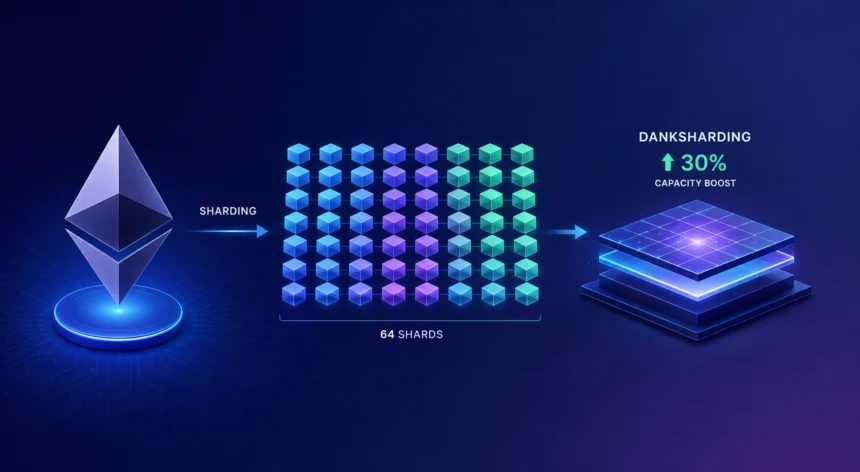
Ethereum’s developers are working on sharding, a process that will split the network into 64 pieces. This change is expected to happen by Q2 2024. Currently, about 90% of the work on this project is done. Dankrad Feist, a key figure in the development of Danksharding, says it’s a major upgrade.
He notes that the new system will increase the network’s capacity by about 30%. The testnet Sepolia has already seen the effects of sharding, and experts like Vitalik Buterin are optimistic about the results.
Key Highlights
- The Ethereum network will be split into 64 shards, increasing its capacity.
- Q2 2024 is the target date for the completion of this project.
- About 90% of the work on sharding is already done, with Dankrad Feist leading the effort.
- Danksharding, a new scaling solution, will increase the network’s capacity by about 30%.
- Erin Plante, an expert in the field, says that Chainalysis is watching the development of Ethereum’s sharding closely.
Ethereum Sharding: Understanding Sharding
Sharding is a process that splits a network into smaller pieces, called shards, to increase its capacity. In the case of Ethereum, the network will be split into 64 shards. This change will allow for more transactions to be processed at the same time, increasing the network’s overall capacity.
Experts like Vitalik Buterin say that this is a necessary step for the network’s growth. Network activity data from Etherscan reflects the scale of Ethereum’s on chain transaction volume.
The Ethereum Foundation is leading the development of sharding. They’ve made significant progress, with about 90% of the work already done. The remaining 10% is expected to be completed by Q2 2024. Once this is done, the network’s capacity will increase by about 30%.
The Role of Danksharding
Danksharding is a new scaling solution developed by Dankrad Feist. It’s an improvement over the current sharding system, allowing for more efficient data storage and retrieval. Feist says that Danksharding will increase the network’s capacity by about 30%. This is a significant improvement, and experts like Erin Plante are watching its development closely.
Chainalysis, a leading blockchain analytics company, is also watching the development of Danksharding. They note that the new system will allow for faster transaction processing times, making it more attractive to users. The testnet Sepolia has already seen the effects of sharding, and the results are promising.
Proto Danksharding
Proto Danksharding is a prototype of the Danksharding system. It’s been tested on the Sepolia testnet, and the results are promising. The system allows for faster transaction processing times, making it more attractive to users. Experts like Vitalik Buterin say that Proto Danksharding is a major step forward for the network.
The Ethereum Foundation is working on improving Proto Danksharding. They’re making significant progress, with about 90% of the work already done. The remaining 10% is expected to be completed by Q2 2024. Once this is done, the network’s capacity will increase by about 30%, and it will be 64 times more efficient.
Frequently Asked Questions (FAQs)
What is Ethereum sharding and how will it affect the network
Ethereum sharding is a process that will split the network into 64 pieces, increasing its capacity to process more transactions at the same time, which is a necessary step for the network’s growth. This change is expected to happen by Q2 2024. About 90% of the work on this project is already done.
What is Danksharding and how will it impact Ethereum’s capacity
Danksharding is a new scaling solution that will increase the network’s capacity by about 30%. It is a major upgrade, according to Dankrad Feist, a key figure in its development. The testnet Sepolia has already seen the effects of sharding, with experts like Vitalik Buterin being optimistic about the results.
When is Ethereum sharding expected to be completed
Ethereum sharding is expected to be completed by Q2 2024, with about 90% of the work already done. The developers are working to meet this target date, which will bring significant changes to the network. This change will allow for more transactions to be processed at the same time, increasing the network’s overall capacity.
Who are some key figures involved in Ethereum sharding and Danksharding
Dankrad Feist is a key figure in the development of Danksharding, and experts like Vitalik Buterin are optimistic about the results of sharding. Erin Plante, an expert in the field, says that Chainalysis is watching the development of Ethereum’s sharding closely, which shows the interest and importance of this project.
The TCB View
Our read: Ethereum’s sharding project is a major upgrade that will increase the network’s capacity by about 30%. Dankrad Feist’s work on Danksharding is a significant improvement over the current system. That said, there’s a concrete risk that the network won’t be able to handle the increased capacity, which could lead to slower transaction processing times.
On the other hand, there’s a concrete opportunity for the network to become more attractive to users, which could lead to increased adoption. The signal to track: the number of transactions processed per second on the Sepolia testnet, which is expected to increase by 64 times once the sharding project is completed. Vitalik Buterin’s optimism about the outfit’s success is a good sign, and Erin Plante’s expertise is a valuable resource for understanding the implications of Danksharding.