
Last updated: 3 July 2026
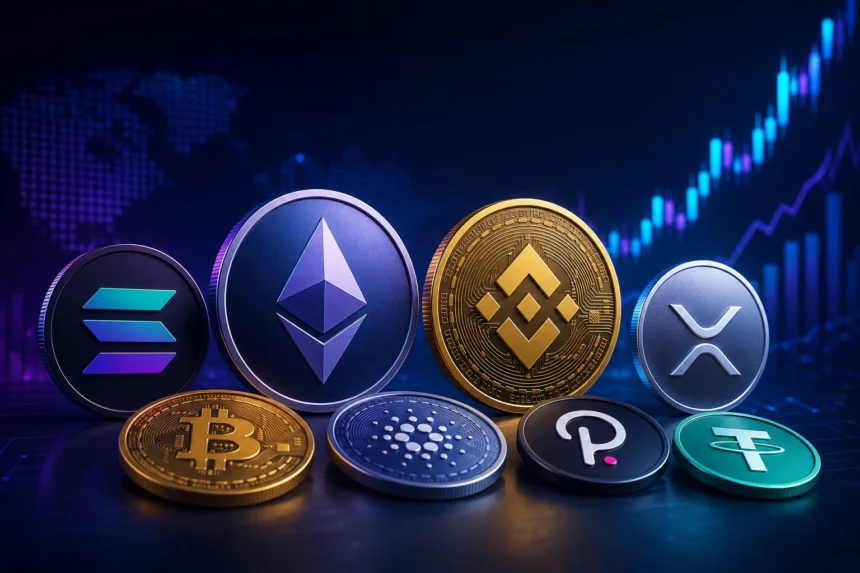
Altcoins, an umbrella term for every cryptocurrency other than Bitcoin, are capturing an increasing share of the digital asset market. Investor attention has visibly shifted, pushing Bitcoin’s market dominance below 50 percent for the first time in nine months, a clear signal of evolving market dynamics.
This shift highlights a maturing industry where alternatives to the original cryptocurrency are carving out distinct niches. It reflects a broadening of investor interests beyond just store of value narratives.
Key Highlights
- Bitcoin’s market dominance has hovered beneath the 50 percent mark for a nine month stretch, indicating a significant rotation of capital.
- Ethereum remains the largest altcoin by market capitalization, consistently demonstrating its network effect and utility for decentralized applications.
- The total altcoin market cap recently surged past $1.3 trillion, representing over 50 percent of the entire cryptocurrency market value, according to data compiled on June 18.
- New projects in decentralized finance (DeFi) and layer two scaling solutions are attracting substantial developer talent and venture capital.
- Stablecoins, a major altcoin subcategory, underpin much of the trading volume across decentralized exchanges, providing crucial liquidity.
What Are Altcoins Crypto
The term altcoin is a catch all for any digital currency or token that isn’t Bitcoin. These alternatives emerged following Bitcoin’s initial success, often aiming to improve upon its design, introduce new functionalities, or target specific use cases that Bitcoin wasn’t originally built for. This includes everything from vast blockchain networks like Ethereum to highly specialized utility tokens powering niche applications.
Understanding what are altcoins crypto fundamentally means recognizing their role as digital assets offering distinct functionalities and economic models. Early altcoins primarily sought to provide faster transaction speeds or different consensus mechanisms. Today, the market is vastly more complex, encompassing thousands of projects with diverse objectives, from allowing microtransactions to enabling complex smart contract operations.
The recent dip in Bitcoin’s market share suggests that investors are increasingly comfortable exploring this diverse array of options, seeking returns or utility beyond the leading cryptocurrency.
This market shift isn’t merely speculative; it points to fundamental growth in various blockchain sectors. Analysts at Chainalysis noted in a recent report that institutional investment in altcoin infrastructure projects has seen a 25 percent increase year over year. These aren’t just retail frenzies. Big money recognizes the underlying technological advancements. The capital flows demonstrate a clear signal toward diversification and a deeper engagement with the wider crypto economy.
Diverse Types of Altcoins: Beyond Bitcoin’s Shadow
The altcoin space is incredibly varied, making generalizations difficult. That said, they can typically be categorized by their technical architecture, economic model, or primary use case. Each type aims to solve a different problem or create a new value proposition within the digital economy.
One prominent category is Layer One Blockchains. These are independent networks with their own native tokens, serving as foundational infrastructure. Ethereum is the most well known example, supporting a vast industry of decentralized applications and other tokens.
Other Layer One networks, like Solana, Avalanche, and Polkadot, aim to offer higher transaction throughput, lower fees, or specialized interoperability features, often hard Ethereum’s dominance in particular niches. Their native tokens are used for network fees, staking, and governance.
Stablecoins represent another critical altcoin type. Designed to minimize price volatility, these cryptocurrencies are typically pegged to stable assets like the US dollar. Tether (USDT), USD Coin (USDC), and Dai (DAI) are leading examples. They serve as a crucial bridge between volatile cryptocurrencies and traditional fiat currencies, enabling trading, lending, and borrowing without constant conversion to fiat. Their stability makes them indispensable in decentralized finance.
Utility Tokens power specific applications or services within a blockchain market. For instance, Filecoin’s FIL token is used to pay for decentralized data storage, while Basic Attention Token’s BAT rewards users for viewing privacy respecting advertisements. These tokens derive their value from the utility they provide within their respective platforms.
They’re not designed as a store of value or a medium of exchange in a broad sense, but rather as keys to unlock particular services.
Governance Tokens give holders the right to vote on the future development and parameters of a decentralized protocol. Projects like Uniswap (UNI) or Aave (AAVE) distribute these tokens to their communities, empowering them to influence treasury management, fee structures, and protocol upgrades. This democratic approach aligns incentives between users and the team’s long term success. It’s a fundamental component of decentralized autonomous organizations.
Other notable types include Meme Coins, which are often community driven and highly speculative, gaining value through social media trends rather than fundamental utility, like Dogecoin. Privacy Coins, such as Monero and Zcash, prioritize anonymity and untraceability in transactions, catering to users who value heightened financial confidentiality. Each type addresses distinct needs or market desires.
Practical Uses and Expanding the Digital Frontier
The true power of altcoins lies in their diverse applications, which extend far beyond simple peer to peer payments. They’re the building blocks for an entirely new internet paradigm, often referred to as Web3. These uses span financial services, digital ownership, gaming, and even traditional industries looking for new efficiencies.
Decentralized Finance, or DeFi, is perhaps the most impactful application arena. Altcoins enable a new community of financial services that operate without traditional intermediaries. Users can lend, borrow, trade, and earn interest on their digital assets through protocols powered by altcoins like Ether or specific DeFi tokens. This includes decentralized exchanges, collateralized lending platforms, and sophisticated derivatives markets. These systems run on transparent, immutable smart contracts.
Non Fungible Tokens (NFTs) are another significant use case for altcoins, primarily built on Ethereum and other Layer One blockchains like Solana. NFTs represent unique digital assets, proving ownership of digital art, collectibles, music, or even real estate deeds. They’ve change the concept of digital ownership, creating entirely new economies for creators and collectors. Gaming is a prime beneficiary. In game assets can now be truly owned by players.
Altcoins also drive innovation in decentralized computing and data storage. Projects like Render Token (RNDR) offer decentralized GPU rendering services, while Arweave (AR) provides permanent, decentralized data storage. These applications leverage blockchain technology to create more resilient, censorship resistant, and often more cost effective alternatives to centralized cloud services. They represent a fundamental shift in how digital infrastructure operates.
Beyond these, altcoins are finding uses in supply chain management, identity verification, and intellectual property rights. By tokenizing assets or data on a blockchain, companies can achieve greater transparency, reduce fraud, and streamline complex processes. The underlying altcoin network helps these secure and verifiable transactions. The potential for disruption in traditional industries is immense.
Frequently Asked Questions (FAQs)
what are altcoins crypto
Altcoins are essentially any cryptocurrency or digital token that isn’t Bitcoin. It’s an umbrella term for all the other digital assets in the market.
why are altcoins becoming more popular
Altcoins are gaining popularity because investor attention is broadening beyond just Bitcoin. New projects in areas like decentralized finance and layer two scaling solutions are attracting a lot of talent and capital, showing a maturing industry.
what is bitcoin market dominance
Bitcoin market dominance refers to the percentage of the total cryptocurrency market value that Bitcoin holds. Recently, it has dipped below 50 percent, indicating a significant shift of capital towards altcoins.
what is the largest altcoin
Ethereum remains the largest altcoin by market capitalization. It consistently demonstrates its strong network effect and utility, especially for decentralized applications.
The TCB View
Our read: The nine month stretch of Bitcoin dominance below 50 percent isn’t just a statistical blip; it’s a structural realignment within the crypto market. Institutional investors and savvy retail traders are no longer just hedging against inflation with Bitcoin; they’re actively seeking high growth opportunities and specific utility in the altcoin space. This expansion signals a growing maturity of the overall digital asset market.
A concrete risk remains the sheer number of speculative, low utility projects, but the opportunity lies in supporting truly innovative Web3 protocols that address real world problems. The signal to track: sustained capital flow into specific sectors like decentralized AI infrastructure or real world asset tokenization, rather than broad market rallies.