Last updated: 6 July 2026
Key Highlights
- In 2023, an estimated 90% of online images have been generated or altered using AI technologies.
- According to a report by Stanford University, deepfake videos increased by 300% from 2020 to 2023.
- As of 2023, only 30% of organizations have implemented AI detection tools in their content verification processes.
- The Coalition for Content Provenance and Authenticity (C2PA) introduced new watermarking standards in early 2023 to combat AI generated misinformation.
- A study found that 70% of people struggle to spot AI generated text without the aid of detection tools.
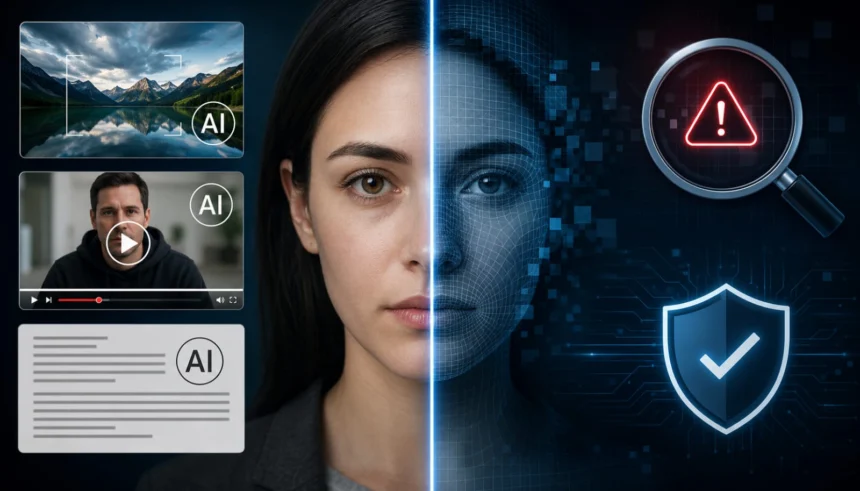
Spotting AI generated content isn’t just for tech enthusiasts. It’s essential for everyone. Whether you’re scrolling through social media, watching videos, or reading articles, the risk of encountering manipulated content is higher than ever. With AI technology quickly changing, knowing how to spot AI generated content in images, videos, and text is important.
This guide aims to provide a practical checklist for identifying these fakes and highlights the tools and standards available to help. Recent research published on arXiv tracks rapid advancement across AI model architectures.
Spot AI Generated Content: Identifying AI Generated Images
Images created by AI can be deceptively realistic. However, a few specific tells can give them away. First, focus on the details. AI generated images often struggle with complex elements, like hands and facial features. Look for unnatural hand shapes or awkward finger placements. These artifacts are telltale signs of AI manipulation.
Next, examine the lighting and shadows. AI may generate images with inconsistent or unrealistic lighting. If the shadows don’t match the light source or appear oddly placed, that’s a red flag. Pay attention to backgrounds as well; AI can create bizarre or nonsensical elements that don’t quite fit the context.
Deepfake Video Detection
Deepfake technology has advanced notably, making it hard to distinguish real videos from fakes. Yet, there are still identifiable patterns. Watch for irregular facial movements. Deepfakes often fail to capture subtle expressions or may distort the lips when mimicking speech.
On top of that, check for mismatched audio. If the voice doesn’t sync with the lip movements, you’re likely looking at a manipulated video. And, don’t forget to scrutinize the overall quality. Many deepfakes exhibit a lack in detail when it comes to hair, skin texture, or even the background, revealing their artificial nature.
AI Generated Text Patterns
Text generated by AI can be even trickier to spot. One key indicator is the writing style. AI generated text often lacks personal voice or emotional depth. If the content feels generic or overly formal, that’s a warning sign. AI models tend to recycle phrases and ideas, leading to repetitive patterns.
Another tell is coherence. AI generated content can sometimes veer off topic or include irrelevant details. If a paragraph feels disjointed or fails to logically progress, you may be reading AI generated text. Lastly, consider the structure. AI often produces overly detailed or complex sentences that lack clarity and directness.
using Detection Tools
To combat the rise of AI generated content, various detection tools have emerged. For instance, platforms like C2PA are working to establish watermarking standards that help identify authentic content. These standards allow users to verify the provenance of images, ensuring they aren’t falling for fakes.
On top of that, AI detection software is becoming increasingly accessible. Tools like Deepware Scanner and Sensity AI analyze videos and images for signs of manipulation. They’re not foolproof, but they can considerably reduce the time spent on verifying content.
The Importance of Media Literacy
As AI generated content becomes more pervasive, media literacy is more important than ever. Educating ourselves and others on how to spot AI generated content can empower us against misinformation. It’s not just about recognizing fakes; it’s about driving a critical mindset toward all media.
Organizations and institutions should prioritize training programs focused on digital literacy. By equipping people with the tools to discern real from fake, we can collectively combat the risks associated with AI generated content. After all, misinformation can have real world consequences.
Frequently Asked Questions (FAQs)
What percentage of online images have been generated or altered using AI technologies
An estimated 90% of online images have been generated or altered using AI technologies as of 2023, which is a pretty staggering number, and it shows just how prevalent AI generated content is becoming.
How can I spot AI generated text
Spotting AI generated text can be tough, with 70% of people struggling to do so without detection tools, but this guide aims to provide a practical checklist to help identify these fakes.
What is being done to combat AI generated misinformation
The Coalition for Content Provenance and Authenticity introduced new watermarking standards in early 2023 to combat AI generated misinformation, which is a step in the right direction, and some organizations are also implementing AI detection tools.
Why is it important to know how to spot AI generated content
Knowing how to spot AI generated content is important because the risk of encountering manipulated content is higher than ever, whether you are scrolling through social media, watching videos, or reading articles, so it is essential for everyone, not just tech enthusiasts.
The TCB View
TCB believes the rise of AI generated content presents serious challenges for media integrity. As detection tools improve, so do the techniques used to create fakes, leading to a constant battle for authenticity. The risk of misinformation remains high, especially in politically charged environments.
Watch for the adoption of new watermarking standards like those from C2PA. Their implementation could be a game changer in content verification. Keep an eye on how organizations adapt to these technologies in the near term.