
Last updated: 3 July 2026
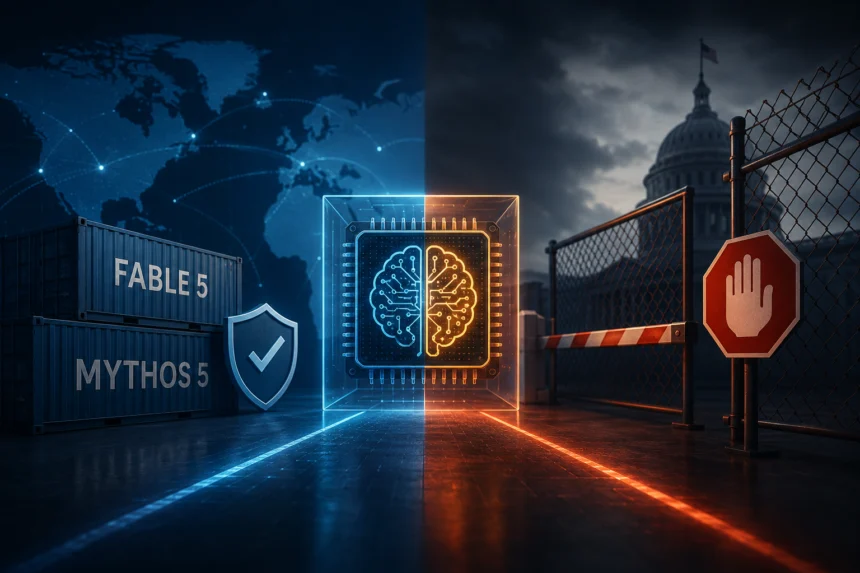
Anthropic races: The total crypto market added about $45.78 billion in 24 hours (+2.0%), computed from CoinGecko global data on 2026-06-15. Anthropic is tricky newly imposed export controls impacting its Fable 5 and Mythos 5 artificial intelligence models.
This move pits one of the frontier AI developers against government agencies seeking to regulate advanced technological proliferation. The firm’s actions signal a significant pushback on policies shaping the global availability of powerful AI. Developers across the sector are watching closely for precedent. (via CoinGecko)
Key Highlights
- Anthropic, a leading artificial intelligence research company, has initiated efforts to reverse recent export restrictions.
- The Fable 5 AI model is a primary subject of these new export control measures.
- And the Mythos 5 AI model from Anthropic faces similar limitations on its international deployment.
- These controls typically aim to prevent the transfer of advanced technology to foreign adversaries or for unintended uses.
- The company’s challenge highlights a growing tension between innovation speed and national security concerns within the AI industry.
The Fight Against Controls
Anthropic’s decision to directly confront export restrictions is a critical juncture for the burgeoning artificial intelligence sector. Governments increasingly view advanced AI models, particularly those with broad capabilities, as strategic national assets or even dual use technologies. The firm is actively working to convince regulators that current restrictions are either too broad or misapplied to its specific creations, Fable 5 and Mythos 5.
This engagement isn’t merely procedural. It’s a deep seated disagreement over who should control the spread of big computing power. The stakes are immense for both companies and nations. Powerful AI capabilities can redefine economies and military strategies.
Understanding Fable 5 and Mythos 5
While specific details about Fable 5 and Mythos 5 remain proprietary, their inclusion in export controls suggests they possess capabilities deemed sensitive by regulatory bodies. These models likely represent Anthropic’s advanced research, embodying advanced reasoning, generation, or problem solving. Their architectural complexity and potential for widespread application could make them targets for restriction.
Export controls aim to prevent these sophisticated systems from falling into the wrong hands. It’s about national security. The concern often centers on how foreign entities might leverage such models for purposes contrary to a nation’s interests. For Anthropic, restricted access to international markets can severely impact research funding and global expansion strategies. Maintaining an open flow of advanced technology can boost innovation. Restricting it can stifle growth.
Broader Regulatory Ripple Effects
Anthropic’s challenge extends beyond its own specific models; it reflects a growing global debate on governing frontier technologies. Governments worldwide are grappling with how to balance promoting innovation with mitigating risks associated with powerful AI. This balancing act isn’t unique to AI; it mirrors similar challenges seen in other advanced digital sectors.
Take, for instance, the layered regulatory industry surrounding decentralized finance and digital assets, where evolving rules can heavily impact the TCB DEFI PULSE. These controls could set a precedent for future AI development and distribution.
Should Anthropic succeed in modifying these controls, it could pave the way for other AI developers facing similar hurdles. Conversely, if the challenge fails, it might embolden regulators to implement even stricter oversight on next generation AI. The outcome will influence investment, research trajectories, and the very structure of the international AI market.
Scrutiny is high across all advanced tech sectors. Even the stress levels of digital asset miners, as measured by the TCB MINER STRESS SCORE, are rising amid regulatory uncertainty.
The Global Race for AI Dominance
The move to impose export controls on models like Fable 5 and Mythos 5 makes clear the fierce global competition for artificial intelligence leadership. Countries view mastery of AI as fundamental to future economic prosperity and national defense.
Restricting the outflow of powerful models is a tactic to preserve a perceived technological advantage or to prevent competitors from catching up too quickly. It’s a strategic maneuver in an escalating geopolitical tech race.
Anthropic, like its peers, operates within this high stakes environment. Its ability to navigate and influence these regulatory discussions will directly impact its market position and its capacity to bring advanced AI to a wider user base. The outfit must balance its commercial aspirations with the increasing demands of national security. This isn’t just about code; it’s about power.
Frequently Asked Questions (FAQs)
What is Anthropic trying to do?
Anthropic, a major AI research company, is working to reverse new export controls that affect its Fable 5 and Mythos 5 artificial intelligence models. They are pushing back against government policies that regulate the global availability of powerful AI technology.
Which AI models are affected by these export controls?
The new export control measures primarily impact Anthropic’s Fable 5 AI model and its Mythos 5 AI model. These restrictions limit their international deployment and use.
Why are governments putting export controls on AI?
Governments are imposing these controls to prevent advanced technology from being transferred to foreign adversaries or used for unintended purposes. This highlights a growing tension between rapid innovation and national security concerns in the AI industry.
How is the crypto market doing right now?
The total crypto market has seen a recent increase, adding about $45.78 billion in 24 hours, which is a 2.0% rise. This data was computed from CoinGecko global information on June 15, 2026.
The TCB View
Our read: Anthropic’s pushback on export controls for Fable 5 and Mythos 5 is more than a corporate dispute; it’s a direct confrontation over the future of artificial intelligence accessibility. The question nobody’s asking: What happens if every advanced AI model is subject to such restrictions, effectively nationalizing frontier technology?
The primary risk is a fragmented global AI industry, hindering collaborative research and potentially creating an AI “iron curtain.” The opportunity lies in forcing a clearer, more layered definition of what constitutes a “sensitive” AI model, benefiting future innovators. The signal to track: the specific terms of any modification to the Fable 5 and Mythos 5 export controls, or the precedent set if the challenge is denied outright.