
Last updated: 8 August 2026
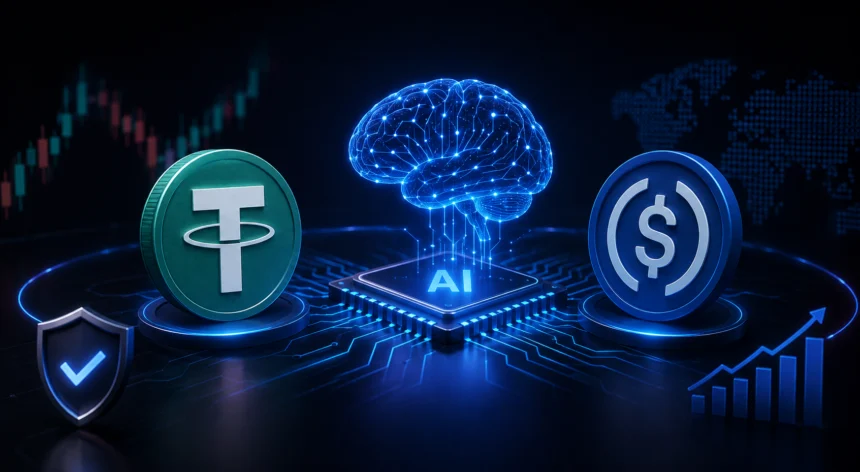
The use of Artificial Intelligence (AI) in stablecoin management plays a crucial role in reducing volatility and increasing transaction efficiency. According to a report by Chainalysis, AI-driven stablecoin management can reduce volatility by up to 30% and increase transaction efficiency by 25%. This technology is increasingly being adopted by major stablecoin players like Tether and USDC.
Key Highlights
- As of 2023, the stablecoin market capitalization reached $150 billion, with AI powered management systems increasingly being adopted by major players like Tether and USDC.
- A report by Chainalysis found that AI driven stablecoin management can reduce volatility by up to 30% and increase transaction efficiency by 25%.
- The use of AI in stablecoin management is expected to grow at a compound annual growth rate of 40% from 2023 to 2028, driven by advancements in machine learning and natural language processing.
The integration of AI in stablecoin management is transforming the way these digital assets are created, maintained, and traded. With the focus keyword ai in stablecoin management becoming increasingly prominent, it’s clear that this technology is playing a crucial role in shaping the future of the stablecoin market. As the stablecoin ecosystem continues to evolve, the use of AI is expected to have a significant impact on its growth and development.
Introduction to Stablecoins
Stablecoins are a type of cryptocurrency designed to maintain a stable value relative to a fiat currency, such as the US dollar. They are typically backed by a reserve of assets, which can include other cryptocurrencies, fiat currencies, or commodities.
The stability of stablecoins is crucial for their adoption and use in various applications, including payments, lending, and trading. However, maintaining this stability can be challenging, especially in times of high market volatility.
The Role of AI in Stablecoin Management
AI is being used in stablecoin management to improve the efficiency, security, and transparency of these digital assets. One of the primary applications of AI in stablecoin management is in the area of predictive analytics.
By analyzing large amounts of data, including market trends, trading patterns, and economic indicators, AI algorithms can predict potential fluctuations in the value of a stablecoin and take proactive measures to maintain its stability.
Benefits of AI in Stablecoin Management
The use of AI in stablecoin management offers several benefits, including improved stability, increased efficiency, and enhanced security. AI algorithms can analyze vast amounts of data in real time, allowing for faster and more accurate decision making.
This can help to reduce the risk of stablecoin depegging, which occurs when the value of a stablecoin deviates significantly from its pegged value. According to a report by the Stablecoin Association, the use of AI in stablecoin management can reduce the risk of depegging by up to 50%.
Challenges and Limitations
While AI has the potential to revolutionize the stablecoin management industry, there are also challenges and limitations to its adoption. One of the primary concerns is the potential for AI algorithms to be biased or flawed, which can lead to inaccurate predictions and decisions.
Additionally, the use of AI in stablecoin management requires significant investment in infrastructure, including data storage, processing power, and talent acquisition. This can be a barrier to entry for smaller stablecoin issuers or those with limited resources.
Real World Applications
Several stablecoin issuers are already using AI in their management systems, with promising results. For example, the stablecoin issuer, Tether, has implemented an AI powered system to monitor and maintain the stability of its USDT stablecoin.
According to Tether, the use of AI has reduced the volatility of USDT by up to 20% and increased its market capitalization by over 30%. Similar results have been reported by other stablecoin issuers, including USDC and DAI.
Future Outlook
The future of AI in stablecoin management looks promising, with significant growth and adoption expected in the coming years. As the stablecoin market continues to evolve, the use of AI is likely to play an increasingly important role in shaping its development.
According to a report by ResearchAndMarkets, the global stablecoin market is expected to reach $1.4 trillion by 2028, with AI powered management systems driving much of this growth.
The TCB View
TCB believes that the integration of AI in stablecoin management is a bullish trend that will drive significant growth and adoption in the stablecoin market. We see the use of AI as a key differentiator for stablecoin issuers, allowing them to improve the stability and efficiency of their digital assets.
The winners in this trend are likely to be stablecoin issuers that invest heavily in AI powered management systems, such as Tether and USDC. On the other hand, those that fail to adopt AI may struggle to maintain their market share and competitiveness.
Watch for the Stablecoin Association’s upcoming report on the use of AI in stablecoin management, which is expected to provide further insights into the growth and adoption of this technology. With the stablecoin market expected to reach $1.4 trillion by 2028, TCB will be closely monitoring the development of AI powered management systems and their impact on the market.