
Last updated: 3 July 2026
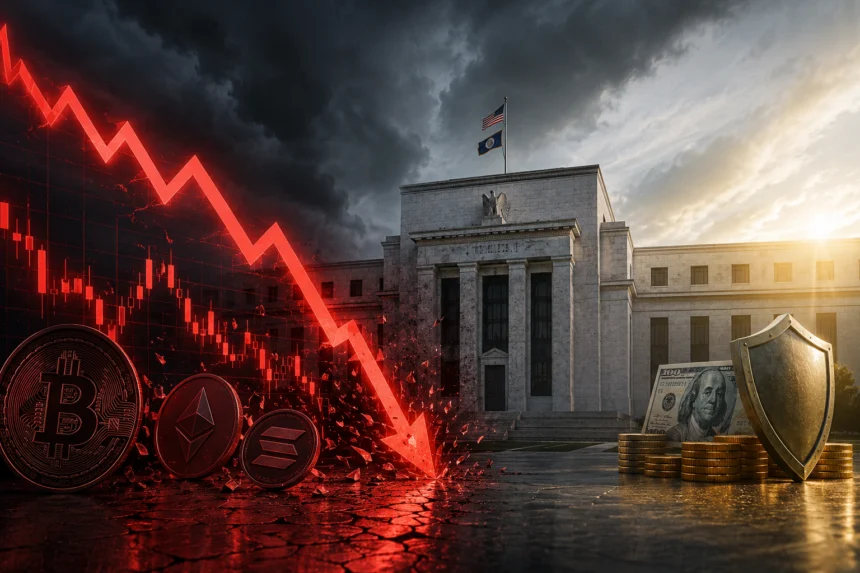
The total crypto market capitalization saw a sharp correction, dropping $48.45 billion within a 24 hour period. This significant outflow reflects a broader unease in United States financial markets, which are grappling with a persistent high interest rate environment. Investors had once hoped for aggressive rate cuts, a sentiment at times echoed by political figures and their chosen economic advisors. That hope hasn’t materialized. (via CoinGecko)
Key Highlights
- Overall crypto market value fell by $48.45 billion in a single day, signaling investor apprehension.
- Expectations for an immediate easing of interest rates have notably diminished across traditional financial sectors.
- Political rhetoric favoring lower borrowing costs is clashing with the Federal Reserve’s resolute stance on inflation.
- Macroeconomic headwinds are contributing to a flight from riskier assets, impacting digital currencies disproportionately.
The Stubborn Reality of Rates
Investors had long anticipated a series of interest rate reductions from the Federal Reserve throughout the year. These expectations were often fueled by a mix of historical patterns and even previous political aspirations, reminiscent of times when figures like Donald Trump expressed desires for easier money policies, once considering individuals like Kevin Warsh for central bank leadership positions who aligned with such views. Those cuts haven’t arrived.
Instead, the Federal Reserve has maintained a firm position, emphasizing its commitment to bringing inflation back to its two percent target. Recent economic data, particularly strong employment figures and stubbornly high service sector inflation, provided little justification for a swift pivot. Policymakers are clearly prioritizing lasting price stability.
This prolonged period of elevated borrowing costs reshapes investment strategies. Money markets now price in fewer rate cuts, or even none, for the current year. This fundamental shift trickles down to all asset classes.
Crypto Markets Feel the Squeeze
Digital assets, often seen as higher risk investments, are particularly vulnerable to a climate of higher interest rates. The total crypto market capitalization illustrated this sensitivity acutely, shedding $48.45 billion in a day. This wasn’t a slow erosion. It was a rapid repricing.
When capital becomes more expensive, investors tend to pull funds from speculative holdings, moving towards safer havens or yielding fixed income instruments. We’re witnessing precisely this dynamic play out. The sell off extended across major cryptocurrencies, indicating a broad based exit rather than an isolated event.
The immediate impact resonates through the entire Web3 market. Projects relying on fresh capital injections find funding harder to secure. Liquidity across decentralized finance platforms experiences contraction, reflected in metrics tracked by the TCB DEFI PULSE. Mining operations also face increased pressure; their profitability margins tighten with reduced token prices and sustained energy costs, a trend keenly observed in the TCB MINER STRESS SCORE. It’s a hard environment.
Navigating Investor Sentiment
The market’s reaction clearly demonstrates that investors are recalibrating their portfolios for a world without imminent rate relief. The days of cheap money inflating all asset prices, especially those without strong underlying cash flows, appear to be receding further into the past. This isn’t just about the Fed. It’s about investor psychology. Uncertainty breeds caution.
Fund managers and retail traders alike are watching closely for any signals from Federal Reserve officials, scrutinizing every speech for hints about future policy moves. Until there’s a clear indication of a loosening monetary policy, capital will likely remain reserved. That’s a new normal.
For the digital asset space, this means projects must demonstrate real world utility and sustainable business models to attract and retain capital. Mere speculation isn’t enough anymore. The emphasis shifts towards fundamental value and tangible development.
The Political Divide Versus Economic Reality
The disconnect between political aspirations for stimulating growth through lower rates and the current economic reality of persistent inflation creates significant friction. While some political voices might advocate for easing monetary conditions to boost the economy, the central bank’s mandate remains focused on price stability. That mandate won’t change soon. This divergence creates volatility.
Historical instances suggest that attempts to overtly influence central bank policy often meet resistance, especially when economic fundamentals demand a different approach. The market understands this. It filters out political noise and reacts to concrete data. That’s why the $48.45 billion drop occurred. The market reacts to facts, not wishes.
For Web3 specifically, this means a harsher proving ground. Only projects with solid tokenomics and genuine user adoption will thrive. The TCB MINER STRESS SCORE provides a real time gauge of this endurance. Survival demands resilience.
Frequently Asked Questions (FAQs)
why did crypto market cap drop so much
The total crypto market capitalization dropped by $48.45 billion in 24 hours because of a broader unease in US financial markets. Investors are worried about persistent high interest rates and the diminishing hope for aggressive rate cuts, which is making them pull money out of riskier assets like crypto.
what is happening with interest rates in the US
Interest rates in the US are remaining stubbornly high, contrary to what many investors and some political figures had hoped for. The Federal Reserve is maintaining its resolute stance on inflation, meaning expectations for immediate rate cuts have significantly diminished across financial sectors.
how are high interest rates affecting crypto
High interest rates are making investors shy away from riskier assets, and digital currencies are being disproportionately impacted. The article notes a significant outflow from the crypto market, reflecting this flight from risk as macroeconomic headwinds persist.
did donald trump want lower interest rates
Yes, Donald Trump has previously expressed desires for easier money policies and even considered individuals for central bank leadership, like Kevin Warsh, who aligned with such views. However, the Federal Reserve’s current stance on inflation is clashing with this political rhetoric.
The TCB View
Our read: The recent $48.45 billion market cap drop isn’t merely a cyclical downturn; it’s a stark repricing reflecting the enduring power of the Federal Reserve’s inflation fight, irrespective of past political hopes for an easy money era championed by advisors like Kevin Warsh. The risk for digital asset investors is a prolonged period of stagnant prices and capital outflows, as traditional finance offers compelling risk free returns.
The opportunity lies in identifying projects building fundamental value that can withstand this liquidity crunch. The signal to track: the Federal Reserve’s next move, specifically any shift in its language on inflation targets.