
Last updated: 21 July 2026
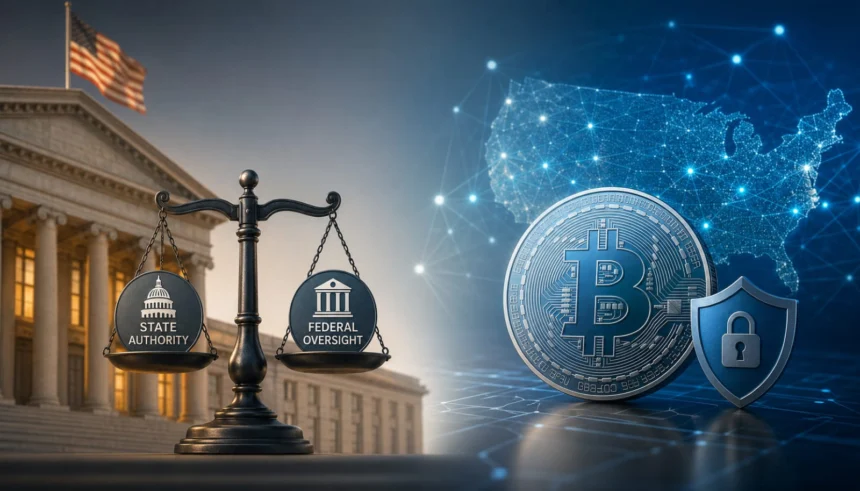
Senators urge: Thirteen United States Senators on June 20 asked Treasury Secretary Janet Yellen and FinCEN Acting Director Himamauli Das to clarify a proposed rule for digital asset mixers. The bipartisan group expressed concerns that FinCEN’s planned “Geographic Targeting Orders” (GTOs) could disrupt existing state regulatory frameworks.
This intervention highlights ongoing tensions over federal versus state control in the quickly changing crypto industry. The market reacted mildly to the news, adding $10.44 billion over 24 hours. (via CoinGecko)
Key Highlights
- Senators pressed Treasury Secretary Yellen and FinCEN Director Das on June 20 regarding digital asset mixer regulations.
- The letter from a bipartisan group of thirteen Senators raised flags about potential federal GTOs undermining state authority.
- FinCEN’s “Anti Money Laundering/Countering the Financing of Terrorism (AML/CFT) Requirements for Convertible Virtual Currency Mixing Services” was announced October 19, 2023.
- Senators emphasized that states already license and oversee virtual currency businesses.
- The overall crypto market capitalization saw an increase of 0.4 percent in the last 24 hours.
A Bipartisan Push for State Authority
A bipartisan group of thirteen Senators, including prominent figures like Mike Crapo of Idaho, Elizabeth Warren of Massachusetts, and Cynthia Lummis of Wyoming, delivered a sharp letter to top Treasury officials.
They voiced significant apprehension that the Financial Crimes Enforcement Network’s proposed Geographic Targeting Orders could inadvertently erode state level regulatory power over digital asset mixing services. States currently possess established systems for licensing and supervising a range of virtual currency businesses, often through detailed money transmitter laws.
These frameworks, developed over years, would be directly challenged by FinCEN’s broad GTO approach, creating potential overlap and conflict.
The Senators’ letter specifically pointed to an earlier legislative attempt, the “FinCEN Innovation Act” (S. 3968) from the 117th Congress. Introduced by Senator Crapo, that bill aimed to guarantee that any FinCEN regulations concerning convertible virtual currency mixers wouldn’t preempt existing state authority or state specific money transmitter laws.
It was a clear effort to protect state led oversight. Though that prior legislative effort didn’t pass, it signals a persistent congressional intent to preserve the balance of federal and state oversight. The current proposal, they argued, creates confusion where clarity is vitally needed for legitimate businesses operating in this space.
This isn’t a small issue.
FinCEN’s Anti Money Laundering Imperative
FinCEN first unveiled its “Anti Money Laundering/Countering the Financing of Terrorism (AML/CFT) Requirements for Convertible Virtual Currency Mixing Services” proposal on October 19, 2023. The agency’s stated goal is unequivocally clear: combatting illicit finance that often uses mixer services to obscure transaction origins and allow criminal activities.
Under this proposal, FinCEN intends to classify mixers as financial institutions, bringing them under the purview of the Bank Secrecy Act and its stringent AML/CFT mandates. This reclassification would dramatically alter how these services operate within the United States, imposing significant new compliance obligations.
But the Senators highlighted what they see as a conflicting signal from FinCEN itself, creating an apparent policy disconnect. They referenced “Project GENIUS,” an existing FinCEN initiative designed to help the secure sharing of Suspicious Activity Reports with state regulators.
This project visibly acknowledges the central role states already play in the financial oversight industry, promoting collaborative efforts. The Senators questioned how FinCEN could reconcile its desire to empower states through Project GENIUS with a GTO proposal that potentially undermines foundational state level authority over virtual currency businesses. The inconsistency needs addressing.
Navigating a Regulatory Crossroads
The ongoing dialogue between Congress and FinCEN illuminates a deeper tension surrounding digital asset regulation: where does the ultimate authority truly lie? States have traditionally taken the lead in licensing and supervising money transmitters, a category that now encompasses many virtual currency companies.
A federal rule, especially one as sweeping as a Geographic Targeting Order, could create a chaotic patchwork of overlapping or even contradictory rules. This scenario would introduce significant regulatory confusion and uncertainty for legitimate businesses operating across state lines, forcing them to navigate inconsistent compliance burdens. It’s a critical point for industry stability.
Industry participants are closely monitoring these developments, understanding that clarity on federal and state responsibilities is vital for sustained innovation and market stability in the digital asset space. Any abrupt shift in oversight without careful coordination could have tangible, negative effects on market confidence and investment.
Today, the total crypto market capitalization saw a modest increase of 0.4 percent, with TCB DEFI PULSE showing a generally stable sentiment despite the unfolding regulatory discussions. That’s a gain of $10.44 billion in the past day.
As the industry grapples with varying rules and potential conflicts, tools like the TCB MINER STRESS SCORE help assess industry resilience under such mounting pressures, providing vital insights into market health.
Frequently Asked Questions (FAQs)
What is a digital asset mixer?
A digital asset mixer is a service that pools and shuffles cryptocurrencies from various users to obscure the origin and destination of transactions. This makes it harder to trace the flow of funds on a blockchain, which can be used for both privacy and illicit activities.
What are Geographic Targeting Orders GTOs?
Geographic Targeting Orders, or GTOs, are special directives issued by FinCEN that require financial institutions in specific geographic areas to report certain transactions. In this context, FinCEN is proposing to use them to regulate digital asset mixers.
Why are senators concerned about FinCEN’s proposed rule for crypto mixers?
Senators are worried that FinCEN’s proposed GTOs for digital asset mixers could interfere with existing state level regulations for virtual currency businesses. They believe states already have frameworks in place and federal intervention might disrupt them.
Who are some of the senators involved in this letter to Treasury?
A bipartisan group of thirteen senators signed the letter, including prominent figures like Mike Crapo of Idaho, Elizabeth Warren of Massachusetts, and Cynthia Lummis of Wyoming. Their involvement highlights the broad concern across the political spectrum.
The TCB View
Our read: FinCEN’s GTO proposal, while aimed at curbing illicit activity, fundamentally risks fracturing an already complex and disparate regulatory environment. The agency’s past initiatives, like Project GENIUS, demonstrate a clear understanding of existing state roles, yet this new proposal directly contradicts that cooperative spirit. The opportunity here lies in FinCEN working directly and collaboratively with state financial regulators to craft an unified, rather than conflicting, approach to digital asset oversight, creating clear guidelines for all stakeholders.
The substantial risk is a continued balkanization of crypto regulation, making compliance an impenetrable labyrinth for innovators and hindering legitimate industry growth and adoption. The signal to track: any revised FinCEN guidance that explicitly outlines solid collaboration with state licensing authorities and ensures a cohesive regulatory framework, particularly given the $10.44 billion market gain suggesting confidence is still fragile and highly sensitive to policy shifts.