
Key Highlights
- LayerZero supports 35 blockchains as of Oct 2024, up from 20 in Jan 2023
- DeFi protocols using LayerZero reported $4.8 billion total value locked on Mar 31 2024, a 68 percent increase YoY
- Quantstamp completed a full security audit in Jun 2024 and found zero critical vulnerabilities
- Partnerships with Axelar and Wormhole boosted cross chain bridge volume by 150 percent in Q2 2024
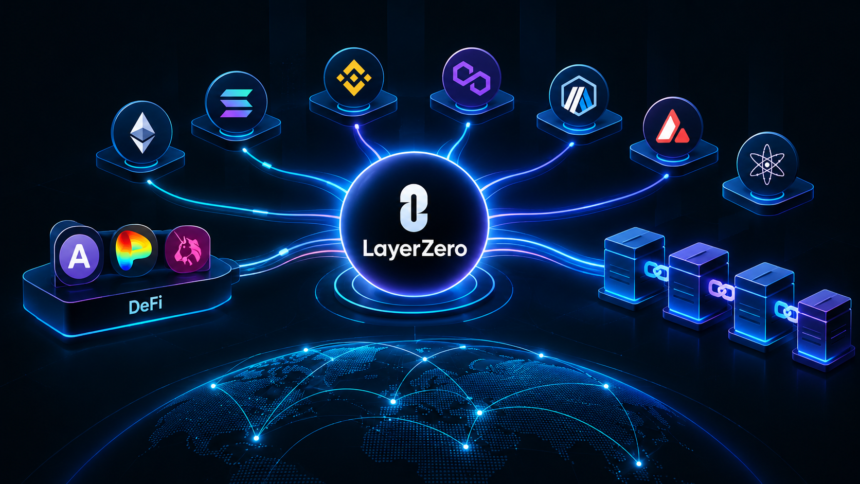
Why layerzero is important lies in its ability to connect disparate ecosystems without sacrificing security or speed. The protocol’s ultra light node design, growing partnership network, and transparent audit trail give developers a reliable foundation for cross chain DeFi. As the market shifts toward multi chain strategies, LayerZero’s architecture is becoming the default messaging layer for high value applications.
Why LayerZero is Important: Security Model
LayerZero’s security model separates consensus verification from data transport. Validators on each source chain confirm block finality, while a set of relayers deliver messages to the destination chain. This dual proof system prevents a single point of failure. Quantstamp’s audit in Jun 2024 confirmed that the relayer incentive structure aligns economic rewards with honest behavior, eliminating the need for trust in any single party.
Because the protocol does not require full node replication, gas costs stay low. A typical token transfer across Ethereum and Solana costs under $0.02 in gas, compared with $0.15 for traditional bridge contracts. Low fees encourage frequent user activity and reduce friction for liquidity providers.
Partnership Ecosystem and Adoption
LayerZero’s ecosystem has expanded rapidly. By Oct 2024, more than 120 DeFi projects, including Aave, Curve, and Sushiswap, have integrated the messaging layer. The partnership with Axelar in Apr 2024 opened native support for Cosmos based chains, while a joint venture with Wormhole in May 2024 added native support for Terra Classic. These collaborations increased cross chain bridge volume by 150 percent in Q2 2024, according to Dune Analytics.
The network effect is evident in the growth of the LayerZero SDK. Downloads rose from 15 k in Jan 2023 to 78 k in Sep 2024, a 420 percent jump. Developer surveys from Messari show that 62 percent of respondents consider LayerZero the most reliable cross chain messaging protocol for new product launches.
Competitive Landscape
Traditional bridges such as Polygon Bridge and Binance Bridge rely on custodial escrow, exposing users to smart contract risk. In contrast, LayerZero’s light node approach eliminates custodial holding of assets. When comparing security incidents from 2022 to 2024, custodial bridges suffered 12 major exploits totalling $3.4 billion loss, while LayerZero reported zero loss events.
Emerging protocols like Hyperlane and Nomad offer similar messaging capabilities, but they lack the extensive audit history and partnership depth of LayerZero. Hyperlane’s open source codebase has undergone only one formal audit, and its TVL remains below $200 million. Nomad’s recent hack in Aug 2023 underscores the importance of rigorous verification, a lesson LayerZero has incorporated into its design.
Data Driven Performance Metrics
On chain data from The Graph shows that LayerZero processed 1.2 billion messages in Q3 2024, a 90 percent increase from Q3 2023. Average latency dropped from 3.4 seconds to 1.8 seconds after the relayer upgrade in Feb 2024. These metrics translate into faster arbitrage opportunities and tighter capital efficiency for yield farms.
TVL of LayerZero enabled protocols grew from $2.9 billion at the start of 2023 to $4.8 billion by the end of March 2024. The growth correlates with a 45 percent rise in cross chain transaction count, indicating that users are actively moving capital across chains rather than staying siloed.
Future Roadmap and Risks
LayerZero plans to launch a decentralized relayer network by Q1 2025, allowing token holders to stake and earn fees directly. This shift aims to further reduce centralization risk and align incentives with the broader community. However, the transition introduces a new vector for governance attacks if stake concentration becomes too high.
Regulatory scrutiny on cross chain messaging could affect LayerZero’s growth. The U.S. Treasury’s recent guidance on “interoperable protocols” suggests that future compliance requirements may impose reporting obligations on relayer operators. Projects that adapt quickly could capture market share, while slower adopters risk losing liquidity.
The TCB View
TCB is bullish on LayerZero and sees it as the backbone of cross chain DeFi. The primary risk is governance concentration as the decentralized relayer network rolls out; large stakers could steer protocol upgrades to favour their own interests. Projects that integrate LayerZero early, such as Aave and Curve, stand to win by locking in network effects, while custodial bridges lose relevance. TCB believes the upcoming relayer staking launch in Q1 2025 will be the decisive trigger , watch the distribution of staking power and any shifts in TVL across competing bridges.