
Last updated: 3 July 2026
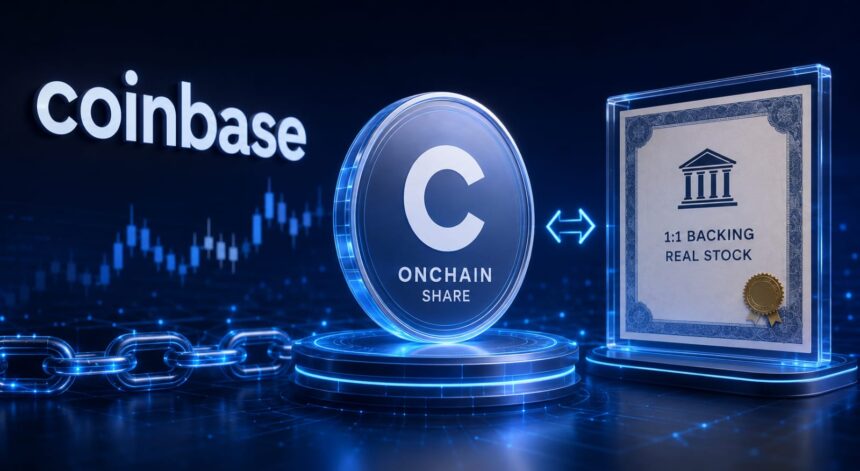
Coinbase is set to join the burgeoning tokenized stock market, actively pursuing onchain shares with one to one backing. The move signals a major step by a prominent crypto exchange into the emerging real world asset sector. This development introduces a new frontier for digital investment, blending traditional finance with blockchain technology.
Key Highlights
- Coinbase will officially launch tokenized shares, integrating conventional equities with blockchain technology.
- The platform plans to use entirely onchain shares, establishing full digital ownership and transferability.
- Each tokenized share will be backed one to one by its traditional counterpart, ensuring parity and underlying asset security.
- The new offering anticipates allowing automated dividend payments, potentially increasing efficiency for investors.
- This initiative places Coinbase at the forefront of financial innovation, competing directly within the growing tokenized asset industry.
The Onchain Share Model Coinbase Aims To Establish
Coinbase is embracing an onchain model for its new stock offering, a significant departure from traditional equity management. This approach means that ownership records and transaction histories reside entirely on a public ledger. Every share will be a verifiable digital asset.
The core promise here lies in the one to one backing. For every digital token representing a share on the Coinbase platform, an equivalent traditional share exists in a custodial account. This mechanism ensures that the digital asset maintains its value and legitimacy relative to its real world asset counterpart. It builds crucial trust in the tokenized space.
Integrating securities onto a blockchain offers several distinct advantages over legacy systems. Settlement times can shrink from days to minutes, dramatically reducing counterparty risk. The transparency built in in blockchain technology means audit trails are immutable and publicly accessible, improving investor confidence. Transaction costs could also see reductions. It’s a fundamental shift.
Beyond Trading: The Dividend Payment Future
One of the more intriguing aspects of Coinbase’s venture is its plan to help automated dividend payments. Traditionally, dividend distribution involves complex processes managed by transfer agents and clearing houses. Delays are common. Error rates exist.
With tokenized shares, dividend payouts can be programmed directly into smart contracts. When a company declares a dividend, the smart contract automatically distributes the specified amount to all token holders’ wallets at the designated time. This eliminates manual reconciliation and speeds up the entire process. Investors get their money faster. The system is more resilient.
This automation extends beyond simple dividends. Corporate actions such as stock splits or voting rights could also be coded directly into these onchain instruments. Such functionality could redefine shareholder engagement and corporate governance, offering real time participation and immutable record keeping. It’s a potent blend of finance and technology.
Expanding Market For Tokenized Assets
Coinbase’s entry is a significant validation for the broader tokenized stock market. This sector has seen increasing interest from both crypto natives and traditional finance players. Financial institutions are exploring ways to leverage blockchain for greater efficiency.
Tokenization isn’t limited to equities; it’s extending to real estate, commodities like gold, and even fine art. The underlying principle is to make illiquid assets more accessible and fractionalizable, opening them up to a wider pool of investment. Coinbase’s stature as a leading crypto exchange will undoubtedly bring more mainstream attention and potentially greater liquidity to this early stage market.
Regulatory frameworks are still evolving for tokenized securities across different jurisdictions. The move by Coinbase to launch tokenized shares will likely prompt regulators to accelerate their efforts in creating clear guidelines. Their success could pave the way for other major financial players to follow suit, leading to a sharp growth in blockchain based securities. It’s a high stakes race.
Frequently Asked Questions (FAQs)
What is Coinbase doing with tokenized stocks?
Coinbase is launching tokenized shares that are backed one to one by traditional stocks, essentially bringing conventional equities onto the blockchain. This move puts them at the forefront of blending traditional finance with Web3 technology.
How will Coinbase’s onchain shares work?
Coinbase’s onchain shares will mean that ownership and transaction records are stored entirely on a public blockchain ledger. Each share will be a verifiable digital asset, ensuring full digital ownership and transferability.
What are the benefits of tokenized stocks on Coinbase?
One key benefit is the potential for automated dividend payments, which could make the investment process more efficient for shareholders. The one to one backing also ensures that each digital share has the same value as its traditional counterpart.
Why is Coinbase getting into real world assets?
Coinbase is entering the real world asset sector to innovate within the financial industry and compete in the growing tokenized asset market. This strategy positions them as a leader in merging traditional finance with blockchain technology.
The TCB View
Our read: Coinbase’s plunge into onchain shares isn’t just another product launch; it’s a strategic gambit for future dominance. The integration of 1:1 backed equities and automated dividend payments sets a new standard for asset tokenization efficiency. A key risk lies in fragmented global regulations, which could hinder widespread adoption and cross border trading for these new instruments.
The opportunity, that said, is immense: Coinbase could capture a substantial share of the next generation of financial markets, attracting institutional capital eager for innovation. The signal to track: How quickly their initial offerings achieve significant trading volume and liquidity.