
Last updated: 9 April 2026
Key Takeaways
- Legal Status: Polymarket is now considered an unauthorized gambling platform in Argentina.
- User Safety: A primary concern for the government is the ease with which minors can access the site.
- Market Impact: Despite the block, millions of dollars remain tied up in global event “bets,” showing the massive scale of this industry.
- Technological Battle: Many users are already looking for ways to bypass the block, setting up a cat and mouse game between the public and the state.
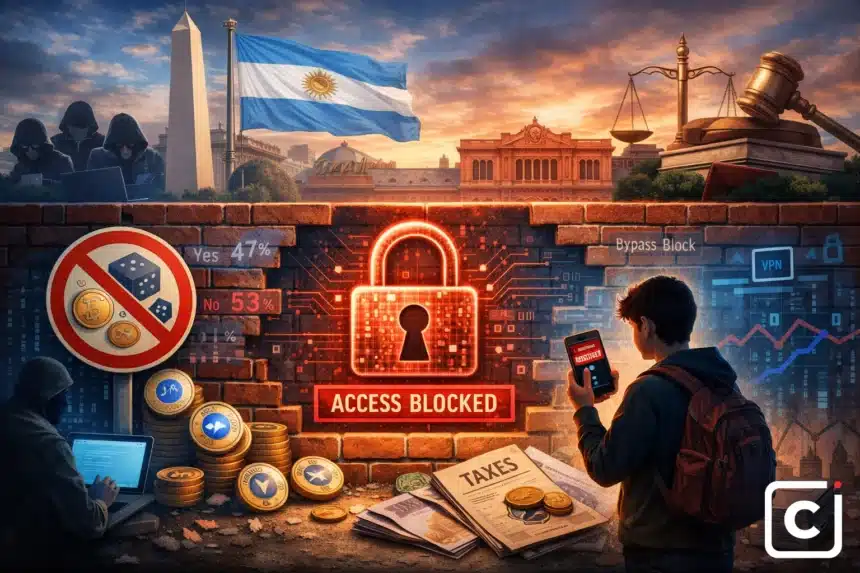
Argentina has officially ordered a nationwide block on Polymarket, the world’s largest website for trading on the outcomes of real world events, as officials raise alarms over unregulated gambling and the protection of young users.
Why This Matters and What to Watch
- The Crackdown: Argentina’s telecommunications authority (ENACOM) has instructed internet service providers to prevent users from accessing the site following a request from lottery officials.
- The Reason: Authorities claim the platform lacks the proper licenses to operate as a gambling entity and fails to verify the age of its participants.
- The Global Trend: This move follows similar scrutiny in France and the United States, signaling a difficult road ahead for prediction websites worldwide.
What Just Happened? The Block Explained
In a sudden move that has sent ripples through the digital world, the Argentine government has moved to shut off access to Polymarket. This isn’t just a suggestion; it is a legal order sent to the companies that provide your internet. If you try to visit the site from a standard Argentine connection, you will likely find a “site blocked” message or a failed loading screen.
The order came from the Lottery of the City of Buenos Aires (LOTBA) and was executed by the national communications agency. Their argument is simple: if you offer a service where people put money on an outcome to win more money, you are a gambling business. In Argentina, gambling businesses must follow strict rules, pay specific taxes, and most importantly prove they are keeping kids away from the “virtual table.”
How We Evaluated This News
To bring you the most accurate picture, we looked at official government filings from ENACOM, public statements from Argentine legal experts, and the current user traffic data provided by web analytics platforms. We compared this to how other countries, like France, have handled similar situations to see if Argentina is acting alone or following a global pattern.
What is Polymarket and Why is it Famous?
To understand the block, you have to understand what the site does. Imagine a giant digital chalkboard where anyone can ask a question about the future. For example: “Will it rain in Buenos Aires on Christmas?” or “Who will win the next big football match?”
Instead of just guessing, people use digital money to buy “shares” in an answer. If you think the answer is “Yes,” you buy a “Yes” share. If the event actually happens, your share becomes worth more money. If it doesn’t, your share becomes worth nothing.
Why it became a global hit:
- Accuracy: Because people are using real money, they tend to be very honest. Many people believe these markets predict the future better than news experts or polls.
- Variety: You can bet on almost anything from movie awards and scientific breakthroughs to political elections.
- Speed: Unlike a traditional bank or a slow betting shop, these transactions happen almost instantly using digital technology.
The Core Issues: Why Argentina Said “No”
The government’s decision wasn’t based on whether the technology was cool; it was based on the law. There are three main “red flags” that led to this nationwide ban.
1. The “Hidden” Gambling Problem
In many countries, these sites try to call themselves “information markets” or “research tools.” Argentina isn’t buying it. The government views any platform where you risk money for a chance at a profit as a casino. Since Polymarket didn’t apply for a local gambling license, the government views it as an “underground” or “black market” operation.
2. Protecting the Youth
This is the most emotional and powerful part of the argument. Traditional casinos check your ID at the door. Traditional betting websites in Argentina require a “know your customer” process where you upload a photo of your ID. Polymarket, which runs on digital currency technology, often allows users to sign up with just an email or a digital wallet. This makes it very easy for teenagers to use their allowance to “bet” on events, which the government considers a major public health risk.
3. Tax and Oversight
Licensed betting companies pay a portion of their earnings back to the state. This money often goes to schools, hospitals, and social programs. Because Polymarket is a global, decentralized platform, it doesn’t pay these local taxes. Argentine officials see this as unfair competition for local businesses that play by the rules.
How Different Countries View Prediction Markets
| Country | Status | Primary Reason for Restriction |
| United States | Restricted | Markets must be registered with commodity regulators. |
| France | Under Investigation | Concerns over illegal gambling laws and lack of license. |
| Argentina | Blocked | Unauthorized gambling and lack of age verification. |
| United Kingdom | Regulated | Must hold a specific Gambling Commission license. |
The “Human” Side: How This Affects Regular People
For the average person in Buenos Aires or Cordoba, this block changes things immediately.
The Investor’s Perspective
Many people in Argentina use these markets as a way to protect their money from inflation. By “investing” in outcomes they are sure of, they feel they are growing their savings in a way that local banks might not allow. Now, those people face a scary reality: their money is still “in” the website, but the “door” to get to it has been locked by their own government.
The Freedom Perspective
There is also a growing group of people who feel the government shouldn’t tell adults what they can do with their own money online. They argue that by blocking the site, the government is practicing “internet censorship.” This group believes that instead of a block, the government should have worked with the site to create better rules.
”The issue isn’t the technology; it’s the lack of a handshake between the tech world and the local law.” Summarized viewpoint from local legal analysts.
What’s Next for Polymarket and Argentina?
The story doesn’t end with the block. In fact, this is likely just the first chapter. Here is what we are watching for in the coming months:
The Legal Battle
Polymarket has a massive amount of money and a global user base. It is possible they will hire local lawyers to fight the block or apply for a formal license. However, getting a gambling license in Argentina is a long and expensive process.
The Use of “Workarounds”
Historically, when a government blocks a website, tech savvy users turn to tools like VPNs (Virtual Private Networks) to hide their location and keep using the site. We expect to see a surge in “How to use Polymarket in Argentina” searches. If the government sees this happening, they may try to block those tools too, leading to a much larger tech conflict.
Other Sites in the Crosshairs
If the government is successful in keeping Polymarket out, they won’t stop there. There are dozens of smaller sites that do the same thing. This block serves as a “warning shot” to any digital platform operating in Argentina without local permission.
FAQ:
Is it illegal to have money on Polymarket in Argentina?
The block is on the access to the site. While the government hasn’t said it’s a crime for an individual to own a “share” on the site, you may find it very difficult to log in and get your money back without using special technical tools.
Why can’t the site just verify ages?
Polymarket is built on a type of technology that values privacy. Changing the site to require ID uploads for every user would change the core of how it works. It’s a conflict between “privacy first” tech and “safety first” laws.
Does this affect other crypto websites?
For now, the order is specific to Polymarket. However, any site that looks like a betting platform or a casino is likely being watched closely by the Lottery officials right now.
Can the block be reversed?
Yes. If Polymarket agrees to follow Argentine laws such as blocking minors and paying local taxes the government could lift the block. This happened with other tech companies in the past.
Will this stop online betting?
Probably not. Most experts agree that when you block one site, users just move to another one that hasn’t been blocked yet. It is often described as “whack a mole.”
Final Thoughts
The block of Polymarket in Argentina is a perfect example of what happens when the fast moving world of digital finance hits the “brick wall” of traditional government law. While technology offers exciting new ways to predict the future and trade value, the government’s job is to ensure that those activities don’t hurt the most vulnerable members of society, like children.
As we move through 2026, expect to see more of these “clashes.” The digital world is no longer a lawless frontier; the “sheriffs” have arrived, and they are bringing their rulebooks with them
Free Daily Briefing
Get the Daily Briefing
Crypto, AI, and Web3 intelligence. Free, every day.
The Daily Brief by TCB
Crypto, AI & finance intelligence in 5 minutes. Every weekday morning. Free.