Key Takeaways
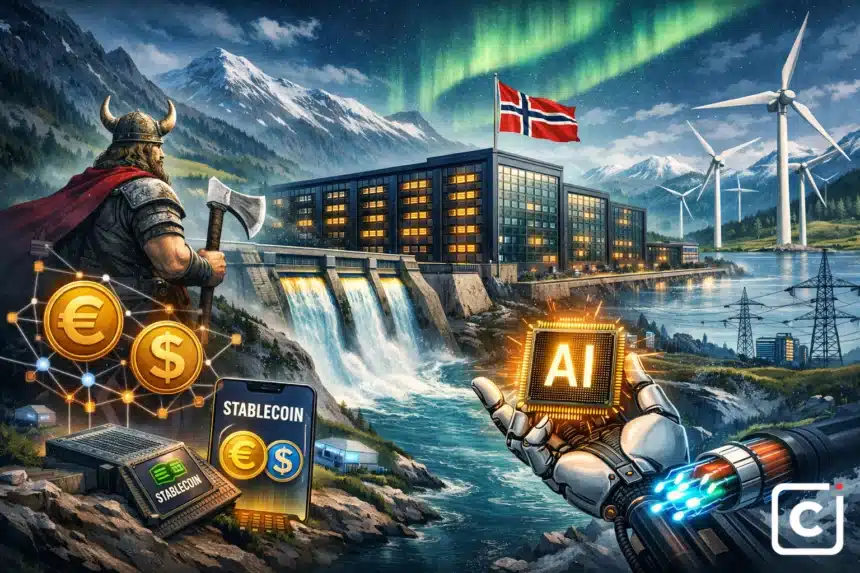
- Norway’s Big Move: The Tydal facility is now the largest AI data center in the Nordic region.
- The Business Pivot: Major tech firms like MARA are refocusing their billion-dollar hardware setups to power AI instead of just digital coins.
- Modern Money: Digital versions of the Euro and Dollar (stable coins) are replacing old, slow banking transfer methods for big businesses.
- Green Tech: The future of AI relies on “decentralized energy,” using natural resources to power the next generation of internet tools.
Norway is rapidly transforming into the primary hub for European artificial intelligence by converting massive industrial sites into high-tech data centers.
Why This Matters Today
- Infrastructure Shift: Large companies are moving away from simple digital currency mining to building the physical “brains” (data centers) needed for AI.
- Energy Efficiency: Norway’s cold climate and green energy make it the most cost-effective place in the world to run powerful computers.
- Economic Stability: The use of “stable” digital currencies is helping European businesses move money faster and more safely than traditional bank systems.
How Norway Took the Lead in the AI Race
For a long time, the world looked to Silicon Valley for tech breakthroughs. However, a massive shift is happening. The physical power required to run AI the kind that writes essays, generates images, and helps doctors diagnose diseases requires an incredible amount of electricity and cooling.
Norway has become the perfect answer. With its naturally cold weather and abundance of water-powered energy (hydroelectric power), it offers a home for computers that won’t overheat or break the bank.
The Transformation of Tydal
A company called Bitdeer recently made headlines by finishing a massive project in Tydal, Norway. They didn’t just build a new office; they converted an existing industrial facility into a giant “brain.” This facility is now the largest of its kind in the Nordic countries.
Instead of just processing digital transactions, these computers are now dedicated to “High-Performance Computing.” This is a fancy way of saying they are doing the heavy lifting for AI companies that need to process trillions of bits of information every second.
The Great Pivot: Why “Miners” Are Becoming “Makers”
One of the most interesting trends in 2026 is the total transformation of companies like MARA (formerly known primarily for Bitcoin mining).
Moving Beyond Digital Currency
In the past, these companies used thousands of computers to secure digital currency networks. But they realized something important: the same “plumbing” the buildings, the power lines, and the cooling systems is exactly what the AI world needs.
- From BTC to AI: Companies are no longer just “mining” for coins. They are building the “infrastructure” (the foundation) for the entire AI economy.
- Diversifying the Future: By offering their computer power to AI developers, these companies are making their businesses much more stable. If the price of digital coins goes down, their AI services keep them profitable.
Why This Helps You
When these companies pivot, it makes AI tools cheaper and faster for everyone. More data centers mean more competition, which eventually leads to better apps on your phone and more efficient services in your daily life.
Digital Money: The “New Plumbing” for European Business
While the physical computers are moving to Norway, the way money moves across Europe is also changing. You might have heard of “stable coins.” Think of these as digital versions of the Euro or Dollar that live on the internet.
Replacing the Old Ways
For decades, businesses used a system called ACH or SEPA to move money between banks. It often took days and involved high fees. Now, European corporate treasuries (the departments that manage a company’s cash) are using stablecoins as their primary tool.
| Feature | Old Banking System (ACH/SEPA) | New Digital System (Stablecoins) |
| Speed | 1 to 3 business days | Nearly instant (minutes) |
| Availability | Monday – Friday, 9–5 | 24 hours a day, 7 days a week |
| Transparency | Hidden behind bank doors | Visible and verifiable on the web |
| Cost | High for international transfers | Significantly lower fees |
This isn’t just for tech experts anymore. Regular companies selling clothes, cars, or food across Europe are using this “new ACH” to pay their suppliers without waiting for a bank to open on Monday morning.
The Connection Between Energy and Silicon
There is a growing “bridge” between two very different worlds: Energy (the power from the earth) and Silicon (the chips inside computers).
Decentralized Energy
In the old world, power came from one giant plant and went to everyone. In the new world, energy is “decentralized.” Small waterfalls in Norway or wind farms in the North Sea can plug directly into an AI data center. This means we aren’t wasting power sending it across long distances.
Why the “Nordic Model” Works
Norway’s success comes from three simple things:
- Cold Air: It’s free cooling for hot computers.
- Clean Water: It provides cheap, renewable electricity.
- Smart Laws: The government makes it easy for tech companies to build there.
What Happens Next? (The Future Outlook)
The “Green AI” movement is just getting started. As we move through 2026, keep an eye on these three developments:
- The Expansion of “Silicon Cities”: Expect more small towns in Norway and Sweden to become tech hubs, bringing jobs and high-speed internet to rural areas.
- Nvidia’s Role: The company that makes the chips for these centers (Nvidia) will likely continue to partner with European energy firms to make sure the computers are as “green” as possible.
- Regulation: European leaders are currently writing rules to make sure this AI growth is safe and that the digital money used by businesses is fully protected.
Frequently Asked Questions
1. Is AI bad for the environment because of all the power it uses?
It can be, but that’s why the move to Norway is so important. By using 100% renewable energy like water and wind, Norway is proving that we can have powerful AI without hurting the planet.
2. Why is a mining company like MARA building AI centers?
They already own the most expensive parts of the puzzle: the massive power connections and cooling systems. Switching to AI is like a delivery company switching from delivering mail to delivering medicine it’s the same truck, just a more valuable package.
3. What is a “data center” exactly?
Think of it as a giant warehouse filled with thousands of very powerful computers. Instead of people working inside, the computers work 24/7 to process information for the internet.
4. Are stablecoins safe for regular businesses?
Yes, most “corporate” stablecoins are backed 1-to-1 with real money in a bank. Businesses use them because they are faster than traditional transfers, not because they are trying to gamble.
5. Why is this happening in Europe specifically?
Europe has very strict rules about data privacy. By building these centers in Norway, European companies can keep their data close to home and follow their own laws, rather than sending information to other continents.
Final Thoughts
Norway is no longer just a land of beautiful mountains and fjords; it is becoming the engine room of the modern world. By combining green energy with the massive computer power needed for AI, and using new digital money to keep business moving, Europe is carving out a unique and powerful spot in the global tech landscape.
The “bridge” between the natural world (energy) and the digital world (silicon) is finally finished, and it runs straight through the heart of the Nordics.
Follow The Central Bulletin on X for daily AI and crypto coverage.
The Daily Brief by TCB
Crypto, AI & finance intelligence in 5 minutes. Every weekday morning. Free.