
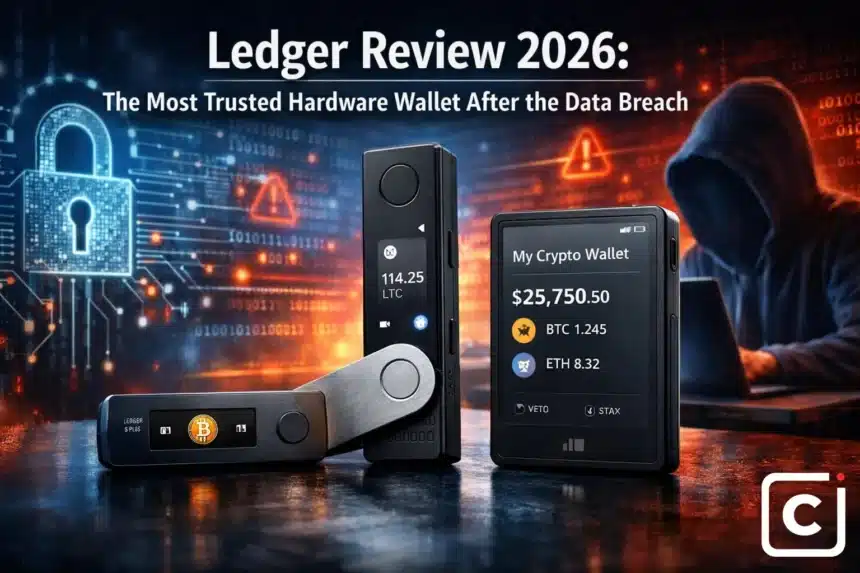
Ledger makes the best hardware wallet on the market. Despite a damaging 2020 customer data breach, a 2023 supply chain hack of its Connect Kit, and the controversial Ledger Recover feature, the underlying hardware security remains best in class. If you are serious about securing crypto, the Nano X or Nano S Plus belongs in your setup — just go in with eyes open about the company’s history.
The Ledger Product Line
Ledger offers three main devices in 2026:
- Nano S Plus (~$79): USB-C only, no Bluetooth, supports 5,500+ coins, solid entry point
- Nano X (~$149): Adds Bluetooth for mobile use, larger memory, most popular model
- Stax (~$279): Touchscreen display, premium build, same core security chip
All three use a Secure Element chip — the same type used in passports and credit cards — to protect private keys. Keys never leave the device.
What Ledger Does Well
Support for 5,500+ cryptocurrencies and tokens is unmatched among hardware wallets. The Ledger Live desktop and mobile app provides a clean interface for managing assets, buying crypto, staking, and accessing DeFi through integrated DApp support.
The Nano X’s Bluetooth connectivity lets you use the device with a mobile phone without a cable — a genuine convenience advantage over competitors. Battery life on the Nano X lasts weeks on standby.
Ledger Live integrates directly with major DeFi protocols and supports NFT management, making it more than a cold storage device.
The Controversies You Need to Know
In 2020, Ledger suffered a database breach that exposed the names, email addresses, and physical addresses of 270,000 customers. That data was published publicly and led to targeted phishing and physical threat campaigns against Ledger owners. Ledger did not handle the disclosure well initially.
In December 2023, a supply chain attack compromised the Ledger Connect Kit — a JavaScript library used by third party DApps to connect with Ledger. Malicious code drained wallets from users who interacted with affected DApps during a brief window. Hardware wallets were not directly breached, but the incident damaged trust in Ledger’s software ecosystem.
Ledger Recover, launched in 2023, allows users to optionally back up their seed phrase via a split-key system tied to identity verification. The crypto community reacted with hostility — the core concern being that a hardware wallet now had a mechanism to export seed phrase shards to third parties. Ledger has clarified it is entirely optional and opt-in, but the controversy remains.
Security Architecture
The Secure Element chip stores private keys in a certified tamper-resistant environment. All transaction signing happens on-device. The firmware is partially open source; the Secure Element OS is not, which is a point of ongoing debate.
Despite the past incidents, no hardware Ledger device has been remotely compromised. The attacks exploited software around the device, not the device itself.
Who Should Buy a Ledger
Anyone holding a meaningful amount of crypto who wants hardware-level security. The Nano S Plus is the value pick for most users. The Nano X is worth the premium if you want Bluetooth and mobile use. Skip the Stax unless you want the premium hardware experience.
Users who are deeply uncomfortable with Ledger Recover’s existence — even as an optional feature — should consider Trezor as an alternative.
Final Verdict
The 2020 breach and 2023 Connect Kit hack are legitimate concerns about Ledger as a company. But the hardware itself has never been the failure point. Ledger Recover is optional and does not affect users who ignore it. For most people looking for a hardware wallet, Ledger’s device quality, coin support, and Ledger Live ecosystem make it the top pick in 2026.
The Daily Brief by TCB
Crypto, AI & finance intelligence in 5 minutes. Every weekday morning. Free.