Trezor is the most transparent hardware wallet available. Its firmware is fully open source — anyone can audit the code. There is no Bluetooth, no cloud backup, and no optional seed phrase export feature to debate. What you get is straightforward, verifiable security. For users who want to trust the math rather than the company, Trezor is the right choice.
The Trezor Lineup
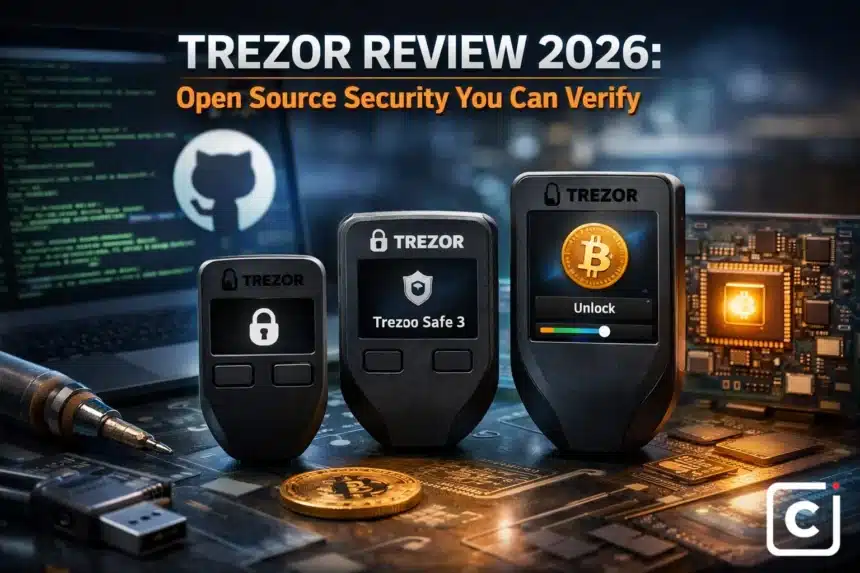
SatoshiLabs, the Czech company that invented the hardware wallet category, offers three devices:
- Model One (~$69): Entry level, two buttons, basic display, proven security
- Safe 3 (~$79): Newer model with Secure Element chip added, replaces the Model One
- Model T (~$179): Touchscreen, wider coin support including Cardano natively, premium build
All models support 9,000+ cryptocurrencies and tokens across multiple networks.
Open Source as a Security Principle
Trezor’s entire firmware stack is published on GitHub. Security researchers, developers, and privacy advocates have reviewed it extensively. No critical backdoors or vulnerabilities have been found in the core firmware. This is a meaningful differentiator — you do not have to trust Trezor’s claims about what the device does. You can verify.
The Safe 3 added a Secure Element chip, addressing a previous criticism that Trezor lacked the certified tamper-resistant hardware found in Ledger devices. Trezor’s Secure Element still uses open source firmware where possible.
Trezor Suite
Trezor Suite is the desktop and web application for managing your Trezor. It handles sending and receiving assets, coin control for Bitcoin privacy, transaction labeling, and basic portfolio tracking. It is clean, functional, and regularly updated. A browser extension version provides DApp connectivity for Ethereum users.
There is no mobile app that connects directly to the device — Trezor is intentionally wired-only, treating Bluetooth as an attack surface to avoid.
What Trezor Does Not Have
No Bluetooth. No cloud backup. No seed phrase recovery service. For some users, these are bugs. For Trezor’s target audience, they are features.
If you lose your Trezor and your seed phrase backup, your funds are gone. There is no recovery service to call. This is the tradeoff of true self-custody — it puts all responsibility on the user.
Trezor also lacks the integrated DeFi ecosystem that Ledger Live offers. DApp interaction requires routing through browser wallets like MetaMask with Trezor as the signing device.
Physical Security
Trezor devices require a PIN to unlock. After a set number of incorrect PIN attempts, the device wipes itself. Passphrase support adds a 25th word to your seed, creating a hidden wallet that cannot be accessed without knowing the passphrase — even if someone physically steals your device and seed phrase backup.
Who Should Buy a Trezor
Security-conscious users who want verifiable open source code. Bitcoin maximalists who prioritize privacy features like coin control. Anyone who is uncomfortable with Ledger’s closed source Secure Element OS or the Ledger Recover feature. Developers who want to audit their tools.
Users who want Bluetooth mobile use, deep DeFi integration, or a managed backup option will be better served by Ledger.
Final Verdict
Trezor does fewer things than Ledger Live, but it does the core thing — keeping your private keys secure — as transparently as any device on the market. The Safe 3 at $79 is an excellent entry point. The Model T is worth considering for Cardano holders or touchscreen preference. If “trust but verify” is your philosophy, Trezor is built for you.
The Daily Brief by TCB
Crypto, AI & finance intelligence in 5 minutes. Every weekday morning. Free.