
Last updated: 24 March 2026
Key Takeaways
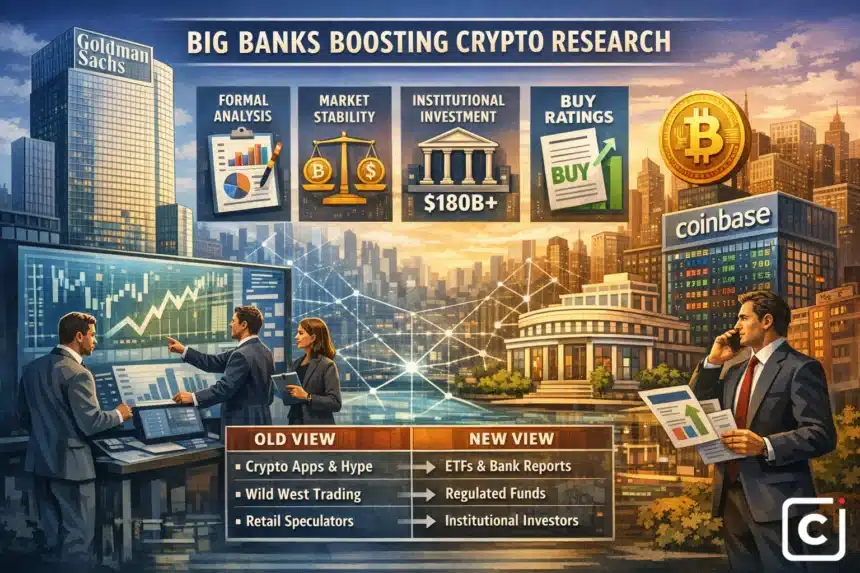
- Formal Recognition: Banks are moving crypto experts into their main research departments.
- Better Information: Investors will get professional-grade analysis instead of just social media hype.
- Market Stability: Expert coverage often leads to more stable prices and less “wild west” behavior.
- Institutional Growth: Over $180 billion is already sitting in regulated crypto products as of late 2025.
Goldman Sachs and Jefferies Expand Crypto Research:
Goldman Sachs and Jefferies are now hiring dedicated specialists to study the crypto market just like they study regular stocks. This move signals that big banks no longer see digital assets as a side project, but as a permanent part of the global financial system.
- Who it affects: Everyday investors, pension funds, and large companies looking for expert guidance on digital assets.
- Why it matters: Research from top banks makes crypto more “official” and easier for big institutions to buy into.
- What to watch: New “Buy” or “Sell” ratings on crypto-linked companies and more detailed reports on how digital coins affect the economy.
This article explains why these two banking giants are expanding their teams, what this means for the future of your investments, and how “equity research” is the bridge bringing crypto to the mainstream.
What is Actually Happening at Goldman and Jefferies?
For a long time, if a bank like Goldman Sachs talked about crypto, it was usually through a small, experimental desk or a specific trading team. However, recent reports show a major shift. Both Goldman Sachs and Jefferies are now hiring “Equity Research Associates” specifically for digital assets.
In simple terms, an equity researcher’s job is to look at a company or a market, crunch the numbers, and tell investors whether it’s a good deal. By putting these experts in their formal research divisions, the banks are saying that crypto is now a “real” sector, just like healthcare, technology, or energy.
Why Are They Doing This Now?
The timing isn’t accidental. By early 2026, the amount of money flowing into regulated crypto funds has reached record highs. Large organizations like the ones that manage your retirement savings don’t like to guess. They need data, and they trust the data coming from established names like Goldman Sachs.
According to market data, institutional holdings in crypto products grew significantly throughout 2025, with Goldman Sachs itself disclosing over $3.3 billion in digital asset holdings in recent filings.
How This Changes the Way We View Crypto
When a big bank starts “covering” an asset, the conversation changes from “Is this a scam?” to “What is this worth?” This process is called institutionalization.
From Hype to Help
Previously, crypto prices were often driven by “vibes” or a single person’s post on social media. When Jefferies or Goldman Sachs writes a 50-page report on a digital asset, they use math and historical data. This helps remove the emotion from the market.
Watching the “Ripple Effect”
This expansion doesn’t just affect Bitcoin. It affects companies like Coinbase, mining firms, and even banks that use blockchain technology. For example, Goldman Sachs recently raised its price target for Coinbase, signaling a “Buy” to their wealthy clients. This kind of professional stamp of approval often leads to more buying from other big players.
The Growth of the Digital Asset Ecosystem
The expansion into research is part of a much larger trend. Wall Street is no longer just watching from the sidelines; they are building the “pipes” that make the system run.
| Feature | Old View (2020) | New View (2026) |
| Market Access | Specialized apps and “wallets” | Standard brokerage accounts and ETFs |
| Research | YouTube and Social Media | Formal Bank Reports (Goldman, Jefferies) |
| Regulation | “The Wild West” | Clearer laws (like the 2025 GENIUS Act) |
| Participants | Mostly individual “retail” traders | Major Banks, Pension Funds, Governments |
The “SOP” of Big Banking
When banks expand research, they follow a specific pattern:
- Hiring: Bringing in the best minds from the crypto world.
- Product Launch: Creating new ways for customers to buy in safely.
- Advisory: Helping big companies put crypto on their balance sheets.
What Happens Next?
Expect to see more “traditional” financial news outlets reporting on crypto using the same language they use for Apple or Amazon. We are entering an era where your financial advisor might suggest a small “allocation” to digital assets as a standard part of a healthy portfolio.
As more banks join in, the “volatility” (the crazy price swings) of crypto is expected to slowly decrease. While this might mean fewer “get rich quick” stories, it also means a much safer environment for people who want to save for the long term.
FAQ:
1. Does this mean the price of Bitcoin will go up?
Not necessarily. Research is about finding the correct value, not just predicting a rise. However, more professional interest usually leads to more money entering the market over time.
2. Why should I care if a bank hires a researcher?
Because those researchers influence the people who manage trillions of dollars. If they say a sector is worth investing in, it changes the entire financial landscape.
3. Is crypto still risky?
Yes. Even with bank research, digital assets are more volatile than traditional stocks or bonds. The research simply helps investors understand those risks better.
4. Will other banks follow?
Most likely. In the world of finance, if Goldman Sachs and Jefferies move into a space, competitors like Morgan Stanley or JPMorgan are usually right behind them or already working on similar plans.
The Daily Brief by TCB
Crypto, AI & finance intelligence in 5 minutes. Every weekday morning. Free.