
Last updated: 9 April 2026
Key Highlights
- Digital money uses a public, shared history book, called the “chain of blocks,” to track all payments.
- This history book is copied and held by thousands of computers worldwide, meaning no single bank or government controls it.
- The records are secured by a unique, digital link between each page (block), making it impossible for anyone to sneakily change past information.
- You control your money using a digital wallet that holds a secret, private key which is the ultimate proof that the funds belong only to you.
The Invisible Engine: How Digital Money Really Works
Imagine money that lives only on the internet, not printed by any government and not kept in a big vault by a bank. This is the simplest way to think about digital money, or what many call “crypto.”
The most important part of this system isn’t the coin itself, but the clever technology that keeps track of everything like an unbreakable, shared history book that everyone in the network owns a copy of. This technology changes the whole game because it lets strangers agree on who owns what, without needing a middleman they both trust.
The Shared Record Book
Think of every single trade or payment you make with this digital money as a small note. Once a bunch of these notes are gathered, they are put into a secure digital container, like a page in our history book. We call this container a “block.”
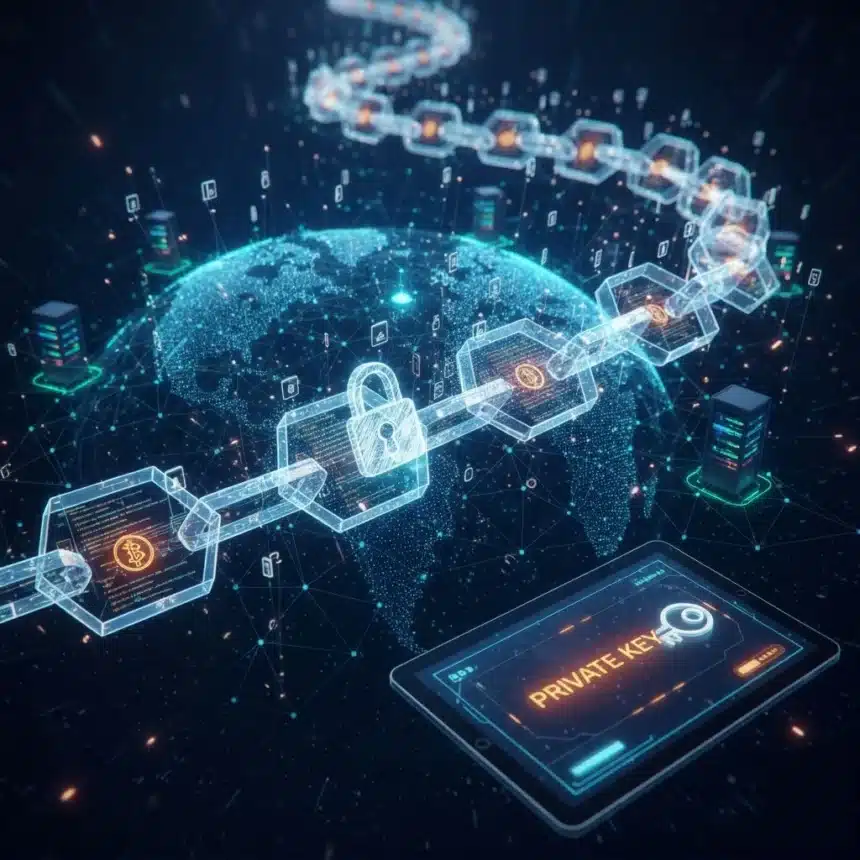
This is the clever part: Every new page of records is permanently stuck to the page before it. This connection is super secure it’s like giving both pages a unique, secret code that matches only them. If someone tries to mess with an old page, the code instantly breaks, and everyone knows the record has been tampered with. Because these secure pages are linked one after the other, we call it the “chain of blocks.” It’s an everlasting, unchangeable history of all the money movements.
Everyone Holds the Master Copy
In the traditional world, only your bank has the real, final record of your money. If the bank’s computer system goes down or something goes wrong, it’s a huge problem. With digital money, that’s not the case. The unbreakable history book (the chain of blocks) is copied and kept on thousands of computers all over the world.
- No Single Boss: Because the record is spread out everywhere, no single person, company, or government controls it. It is truly owned by the community of people using it. This means no one can unilaterally decide to freeze your funds or change the rules of the system.
Trust by Seeing: If someone tries to cheat say, by changing their personal copy of the history book their version instantly looks different from the thousands of other copies held by everyone else. The network knows the change is fake and ignores it. The only true history is the one that everyone agrees upon. This shared agreement keeps the system honest and reliable, and that’s why we don’t need a bank to create trust. The trust is built into the system itself.
How New Pages Get Approved
When you want to send digital money to a friend, your note (the transaction) doesn’t just go through automatically. It first needs to be approved and officially added to the next “block.” How does this global community agree that your payment is real and can be added?
A group of people, often called “checkers” or “approvers,” use their powerful computers to do the hard work. They compete to be the first to solve a complex digital puzzle that basically proves they put in the effort and resources. Once they solve the puzzle, they get to verify and add the new block of payments to the shared chain.
- Their work is crucial: they must confirm that you actually have the money you are trying to send and that you haven’t tried to spend it twice. For successfully proving the payments are valid and adding the new page to the book, they are rewarded with a little bit of the digital money. This whole process is what keeps the engine running smoothly and securely, constantly extending the unbreakable chain.
Your Secret Digital Doorway
The last important piece is how you hold and use your digital money. You keep it in a digital spot called a “wallet.” This wallet isn’t like a leather pouch; it’s just a program or app that holds two special keys for you:
- A Public Address: This is like your email address or street address. You can give it to anyone so they can send you money. It’s public and safe to share.
- A Private Key: This is the secret code to your safe, the ultimate proof that you own your money and can move it. You must never lose or share this private key, because anyone who has it can take your funds instantly. There’s no “forgot password” button in this system. If you lose your key, the money is gone forever.
Simply put, digital money runs on a public history list that’s copied and kept safe by thousands of computers worldwide. Because everyone agrees on the list’s truth, nobody can change it. This gives you a new, secure way to handle your own money, without having to rely on banks or governments.
Free Daily Briefing
Get the Daily Briefing
Crypto, AI, and Web3 intelligence. Free, every day.
The Daily Brief by TCB
Crypto, AI & finance intelligence in 5 minutes. Every weekday morning. Free.