



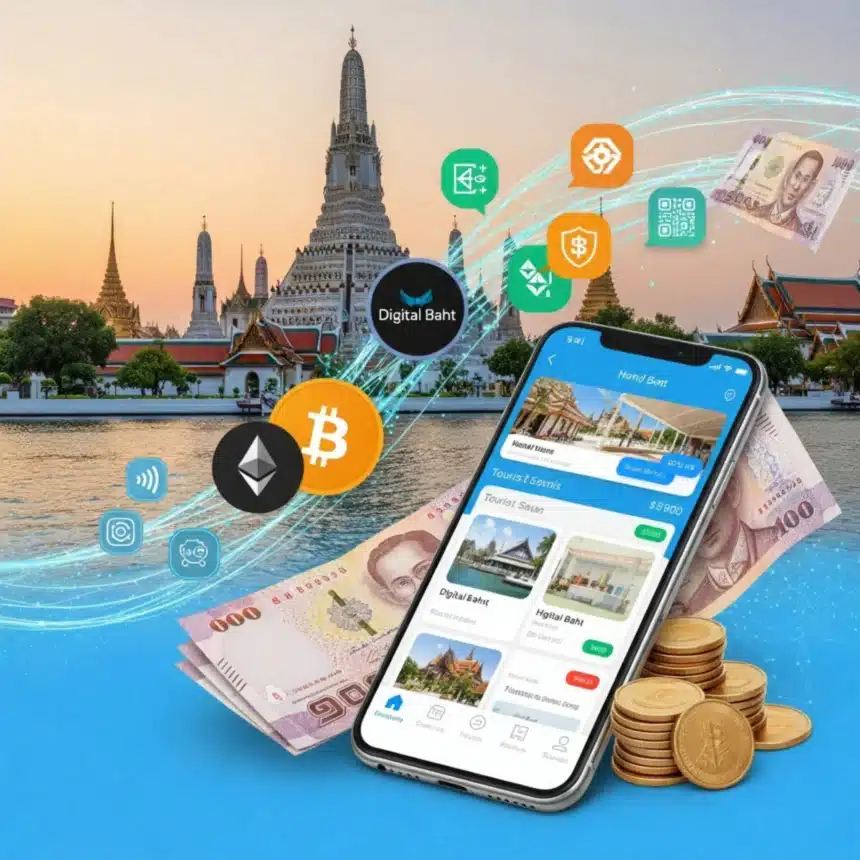
To make it easier for foreign tourists to spend money, Thailand has launched a new program called TouristDigiPay. This program is a trial, known as a regulatory sandbox, that allows visitors to change their digital currencies, like cryptocurrencies, into Thai baht to make electronic payments. It’s a strategic move by the Thai government to help its struggling tourism industry, which has seen a significant drop in visitor numbers.
To make it easier for foreign tourists to spend money, Thailand has launched a new program called TouristDigiPay. This program is a trial, known as a regulatory sandbox, that allows visitors to change their digital currencies, like cryptocurrencies, into Thai baht to make electronic payments. It’s a strategic move by the Thai government to help its struggling tourism industry, which has seen a significant drop in visitor numbers.
The project was officially launched on a Monday and lets international tourists convert their digital money into local currency through regulated companies that handle electronic payments. To use the service, tourists must first go through a strict identification process called Know Your Customer (KYC).
There are tight rules in place to control the system. For example, there are monthly limits on how much money a tourist can spend, and they are not allowed to directly withdraw cash after converting their cryptocurrencies. All the companies involved in this program, from digital asset businesses to electronic money providers, will be jointly regulated by the Bank of Thailand and the Securities and Exchange Commission.
The full details of the program were announced by Deputy Prime Minister Pichai Chunhavajira after several months of planning. The main reason for this initiative is to reverse the major losses in tourism, particularly from Chinese tourists, who have been a key group for the industry.
Thailand’s tourism numbers show a clear decline. In the first half of 2025, the country welcomed 16.8 million visitors, which is a drop from the 17.7 million visitors in the same period the previous year. The number of tourists from East Asia fell by 24%, and Chinese visitor arrivals specifically dropped by 34% compared to the year before.
Thailand is facing stiff competition from its neighbors. Countries like Japan offer better exchange rates, and Vietnam provides more affordable prices for travelers on a budget. This puts pressure on Thailand to be innovative and offer unique experiences to attract international tourists.
Before launching TouristDigiPay, the government had public discussions about how financial innovations and digital assets could help economic growth. There were previous talks about trying out cryptocurrency payments in Phuket, a major tourist spot, but those plans are still in the works.
Thailand is not the only country exploring “crypto-tourism.” Bhutan has already partnered with Binance Pay to accept payments from tourists. Other examples include Blue Origin, which accepts Bitcoin for space travel, and UAE airlines, which have collaborated with Crypto.com to let people buy flights with digital currency.
This regulatory sandbox is a calculated risk that Thailand is taking on cryptocurrency technology. It’s a bet that this new approach will help revive its tourism sector and support a more diverse economy. The success of this trial could pave the way for wider adoption of digital payments in the country, potentially making travel to Thailand more convenient and attractive for a new generation of tourists.