
Last updated: 19 July 2026
Key Takeaways
Key Highlights
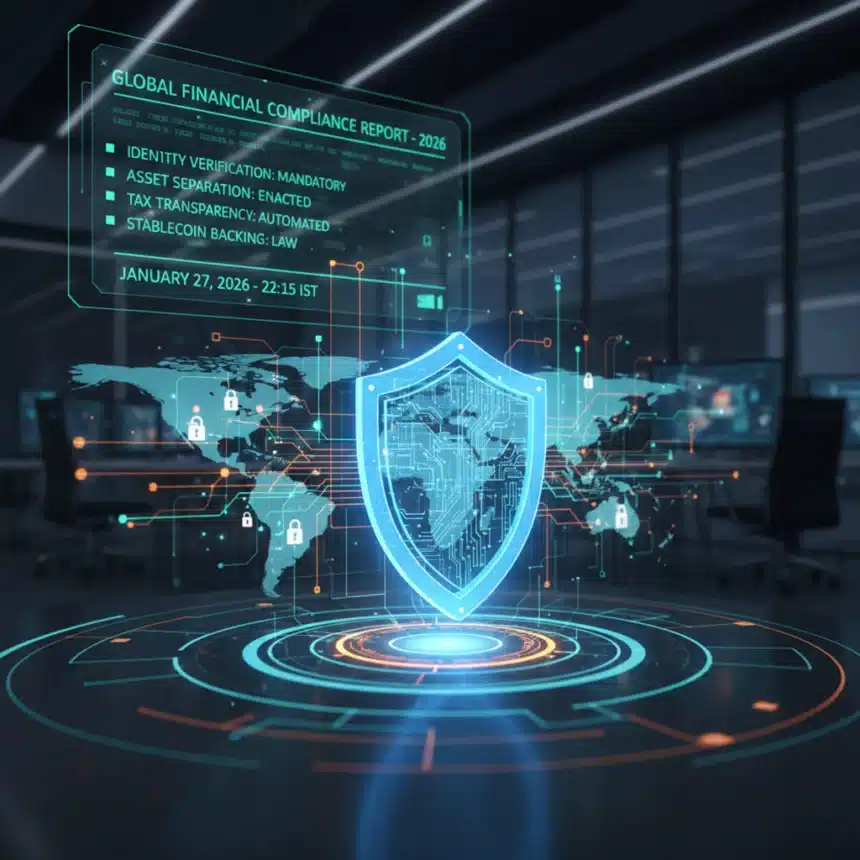
- Identity Checks: As per new crypto rules you can no longer buy or move digital money without proving who you are.
- Safety Nets: Exchanges must now keep your money separate from their own business funds.
- Tax Transparency: Most countries now automatically share your transaction data with tax offices.
- Steady Coins: Digital coins tied to the dollar (stable coins) are now strictly backed by real cash reserves.
Global Crypto Rules in 2026:
The days of the digital “Wild West” are officially over. As of 2026, governments around the world have moved from just talking about rules to actually enforcing them. This change makes using digital coins feel more like using a traditional bank account safer, but with more eyes on your activity.
Why Global Rules Matter Today
In the past, if a digital money platform disappeared, your money went with it. Today, global frameworks like the European MiCA rules and the G20 agreements have created a safety shield for everyday users. Whether you are in London, New York, or Tokyo, the goal is the same: to prevent fraud and make sure the “plumbing” of the digital financial world doesn’t leak.
This article covers the main rules governing digital money today, how they protect you, and what you need to do to stay on the right side of the law.
Proving Who You Are (ID Verification)
The most visible rule for any user is the requirement to show an ID. This is often called “Knowing Your Customer.” In 2026, this isn’t just for signing up; it applies to almost every move you make.
- Verified Accounts: Every major app or website that sells digital coins must verify your identity using a passport or driver’s license.
- The “Travel Rule”: If you send money from one app to another, your name and account info “travel” with the payment. This is designed to stop illegal money movements.
- No More Hiding: While you can still use private digital wallets, it is becoming much harder to move that money back into “real” cash without explaining where it came from.
Keeping Your Money Separate and Safe
One of the biggest rules introduced recently is how companies handle your funds. In the past, some companies used customer money to make their own risky bets.
- Asset Separation: Rules now force companies to keep customer money in a completely different “bucket” from their own office rent or employee salaries.
- Proof of Funds: Companies must regularly prove they actually have the money they say they have.
- Insurance: Many regions now require platforms to have insurance or a “rainy day fund” to pay users back if the system gets hacked.
The New Rules for “Steady” Coins
Digital coins that are meant to stay at a steady price (like $1.00) are now treated almost like digital cash. Because so many people use them, regulators are very strict about them.
| Rule Type | What it Requires | Why it Exists |
| Cash Backing | Every digital dollar must be backed by a real dollar in a bank. | To ensure you can always “cash out.” |
| Licensing | Only approved companies can issue these coins. | To keep scammers out of the market. |
| Redemption Rights | The company must let you trade your coins for real cash instantly. | To prevent your money from being “trapped.” |
The End of Tax Loopholes
If you thought digital money was a way to avoid taxes, 2026 is a wake up call. New global systems like the Crypto-Asset Reporting Framework (CARF) are now active.
Most countries now participate in an automatic data swap. This means if you sell a coin for a profit in one country, that information is sent directly to your home country’s tax office. It is no longer up to you to “choose” to report it; the platforms do it for you.
Expert Note: Always keep a digital log of your trades. Even if you just swap one digital coin for another, many countries count that as a “sale” that might be taxed.
Standardizing Truth in Advertising
Companies can no longer promise that a digital coin will “go to the moon” or guarantee you’ll get rich.
New rules require any company selling digital assets to provide a “White Paper” which is essentially a plain language manual. This document must clearly list the risks, who is running the project, and what the coin actually does. If a company lies in this document, they face massive fines or jail time.
Common Questions (FAQ)
Do I have to pay taxes on my digital coins in 2026?
Yes. In almost every major country, selling or even trading one coin for another is a taxable event. Most platforms now send “tax forms” directly to you and the government.
Is my money protected if an exchange goes bankrupt?
Under the new rules, yes. Because your money is kept in a separate account, it should (in theory) be returned to you even if the company fails.
Can I still use a private hardware wallet?
Yes, you can. However, when you try to send that money to an exchange to sell it, you will likely be asked to prove that the private wallet belongs to you.
What should you do next?
To make sure you are following the latest rules, check the “Settings” or “Legal” section of your favorite crypto app. They are now required to provide a summary of how they protect your assets.