
Last updated: 1 April 2026
Key Takeaways
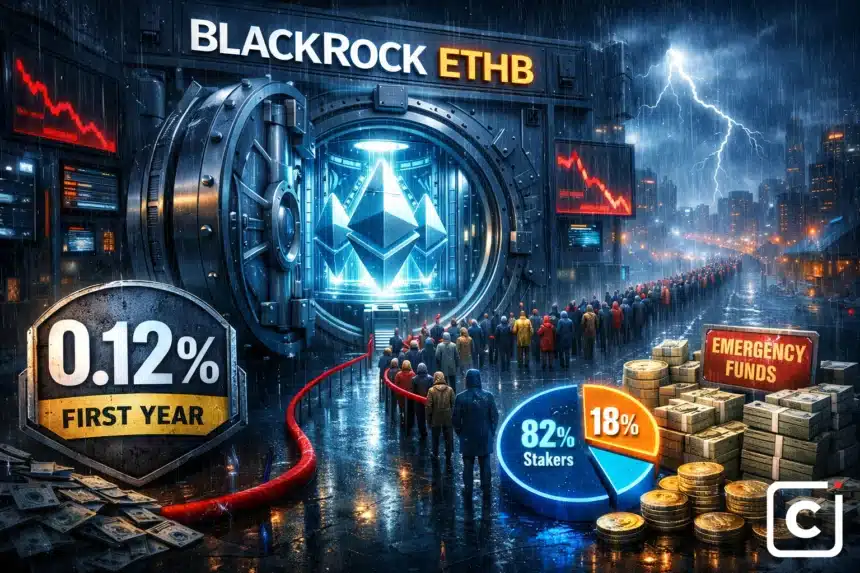
- Net Rewards: After the Blackrock’s 18% cut, investors keep about 82% of the rewards generated.
- Fee Waiver: The main management fee is being cut in half for the first year to attract new money.
- Withdrawal Delay: If the fund’s “emergency stash” runs out, getting your investment back could be a slow process.
- Cash or Coin: BlackRock might pay you back in cash instead of digital coins if things get too crowded.
Why BlackRock’s New Ethereum Fund Could Mean Smaller Wins and Longer Waits
The giant investment firm BlackRock just shared new details about its upcoming iShares Staked Ethereum Trust (ETHB). On Tuesday, February 17, 2026, the company filed updated paperwork with the government showing exactly how it plans to handle the “rewards” earned from the digital currency it holds.
- The Shared Pot: BlackRock and its partner, Coinbase, will keep 18% of the interest earned from holding Ethereum.
- The Wait List: If too many people try to sell their shares at once, it could take weeks to get their money back.
- Safety First: The fund will keep a small “buffer” of cash and digital coins ready to pay out everyday requests.
In this article, we will break down what these fees mean for your wallet, why the “exit queue” matters, and how BlackRock plans to keep things running even when the market gets bumpy.
The 18% “Skim”: How Your Rewards Are Divided
When you hold Ethereum through this new fund, the fund “stakes” it essentially putting the digital coins to work to earn interest. However, you won’t get the full amount of that interest.
According to the newest filing, BlackRock and Coinbase will take an 18% fee off the top of those rewards. For example, if the Ethereum network pays out $100 in rewards, $18 goes to the companies, and $82 stays in the fund for the investors. While this sounds like a large chunk, it is the price investors pay for having a professional firm handle the technical side of digital security and network management.
On top of this reward split, there is a standard management fee of 0.25%. To make the deal sweeter for early birds, BlackRock is lowering this to 0.12% for the first 12 months (or until the fund reaches $2.5 billion in value).
The “Exit Queue” and the Risk of Long Waits
The most surprising part of the news involves what happens when people want to leave. Ethereum isn’t like a regular bank account; when you “stake” it to earn rewards, it gets locked into the network. Getting it back out requires joining a digital “waiting line” called the exit queue.
If only a few people sell their shares, BlackRock can pay them from a small stash of “unstaked” Ethereum they keep on the side usually between 5% and 30% of the total fund. This is their safety buffer.
However, if a lot of people try to sell at the same time perhaps during a market crash that buffer will run dry. When that happens, BlackRock has to ask the Ethereum network to release more coins. Depending on how many other people in the world are trying to do the same thing, this “exit queue” can take several weeks. During this time, your money is effectively stuck in line.
Cash vs. Kind: How You Get Paid Back
Because of these potential delays, BlackRock has warned that it might change how it pays people back. Usually, big investors like to get paid back in the actual digital coins (this is called “in kind”). But if the line is too long, the fund might be forced to use “cash in lieu.” This means the fund sells what it can and gives you dollars instead of the digital Ethereum you originally expected. While this gets you your value faster, it can have different tax rules and might not be what every investor wants.
Comparing the Options
| Feature | BlackRock ETHB | Standard Ethereum ETF |
| Earns Interest? | Yes | No |
| Fees on Interest | 18% | N/A |
| Wait for Cash | Can be weeks if busy | Usually 1–2 days |
| Main Fee | 0.25% (0.12% initially) | 0.25% |
Why This Matters for the Future
It is the largest money manager in the world, and this move shows they are getting more serious about the technical parts of digital money. By offering a fund that pays rewards, they are competing with other big names like Grayscale and VanEck.
However, they are also being very honest about the risks. They aren’t promising that you can get your money out instantly if everyone else is panicking. This “honesty” in the paperwork is a signal to big professional investors that they need to be prepared for the unique “plumbing” of the digital world.
FAQ:
1. When did this news come out?
The specific details about the 18% fee and the potential multi week delays were revealed in a government filing on February 17, 2026.
2. Does this affect the regular BlackRock Ethereum ETF?
No. It already has a fund (ticker: ETHA) that just holds the coins. This new fund (ticker: ETHB) is a separate option for people who specifically want to earn the extra interest.
3. Is 18% a high fee?
It is in the middle of the pack. Some smaller competitors take less, but some older, larger funds have been known to take even more.
4. Can I still sell my shares on the stock market?
Yes, regular people can buy and sell shares on the stock market like any other stock. The “weeks long delay” mostly affects the “authorized participants” the big professional firms that move huge blocks of money in and out of the fund. However, if they are delayed, it could cause the price of the stock to act strangely.
5. What is the total expected return?
If the network pays 3% interest, you would get about 2.46% after the 18% cut, and then you would still pay the small annual management fee on your total investment.
The Daily Brief by TCB
Crypto, AI & finance intelligence in 5 minutes. Every weekday morning. Free.