


Key Takeaways
- Power is King: AI requires 10x more power than a standard Google search; miners have the “plugs” ready to go.
- Fast-Track Growth: Building a data center from scratch takes 5 years; partnering with a miner takes less than 2.
- Diversified Income: Miners are no longer just betting on the price of Bitcoin; they are earning steady rent from Big Tech.
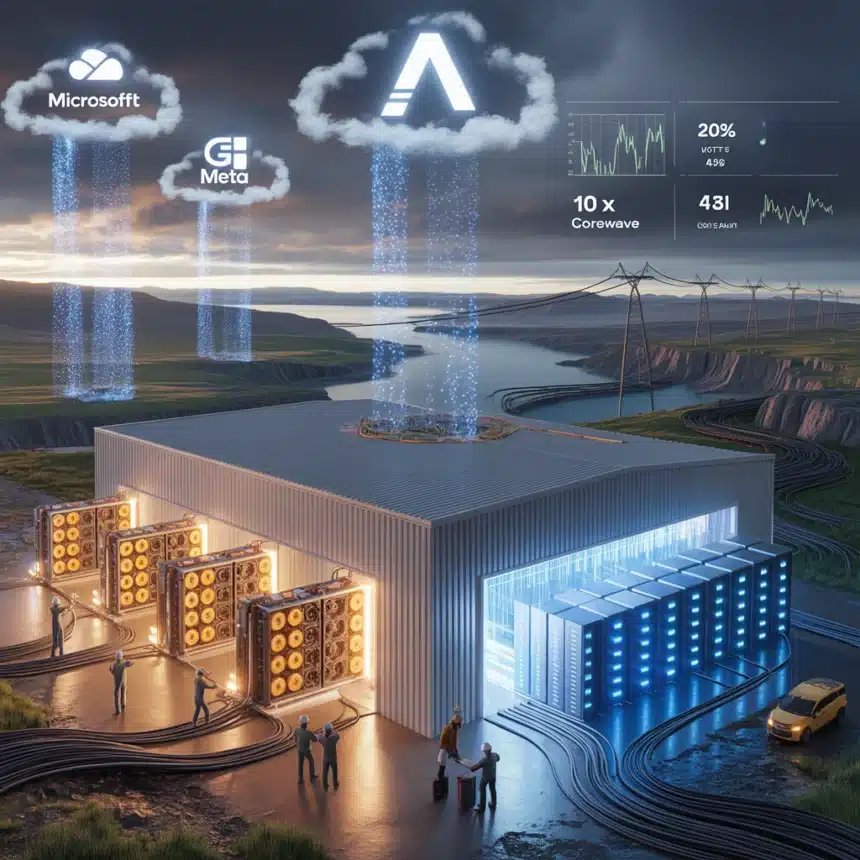
- The “Land Grab”: Companies like Microsoft and Meta are effectively “renting” the electrical grid through these partnerships.
Why Bitcoin Miners are Winning
Big tech companies like Meta and Microsoft are spending record-breaking amounts of money on artificial intelligence, creating a massive shortage of power and space that is turning Bitcoin miners into the tech world’s new landlords.
- Why it matters: AI needs massive amounts of electricity and specialized buildings, both of which Bitcoin miners already own.
- Who it affects: Large tech firms looking for space, Bitcoin mining companies shifting their business models, and investors in the energy sector.
- What to watch: Look for more “merger” deals where mining sites are converted into AI data centers over the next 12 months.
This article explains how the race for AI is changing the world of digital currency mining, why your favorite tech giants are knocking on miners’ doors, and what this means for the future of energy.
The Great Power Hunger of 2026
In early 2026, Meta and Microsoft announced they would continue to increase their spending on artificial intelligence, with budgets reaching hundreds of billions of dollars. However, they hit a major roadblock: they are running out of electricity.
Artificial intelligence isn’t just code; it’s physical. It lives in giant warehouses full of humming computers that get very hot and eat a lot of power. Because the traditional power grid is slow to grow, these tech giants are looking for anyone who already has a “big straw” stuck into the power grid. That is exactly what a Bitcoin miner is.
Why Bitcoin Miners are the Perfect Partners
For years, Bitcoin miners were seen as outsiders. They built massive warehouses in remote areas where electricity was cheap and plentiful. Now, those remote warehouses are the most valuable real estate on earth.
1. The Infrastructure is Already Built
If Microsoft wants to build a new AI center, they have to deal with city permits, copper shortages, and years of waiting for the power company to hook them up. A Bitcoin miner already has the building, the cooling fans, and—most importantly—the massive power cables connected to the grid.
2. The “Dual-Hustle” Model
Miners are realizing that while mining Bitcoin can be hit-or-miss depending on the price of the coin, AI companies pay a steady, guaranteed “rent.” Companies like Core Scientific and TeraWulf have already signed deals to lease out portions of their power capacity to AI firms.
| Feature | Bitcoin Mining | AI Data Centers |
| Income Type | Variable (based on coin price) | Fixed (long-term contracts) |
| Power Needs | High | Extremely High |
| Reliability | Can be turned off during peaks | Must stay on 24/7 |
| Equipment | Specialized (ASICs) | Versatile (GPUs) |
The “AI-Crypto” Marriage: Real-World Proof
We aren’t just guessing that this is happening. The numbers show a massive shift in how these companies operate.
- Core Scientific’s Big Win: Recently, the mining giant signed a 12-year deal with an AI company (CoreWeave) that is expected to bring in over $3.5 billion in revenue.
- The Stock Market Reaction: While Bitcoin’s price has been steady, the stock prices of mining companies that announced AI partnerships have outperformed the rest of the market by nearly 40% in some cases.
- Nvidia’s Role: The chips used for AI are in high demand. Miners are now clearing out their old Bitcoin machines to make room for these expensive AI chips provided by tech giants.
”The bottleneck for AI today isn’t the software; it’s the sheer physical access to electricity.”
What happens next ?
As we move further into 2026, expect to see the “mining” label disappear. These companies will start calling themselves “Energy Infrastructure Providers.”
The Hunt for “Stranded” Energy: Tech giants will start looking for miners in even more remote locations near wind farms or dams where there is extra power that nobody else can reach. This could actually help the green energy movement by providing a guaranteed customer for new solar and wind projects.
The Hybrid Center: We will see buildings that mine Bitcoin during the night (when power is cheapest) and process AI data during the day. This flexibility makes them the most efficient businesses on the electrical grid.
FAQ: Big Tech and Bitcoin Miners
Why can’t Microsoft just build their own power plants?
Building power plants and the lines to carry that power takes a decade or more. Buying or renting from a miner who is already connected to the grid is a “shortcut” that saves them years of waiting.
Is Bitcoin mining going away?
No, but it is changing. The most successful companies will likely do both: mine Bitcoin when it’s profitable and rent out space for AI when they want a guaranteed paycheck.
Does this make AI more expensive?
Actually, it might keep costs down. By using existing buildings and power setups, tech companies can roll out AI tools faster without spending as much on new construction.
How does this affect the price of Bitcoin?
Indirectly, it makes mining companies “stronger.” If a miner has a steady check from Microsoft, they don’t have to sell their Bitcoin the moment the price drops, which can lead to less selling pressure in the market.
Are these sites bad for the environment?
It depends. Many miners are located near renewable energy sources like hydro or wind. By partnering with AI, they are helping to fund more of these clean energy projects.