


Key Highlights
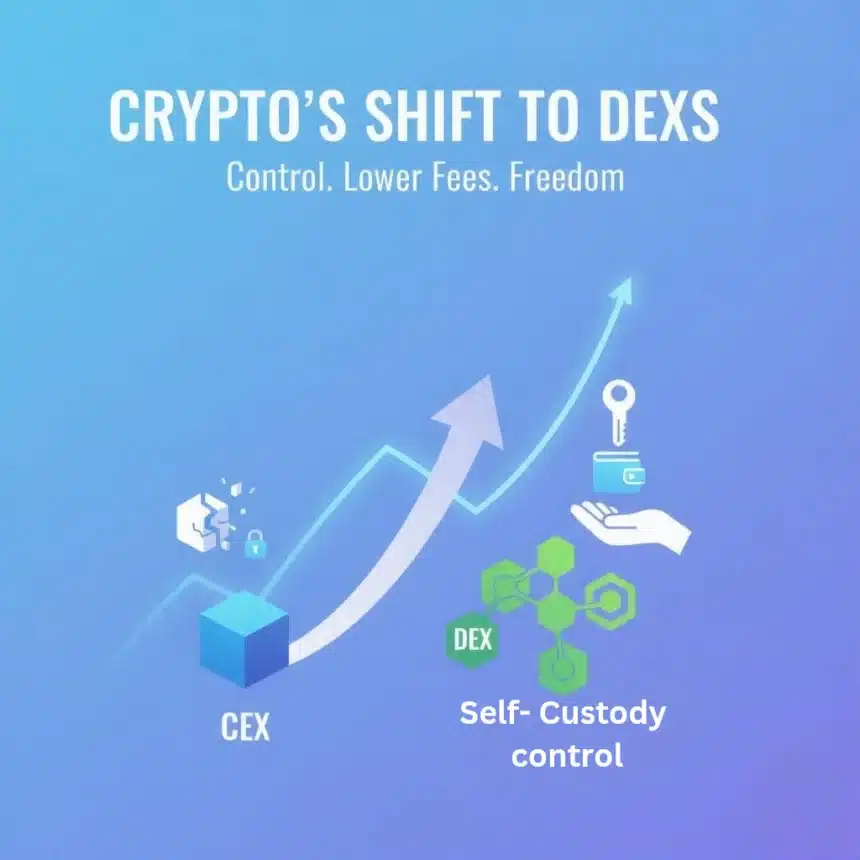
- Users are rapidly shifting from CEXs (like Binance) to DEXs (like Uniswap).
- The primary driver is the need for self-custody and control over funds after CEX scandals (e.g., FTX).
- DEX market share has tripled in 2025 (from \approx9% to \approx30%) due to improved UX, lower fees, and avoiding regulation.
- DEXs now rival CEXs in speed/design and are the initial launchpad for new tokens, driving retail investor volume.
The Big Shift: From CEX to DEX
Crypto traders are increasingly leaving big, well-known exchanges like Binance and Coinbase (which are Centralized Exchanges or CEXs) and moving to platforms like Uniswap and PancakeSwap (which are Decentralized Exchanges or DEXs).
In simple terms:
- CEXs are like a traditional bank or stockbroker. They are run by a single company, and you trust them to hold your money for you.
- DEXs are like a peer-to-peer marketplace. They are run by computer code on a blockchain, and you trade directly from your own personal wallet, so the exchange never actually holds your money.
This shift has been dramatic in 2025. The amount of trading done on DEXs has tripled, rising from under 10% to over 30% of all spot crypto trades. This momentum shows that the power in crypto is moving from large companies back to individual users.
Why Traders Are Making the Switch
For years, CEXs were popular because they were easier to use. However, DEXs have closed the gap, and now offer a better experience with a massive benefit: full control of your funds.
Here are the top reasons people are choosing DEXs:
1. You Control Your Money (Self-Custody and Security)
This is the single biggest reason for the change. The memory of major centralized exchanges collapsing like the FTX scandal in 2022 is a permanent lesson for traders.
- On a CEX: You deposit your crypto into the exchange’s account. If the exchange is hacked, shut down, or mismanages funds, your money is at risk because they hold the keys. The saying is: “Not your keys, not your crypto.”
- On a DEX: You trade directly from your own personal crypto wallet. The exchange never holds your funds. Even if the DEX platform were to be exploited, the assets in your personal wallet would remain safe and untouched.
2. Avoiding Rules and Gatekeepers (Regulatory Pressure)
Centralized exchanges are heavily regulated. This means they must follow strict rules, including asking for your personal ID (KYC) and sometimes limiting who can use their service based on their country.
- DEXs are permissionless. Anyone with a crypto wallet and an internet connection can use them, no ID required, which gives traders global, unrestricted access. When regulators take action against a CEX, traders quickly move to these permissionless platforms for “safer ground.”
3. Better Performance and Lower Cost (Lower Fees and Better UX)
The old idea that DEXs were slow and clunky is no longer true.
- Newer blockchain networks like Solana and Base now allow DEX trades to happen in under a second and for a cost of less than a penny.
- DEXs have become as smooth and easy to use as regular apps, making them a cheaper, faster, and more enjoyable experience than they were a few years ago.
- Getting in Early on New Tokens (Access to New Assets)
- DEXs are the first place new crypto projects launch their tokens, whether it’s the next big governance token or a new meme coin.
- If you’re looking to invest in a project right at the beginning, DEXs offer that early access long before the token gets listed on a major CEX. This is a huge draw for investors chasing high upside.
The Future of Trading
While Centralized Exchanges still hold more total money (liquidity), the story of 2025 is that user trust has changed forever. Traders now expect control and transparency as a basic requirement, not just a bonus.
The rise of DEXs, especially for advanced trading like Perpetual DEXs (which allow for complex trading without an intermediary), shows a powerful shift in the crypto world. It suggests that the future of trading will be less about trusting a large company and more about trusting open-source code and having full, personal control over your assets.