


Key Highlights
- Hong Kong has stopped its rule that forced local digital money trades (crypto) to only match with other local trades. This was known as a “ringfenced” model and kept the market isolated.
- Licensed digital marketplaces (crypto exchanges) are now allowed to connect their Hong Kong operations directly to the massive global pool of buying and selling orders.
- This move will bring in much more trading volume and stability, making it easier and quicker for large banks and professional money managers to complete big transactions at fair global prices.
- The change is a strong signal that Hong Kong is confident in its new rules and aims to become a top, trusted global center for digital assets by aligning its trading environment with international standards for traditional stocks and bonds.
Hong Kong Opens Its Digital Money Markets to the World
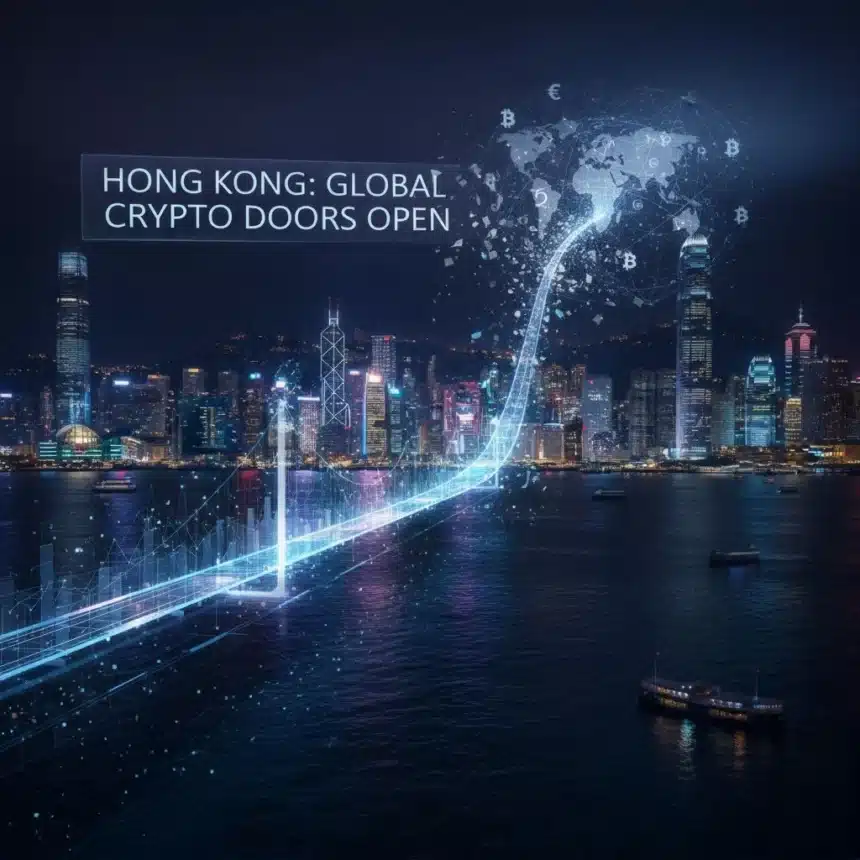
Hong Kong, the longtime financial hub of Asia, has just made a monumental move that signals its serious ambition to become a global capital for digital assets, also known as cryptocurrency. After months of carefully managed growth and strict controls, the city’s regulators have announced they will allow licensed digital marketplaces the “crypto exchanges” to connect their local operations directly with the massive, worldwide pools of buying and selling activity.
This decision marks the end of what was known as a “ringfenced” trading model. If you imagine the entire global crypto market as a vast ocean, Hong Kong’s previous system was like a small, protected swimming pool built right next to it. Trades could only happen inside that local pool. Now, the government is building a large, open channel, allowing the local market to flow freely into the international waters of commerce.
Connecting the Pool to the Ocean
The change was officially unveiled by Julia Leung, the head of Hong Kong’s powerful financial watchdog, the Securities and Futures Commission (SFC). Simply put, the new rules permit a licensed crypto exchange’s Hong Kong branch to use the global list of buy and sell orders from its parent company around the world.
Previously, a trade initiated by a customer in Hong Kong could only be matched with another order from a different customer also based in Hong Kong. This kept the local market small, slow, and often saw prices that didn’t quite match the global average. This cautious approach was a way to protect local investors while the government found its footing in a notoriously wild and fast-moving industry.
The new policy sweeps that limitation away. When a local customer places an order to buy or sell a digital coin, that order can now be matched against any order on the platform’s international books. This key change puts crypto trading on the same footing as traditional assets like stocks and bonds, where it is normal for local dealers to tap into global trading flows.
Why This is a Game-Changer
The most immediate and important effect of this change will be a massive increase in liquidity. In simple terms, liquidity is the ability to buy or sell a large amount of an asset quickly without causing a major swing in its price.
Think of it this way: if you try to sell a million dollars’ worth of digital coins in a small pool, you might struggle to find a buyer immediately, or you might have to drop your price dramatically to complete the sale. This is low liquidity.
But, if you connect to the global order book the vast ocean you are now accessing billions of dollars in activity. This means you can execute large trades faster, get a better, fairer price that is closer to the true global value, and the market becomes much more stable. This stability is crucial for attracting the “professional investors” the big banks, large money managers, and financial institutions that Hong Kong is eager to court.
By dropping the ringfence, Hong Kong is loudly declaring its confidence in its own regulatory system. It’s saying: “Our rules are strong enough to let our local businesses participate on the world stage without needing a protective bubble.” This makes Hong Kong a much more attractive place for major global crypto exchanges to set up a licensed, fully regulated base of operations in Asia.
The Path to Becoming a Digital Hub
This shift is the latest step in a multi-year effort by Hong Kong to reinvent itself as a trusted global center for digital assets. Over the past few years, the city has already put in place a formal system to license and oversee crypto platforms, a critical move that separates legitimate players from fly-by-night operations. It has also allowed the listing of special funds, known as exchange-traded products, that track the price of major digital coins like Bitcoin and Ether, making it easier for traditional investors to gain exposure.
However, progress has been mixed. The strict nature of the ringfenced model and a focus initially only on professional investors meant that the volume of activity in Hong Kong remained small compared to other less-regulated jurisdictions. This new move is designed to inject the necessary capital and trading volume to make Hong Kong truly competitive with rivals like Singapore and Dubai.
What Comes Next
The financial regulators have hinted that this is just the beginning. The next phase under consideration involves allowing other local players, such as crypto brokers, to also access the huge global pools of capital. Brokers act as middlemen, and giving them global access would further smooth the flow of money and trading into Hong Kong.
Furthermore, the SFC is also relaxing rules on which new digital coins can be listed for trading by professional investors, making it easier for platforms to offer a wider variety of assets without a long, required track record.
In summary, the government’s message is clear: the era of cautious, isolated trading is over. By opening the gate to global markets, Hong Kong is betting that its strong regulatory framework, combined with the immense size of the world’s digital asset markets, will cement its position as a major, trustworthy capital in the new digital financial world.