


Key Highlights
- OpenSea CEO Devin Finzer denies claims of pivoting away from NFTs, clarifying the company is expanding, not exiting, the market
- The platform is transforming into a “universal interface” for the entire onchain economy, aiming to trade every type of digital asset
- OpenSea is unifying trading across 22+ blockchains, positioning itself as a non-custodial alternative that makes complex cross-chain swaps and portfolio management seamless and simple
- Key upcoming features include a mobile app for instant cross-chain swaps (pre-Q1 2026) and the launch of the governance-focused SEA token (Q1 2026)
The world’s most recognized non-fungible token (NFT) marketplace, OpenSea, is currently in the midst of a dramatic transformation. Far from abandoning the digital collectibles that made it a household name, the company is making an aggressive push to establish itself as the central, all-in-one trading platform for every single type of asset that exists on a blockchain.
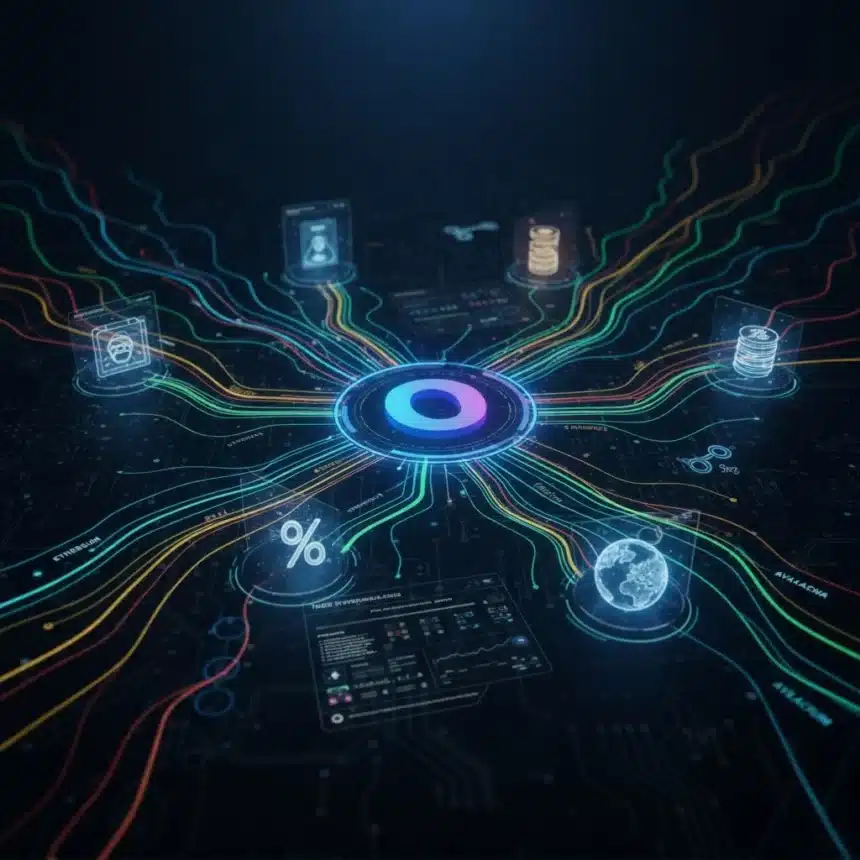
According to CEO Devin Finzer, who recently addressed speculation about the company’s future, the marketplace is not pivoting away from NFTs; rather, it is evolving. He clarifies that OpenSea is aiming to become the “universal interface for the entire onchain economy.” This ambitious new vision means that if an asset is verifiable and tradable on a blockchain be it a token, an artistic collectible, a piece of culture, or even a digitally-represented physical item it should be available for seamless exchange on OpenSea.
Finzer stressed that the goal is straightforward yet profound: to enable users to trade anything onchain, across any network, while ensuring they maintain full, non-custodial control over their digital property. This shift signifies a maturation of the platform, moving beyond its initial focus to embrace the full scope of decentralized finance.
The Catalyst for Change and Current Standing
OpenSea first launched in 2017 and quickly became the dominant player, pioneering the market for trading NFTs. It maintained this commanding position for years until early 2023, when several factors converged to challenge its supremacy. A broader market downturn in the crypto space, combined with the rise of aggressive competitors like Blur, temporarily eroded some of OpenSea’s momentum.
Despite these challenges, the platform has demonstrated remarkable resilience. As of the time of this announcement, OpenSea remains the clear market leader in the NFT space, commanding an impressive 51% of the total trading volume, according to data tracker NFTScan.
The internal data from OpenSea itself provides the most compelling evidence for its new direction. In a recent announcement, Finzer revealed that the platform’s October trading volume had soared past $2.6 billion. Crucially, he noted that over 90% of that massive volume came not from traditional NFT transactions, but from token trading. For OpenSea, this data point was a clear signal that the infrastructure built to unify NFT trading could, and should, be applied to unify the entire onchain trading experience.
The Simplicity of Aggregation
Finzer explained that the current experience for many crypto users is frustrating and complex. To manage a diverse portfolio, users are often forced to “juggle multiple wallets, bridges, and interfaces.” This fragmentation creates unnecessary risk and complexity, especially when trading assets that span different blockchains.
OpenSea’s new positioning solves this by becoming the “interface layer.” They are using their existing technological expertise to consolidate all necessary functionality token trading, portfolio management, and cross-chain swaps into one cohesive experience. For instance, a user can now swap from a Solana-based token to an Ethereum-based asset and manage their entire portfolio, all without ever leaving the OpenSea environment.
This unified approach also allows OpenSea to stake a unique claim in the competitive landscape, positioning itself as a superior alternative to both centralized and decentralized exchanges:
- Alternative to Centralized Exchanges (CEXs): Unlike platforms where users must hand over control of their digital keys, OpenSea operates non-custodially, meaning users keep their keys and maintain ownership of their assets at all times.
- Alternative to Decentralized Exchanges (DEXs): While existing DEXs can be highly complex to navigate, OpenSea makes that complexity “invisible.” By aggregating liquidity across more than 22 different blockchains, the platform provides a simple, streamlined trading experience that mirrors the ease of traditional finance apps.
The CEO was emphatic that this expansion does not mean non-fungible tokens are being relegated to a secondary role. For OpenSea, “everything onchain is core,” a statement that confirms their commitment to the entire spectrum of decentralized assets.
The Road Ahead: Mobile and the SEA Token
Looking to the future, OpenSea has laid out an ambitious roadmap aimed at embedding its new universal trading hub into the daily lives of its users.
A significant part of this plan involves the launch of a brand-new mobile application, scheduled to debut before the first quarter of 2026. This app is designed to bring instant cross-chain swaps and comprehensive portfolio tracking to mobile users, with the ultimate goal of making onchain trading as “easy as checking Instagram.” The company aims to literally bring the entire onchain economy into the user’s pocket.
Accompanying this platform expansion is the planned launch of the SEA token by the OpenSea Foundation, also slated for Q1 2026. This token will play a vital role in supporting platform governance and encouraging greater participation within the OpenSea ecosystem.
OpenSea’s long-term strategic vision also includes the introduction of advanced financial products, such as perpetual futures, along with a commitment to “true crosschain abstraction,” which will allow users to trade any asset across any chain or wallet seamlessly. By making the complexities of the blockchain technology disappear behind a simple interface, OpenSea is cementing its future not just as an NFT marketplace, but as the essential gateway to the entire decentralized digital economy.