
Last updated: 9 April 2026
Key Highlights
- Personal Funding: Vitalik is spending $45 million (16,384 ETH) of his own money to fund “special projects” so the main Ethereum Foundation can focus strictly on core network updates.
- Privacy First: The money is dedicated to building “freedom tech” like private messaging and secure digital identities that stop big companies from tracking your data.
- Open Hardware: He is funding the creation of transparent computer chips and physical devices that are harder for hackers or spies to mess with.
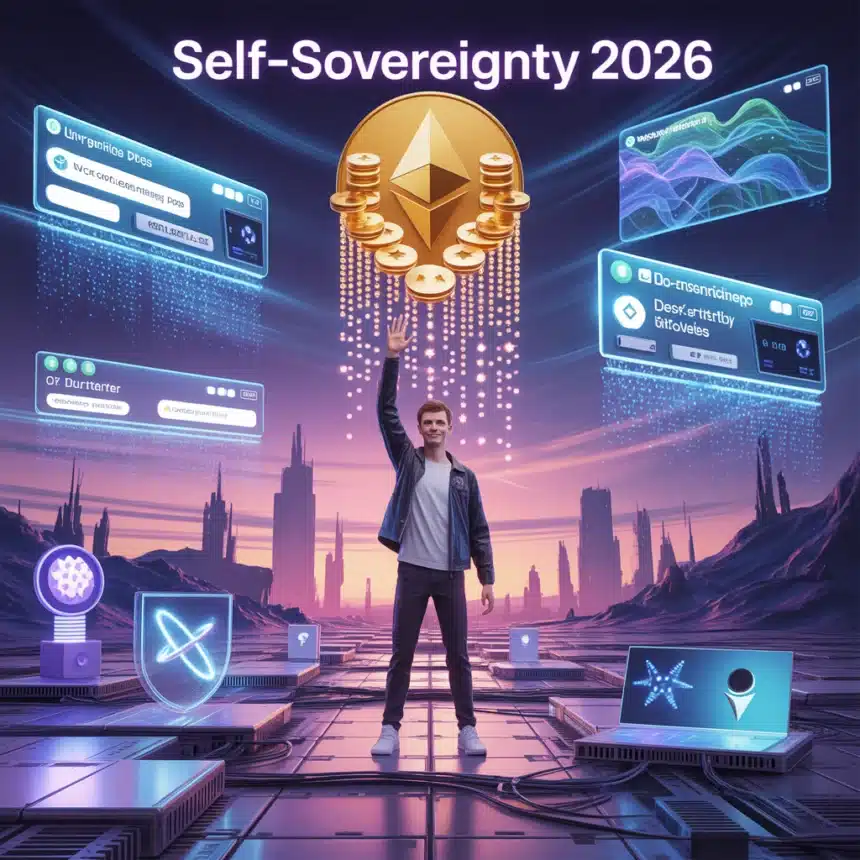
- User Independence: The goal for 2026 is “Self Sovereignty,” making it easy for regular people to control their own money and data without needing to trust a bank or a tech giant.
Vitalik Buterin Commits $45 Million to Future Proof Ethereum in 2026
Ethereum cofounder Vitalik Buterin has personally earmarked approximately $45 million (16,384 ETH) to fund critical open source projects, ensuring the network remains private and independent as it scales.
- The Investment: Vitalik is using his personal wealth to fund projects that the Ethereum Foundation is stepping back from during a new “austerity” phase.
- The Mission: The focus is on “self sovereignty” giving users total control over their data, money, and digital identity without relying on big tech companies.
- The Timeline: These funds will be deployed over the next several years, starting in 2026, to build a “full stack” of secure hardware and software
| Feature | Detail |
| Total Amount | ~16,384 ETH (approx. $43M,$46M depending on market) |
| Primary Goal | Privacy, security, and user independence (Self Sovereignty) |
| Key Projects | Secure hardware (Vensa), privacy apps (U critter), and decentralized tools |
| Strategy | Personal funding to allow the Ethereum Foundation to stay “lean” |
| Vision | Turning 2026 into the year Ethereum “takes back lost ground” |
Why Vitalik is Spending His Own Millions
In late January 2026, Vitalik Buterin announced a major shift in how Ethereum development is funded. For years, the Ethereum Foundation the nonprofit behind the scenes has been the main engine for growth. However, as the foundation enters a “mild austerity” phase to save resources, Vitalik is stepping up personally.
He has withdrawn over 16,000 units of Ether from his personal holdings. His goal is to ensure that “special projects” the experimental stuff that makes the internet safer don’t get left behind. Vitalik believes that for Ethereum to succeed, it must be more than just a place for digital money; it must be a shield for personal privacy.
The 2026 Vision: Taking Back Control
Vitalik has described 2026 as a “rebellion” against the centralized giants of Silicon Valley. He argues that over the last decade, the internet has become a “swamp” where a few big companies control everyone’s data.
His $45 million investment is specifically targeted at reversing this trend. By funding “open source” tools (software that anyone can inspect and no one company owns), he wants to make it easier for regular people to:
- Run their own tech: Simplifying the way people connect to the network so they don’t have to trust a middleman.
- Protect their identity: Developing “social recovery” tools so you never lose access to your digital life, even if you lose your password.
- Stay Private: Funding apps like Ucritter and Venza that hide your activity from hackers and prying eyes.
Where the Money is Going: The “Full Stack” Plan
Vitalik isn’t just funding apps; he’s looking at the hardware too. He wants a “full stack” of technology that is open and verifiable from the ground up.
1. Secure Hardware (The “Physical” Layer)
One of the most unique parts of this plan is the support for Vensa, a project working on “open silicon.” Most computer chips today are “black boxes” we don’t really know what’s happening inside them. Vitalik wants chips that are transparent and secure for high stakes tasks like voting or managing life savings.
2. Privacy First Software
The funds will support software that uses advanced math to prove things are true without revealing private details. This includes tools for private messaging, air quality monitoring, and even biotechnology.
3. Long Term Staking
Instead of spending all the money at once, Vitalik plans to “stake” some of the funds. This means putting the digital currency to work to earn a steady “salary” or reward, which can then be used to fund new projects for years to come.
How This Affects the Average User
You don’t need to be a computer scientist to feel the impact of this move. If Vitalik’s plan succeeds, the way we use the internet will feel different by the end of 2026.
- Fewer Middlemen: You won’t have to “Sign in with Google” or “Sign in with Facebook” as often. You will be your own “anchor” of identity.
- Lower Risk: New “social recovery” wallets will make it harder for scammers to steal funds and easier for honest users to get back into their accounts if they make a mistake.
- Better Privacy: Your digital footprint will be smaller, making it harder for companies to track your every move.
”2026 is the year that we take back lost ground in terms of self sovereignty and trustlessness,” Buterin posted on X (formerly Twitter) on January 30, 2026.
FAQ
Is the Ethereum Foundation in trouble?
No. Vitalik described the current phase as “mild austerity” or “moderate tightening.” This is a strategic move to ensure the Foundation can focus on the core network for decades to come, while Vitalik handles the more experimental “special projects.”
Where did the $45 million come from?
The funds (16,384 ETH) came directly from Vitalik Buterin’s personal digital wallet. He has been a long time advocate for using his wealth to support the public good.
What is “self sovereignty”?
It’s a fancy way of saying “being your own boss” online. It means you own your data, your money, and your digital identity, and no bank or tech company can take it away or lock you out.
How will we know if it’s working?
Watch for new apps that focus on privacy and “recovery.” If it becomes as easy to recover a lost crypto account as it is to reset a Netflix password without a central company involved then the mission is succeeding.
Free Daily Briefing
Get the Daily Briefing
Crypto, AI, and Web3 intelligence. Free, every day.
The Daily Brief by TCB
Crypto, AI & finance intelligence in 5 minutes. Every weekday morning. Free.