



Key Takeaways
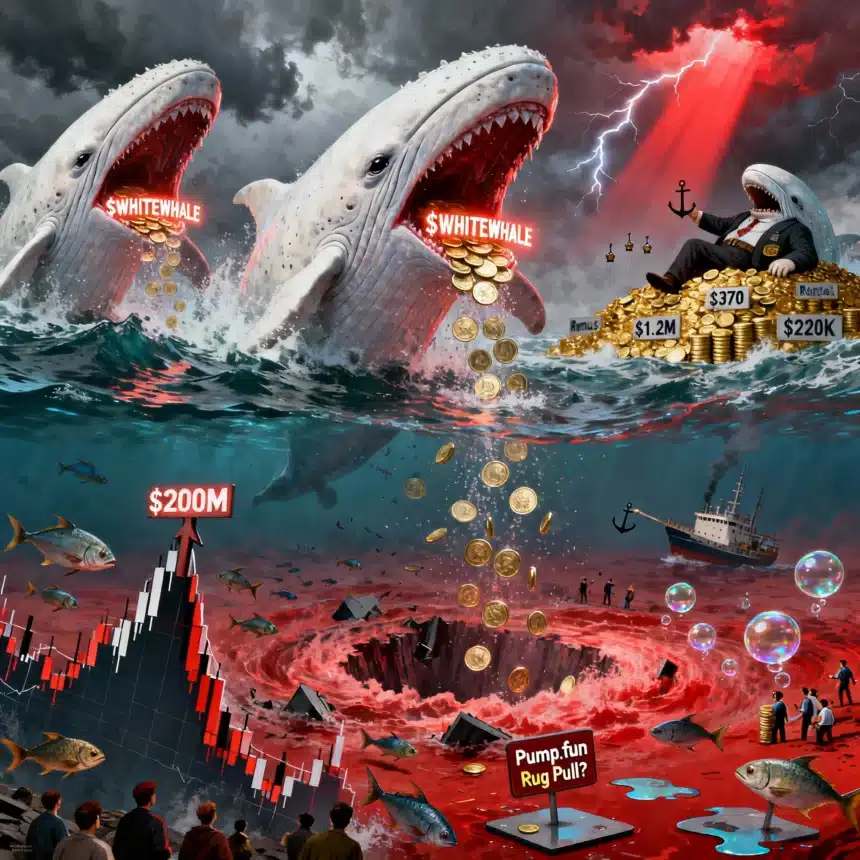
- Massive Crash: The token price fell 60% almost instantly on Monday, January 19, 2026.
- Whale Activity: Three major wallets sold a combined 48 million tokens, worth roughly $1.6 million.
- Market Impact: The total value of the project (market cap) plummeted from $200 million to $20 million before a small recovery.
- Early Profits: One early trader turned a $370 investment into a peak value of $1.2 million.
Why White Whale Is Down Today
The White Whale ($WHITEWHALE) token on the Solana network crashed by 60% in under five minutes after its largest holders sold off $1.3 million worth of tokens.
- Why it matters: This massive drop wiped out over $100 million in market value, leaving smaller investors with significant losses.
- Who it affects: Specifically retail traders on the Solana network and users of the “Pump.fun” platform where the coin first launched.
- What to watch: Keep an eye on the “Remus” wallet and the official development team’s “buyback” promises to see if the price can ever recover.
This article explores how a single sell-off triggered a market-wide panic, the specific players involved, and what this means for the future of Solana-based digital assets.
What Happened to White Whale?
On the morning of January 20, 2026, the White Whale community woke up to a “sea of red.” Within a five-minute window starting at roughly 12:27 AM, the token’s price collapsed. The crash was not caused by bad news about the project’s technology, but rather by the sheer volume of tokens being sold by those at the top.
Blockchain tracking tools identified several large accounts often called “whales” dumping their holdings simultaneously. This created a “death spiral” where the price dropped so fast that other investors panicked and sold their tokens as well, further driving the price into the ground.
Why the White Whale Price Crashed
The collapse was triggered by three main factors that are common in the world of high-risk digital tokens.
1. The $1.3 Million Whale Selloff
The primary cause was a group of large holders who decided to cash out at the same time. According to on-chain data, wallets starting with “6kas” and “5tf1” sold millions of tokens. When such a large amount is sold into a market with limited buyers, the price has nowhere to go but down.
2. Low Market Depth
Because White Whale is a “meme coin,” it lacks the deep financial backing of major currencies like Bitcoin. This means that even a single million-dollar sale can move the price by 50% or more. At the time of the crash, the “liquidity” or the available cash to facilitate trades was less than $1 million, making it very fragile.
3. Allegations of a “Rug Pull”
As the price hit rock bottom, many investors on social media began calling the event a “rug pull.” This is a term used when creators or large insiders abandon a project after selling their shares. While the WhiteWhale team denied these claims, the suddenness of the exit by the top holders destroyed investor trust.
The Big Winners: How “Remus” Made Millions
While most people lost money, a few “smart” traders made a fortune. A trader known in the community as Remus is the prime example.
- The Entry: Remus bought 1.5% of the total supply very early for just $370.
- The Peak: At the token’s highest point in early January, that small stash was worth $1.2 million.
- The Exit: Remus sold about $220,000 during the crash. Even after the 60% drop, this trader still holds tokens worth nearly $1 million, showing how much profit early participants can extract.
| Stat | Before Crash | After Crash |
| Market Capitalization | $200 Million | $37 Million |
| Price Change (7 Days) | +45% | -60% |
| 24h Trading Volume | $5 Million | $52 Million (mostly selling) |
The Team’s Response: “Liquidity Distribution”
In an attempt to calm the storm, the White Whale development team posted a statement on X (formerly Twitter). They claimed the crash was not a “scam” but a “liquidity event.” They argued that by having large whales exit, the token is now “healthier” because the remaining coins are spread out among more people.
The team also claimed to have performed “buybacks,” using their own funds to purchase tokens and stabilize the price. Despite these efforts, the token remains down over 70% from its all-time high set just weeks ago.
What’s Next for White Whale?
The future of White Whale depends on whether new buyers are willing to step in after such a violent drop. Historically, 86% of projects that see this kind of “whale dump” fail to ever reach their old highs.
Investors should watch the $0.040 price level. If the token can stay above this mark, it might consolidate. However, if more early holders decide to follow the first group out the door, the “death spiral” could continue.